Center for Education – författare
671 kr
Skickas
853 kr
Skickas
522 kr
Skickas
641 kr
Skickas
307 kr
Skickas
284 kr
Läs direkt efter köp
What types of instructional experiences help K-8 students learn science with understanding? What do science educators, teachers, teacher leaders, science specialists, professional development staff, curriculum designers, and school administrators need to know to create and support such experiences?
Ready, Set, Science! guides the way with an account of the groundbreaking and comprehensive synthesis of research into teaching and learning science in kindergarten through eighth grade. Based on the recently released National Research Council report Taking Science to School: Learning and Teaching Science in Grades K-8, this book summarizes a rich body of findings from the learning sciences and builds detailed cases of science educators at work to make the implications of research clear, accessible, and stimulating for a broad range of science educators.
Ready, Set, Science! is filled with classroom case studies that bring to life the research findings and help readers to replicate success. Most of these stories are based on real classroom experiences that illustrate the complexities that teachers grapple with every day. They show how teachers work to select and design rigorous and engaging instructional tasks, manage classrooms, orchestrate productive discussions with culturally and linguistically diverse groups of students, and help students make their thinking visible using a variety of representational tools.
This book will be an essential resource for science education practitioners and contains information that will be extremely useful to everyone—including parents—directly or indirectly involved in the teaching of science.
261 kr
Läs direkt efter köp
Teachers, like other professionals, need to stay informed about new knowledge and technologies. Yet many express dissatisfaction with the professional development opportunities made available to them in schools and insist that the most effective development programs they have experienced have been self-initiated. Enhancing Professional Development for Teachers explores how the provision of professional development through online media has had a significant influence on the professional lives of an increasing number of teachers.
Growing numbers of educators contend that online teacher professional development (OTPD) has the potential to enhance and even transform teachers'' effectiveness in their classrooms and over the course of their careers. They also acknowledge that it raises many challenging questions regarding costs, equity, access to technology, quality of materials, and other issues. Enhancing Professional Development for Teachers suggests that teachers be active participants in planning and implementation of any new technologies that enhance professional development. The book recommends that federal and state policy makers take on the responsibility of promoting equal access to technology while the federal government and foundations play an important role by supporting the development, evaluation, and revision of OTPD.
387 kr
Läs direkt efter köp
Over the past five years, business and education groups have issued a series of reports indicating that the skill demands of work are rising, due to rapid technological change and increasing global competition. Researchers have begun to study changing workplace skill demands. Some economists have found that technological change is "skill-biased," increasing demand for highly skilled workers and contributing to the growing gap in wages between college-educated workers and those with less education. However, other studies of workplace skill demands have reached different conclusions. These differences result partly from differences in disciplinary perspective, research methods, and datasets. The findings of all of these strands of research on changing skill demands are limited by available methods and data sources. Because case study research focuses on individual work sites or occupations, its results may not be representative of larger industry or national trends. At a more basic level, there is some disagreement in the literature about how to define "skill". In part because of such disagreements, researchers have used a variety of measures of skill, making it difficult to compare findings from different studies or to accumulate knowledge of skill trends over time. In the context of this increasing discussion, the National Research Council held a workshop to explore the available research evidence related to two important guiding questions: What are the strengths and weaknesses of different research methods and data sources for providing insights about current and future changes in skill demands? What support does the available evidence (given the strengths and weaknesses of the methods and data sources) provide for the proposition that the skills required for the 21st century workplace will be meaningfully different from earlier eras and will require corresponding changes in educational preparation?
465 kr
Läs direkt efter köp
The federal role in precollege science, technology, engineering, and mathematics (STEM) education is receiving increasing attention in light of the need to support public understanding of science and to develop a strong scientific and technical workforce in a competitive global economy. Federal science agencies, such as the National Aeronautics and Space Administration (NASA), are being looked to as a resource for enhancing precollege STEM education and bringing more young people to scientific and technical careers.
For NASA and other federal science agencies, concerns about workforce and public understanding of science also have an immediate local dimension. The agency faces an aerospace workforce skewed toward those close to retirement and job recruitment competition for those with science and engineering degrees. In addition, public support for the agency''s missions stems in part from public understanding of the importance of the agency''s contributions in science, engineering, and space exploration. In the NASA authorization act of 2005 (P.L. 109-555 Subtitle B-Education, Sec. 614) Congress directed the agency to support a review and evaluation of its precollege education program to be carried out by the National Research Council (NRC). NASA''s Elementary and Secondary Education Program: Review and Critique includes recommendations to improve the effectiveness of the program and addresses these four tasks:1. an evaluation of the effectiveness of the overall program in meeting its defined goals and objectives;2. an assessment of the quality and educational effectiveness of the major components of the program, including an evaluation of the adequacy of assessment metrics and data collection requirements available for determining the effectiveness of individual projects;3. an evaluation of the funding priorities in the program, including a review of the funding level and trend for each major component of the program and an assessment of whether the resources made available are consistent with meeting identified goals and priorities; and4. a determination of the extent and effectiveness of coordination and collaboration between NASA and other federal agencies that sponsor science, technology, and mathematics education activities.607 kr
Läs direkt efter köp
Informal science is a burgeoning field that operates across a broad range of venues and envisages learning outcomes for individuals, schools, families, and society. The evidence base that describes informal science, its promise, and effects is informed by a range of disciplines and perspectives, including field-based research, visitor studies, and psychological and anthropological studies of learning.Learning Science in Informal Environments draws together disparate literatures, synthesizes the state of knowledge, and articulates a common framework for the next generation of research on learning science in informal environments across a life span. Contributors include recognized experts in a range of disciplines—research and evaluation, exhibit designers, program developers, and educators. They also have experience in a range of settings—museums, after-school programs, science and technology centers, media enterprises, aquariums, zoos, state parks, and botanical gardens.Learning Science in Informal Environments is an invaluable guide for program and exhibit designers, evaluators, staff of science-rich informal learning institutions and community-based organizations, scientists interested in educational outreach, federal science agency education staff, and K-12 science educators.
261 kr
Läs direkt efter köp
Every state in the United States, the District of Columbia, and the Department of Defense Education Activity now has its own academic standards, at least in core subjects. These documents vary in their structure, level of specificity, and other characteristics. Professional societies have also developed standards, in mathematics, English language arts, science, social studies, civics, foreign languages, and other academic subjects, and many states have drawn on these as they prepared their own standards documents. Other organizations have also offered standards and benchmarks. For example, the Mid-continent Research for Education and Learning (McREL) offers standards developed with the goal of applying a consistent structure and degree of rigor and specificity to standards in diverse subjects.
This abundance of standards reflects a vigorous response to the call for high standards articulated in the National Commission on Excellence in Education''s 1983 report A Nation at Risk, and it also poses a variety of questions for educators, policy makers, and the public. What role are these standards playing? What are the strengths and weaknesses of the reform efforts that have been anchored by these standards? How are these standards applied, and how might standards-based reforms be improved? Would a move toward national standards in core academic subjects lead to improved instruction and learning? Would it be feasible?
The committee identified three components to the charge for the first workshop: a review of the policy and research context in which current standards-based reform efforts are operating, a consideration of how the costs of standards and accountability systems might be calculated, and an analysis of similarities and differences among states'' content and performance standards. Assessing the Role of K-12 Academic Standards in States: Workshop Summary summarizes this workshop and the committee''s recommendations.
544 kr
Läs direkt efter köp
347 kr
Läs direkt efter köp
The goal of this book is not to answer the policy question of whether or not common standards would be a good idea. Rather, the book provides an objective look at the available evidence regarding the ways in which standards are currently functioning, the strategies that might be used to pursue common standards, and the issues that doing so might present.
568 kr
Skickas
357 kr
Läs direkt efter köp
Designed to protect the privacy of individual student test scores, grades, and other education records, the Family Educational Rights and Privacy Act (FERPA) of 1974 places limits the access of educational researches, and slows research not only in education but also in related fields, such as child welfare and health.Recent trends have converged to greatly increase the supply of data on student performance in public schools. Education policies now emphasize education standards and testing to measure progress toward those standards, as well as rigorous education research. At the same time, private firms and public agencies, including schools, have replaced most paper records with electronic data systems. Although these databases represent a rich source of longitudinal data, researchers'' access to the individually identifiable data they contain is limited by the privacy protections of FERPA.To explore possibilities for data access and confidentiality in compliance with FERPA and with the Common Rule for the Protection of Human Subjects, the National Academies and the American Educational Research Association convened the Workshop on Protecting Student Records and Facilitating Education Research in April 2008.
670 kr
Läs direkt efter köp
Early childhood mathematics is vitally important for young children''s present and future educational success. Research demonstrates that virtually all young children have the capability to learn and become competent in mathematics. Furthermore, young children enjoy their early informal experiences with mathematics. Unfortunately, many children''s potential in mathematics is not fully realized, especially those children who are economically disadvantaged. This is due, in part, to a lack of opportunities to learn mathematics in early childhood settings or through everyday experiences in the home and in their communities. Improvements in early childhood mathematics education can provide young children with the foundation for school success.Relying on a comprehensive review of the research, Mathematics Learning in Early Childhood lays out the critical areas that should be the focus of young children''s early mathematics education, explores the extent to which they are currently being incorporated in early childhood settings, and identifies the changes needed to improve the quality of mathematics experiences for young children. This book serves as a call to action to improve the state of early childhood mathematics. It will be especially useful for policy makers and practitioners-those who work directly with children and their families in shaping the policies that affect the education of young children.
536 kr
Läs direkt efter köp
Teachers make a difference. The success of any plan for improving educational outcomes depends on the teachers who carry it out and thus on the abilities of those attracted to the field and their preparation. Yet there are many questions about how teachers are being prepared and how they ought to be prepared. Yet, teacher preparation is often treated as an afterthought in discussions of improving the public education system. Preparing Teachers addresses the issue of teacher preparation with specific attention to reading, mathematics, and science. The book evaluates the characteristics of the candidates who enter teacher preparation programs, the sorts of instruction and experiences teacher candidates receive in preparation programs, and the extent that the required instruction and experiences are consistent with converging scientific evidence. Preparing Teachers also identifies a need for a data collection model to provide valid and reliable information about the content knowledge, pedagogical competence, and effectiveness of graduates from the various kinds of teacher preparation programs. Federal and state policy makers need reliable, outcomes-based information to make sound decisions, and teacher educators need to know how best to contribute to the development of effective teachers. Clearer understanding of the content and character of effective teacher preparation is critical to improving it and to ensuring that the same critiques and questions are not being repeated 10 years from now.
442 kr
Läs direkt efter köp
What types of instructional experiences help K-8 students learn science with understanding? What do science educators, teachers, teacher leaders, science specialists, professional development staff, curriculum designers, and school administrators need to know to create and support such experiences?
Ready, Set, Science! guides the way with an account of the groundbreaking and comprehensive synthesis of research into teaching and learning science in kindergarten through eighth grade. Based on the recently released National Research Council report Taking Science to School: Learning and Teaching Science in Grades K-8, this book summarizes a rich body of findings from the learning sciences and builds detailed cases of science educators at work to make the implications of research clear, accessible, and stimulating for a broad range of science educators.
Ready, Set, Science! is filled with classroom case studies that bring to life the research findings and help readers to replicate success. Most of these stories are based on real classroom experiences that illustrate the complexities that teachers grapple with every day. They show how teachers work to select and design rigorous and engaging instructional tasks, manage classrooms, orchestrate productive discussions with culturally and linguistically diverse groups of students, and help students make their thinking visible using a variety of representational tools.
This book will be an essential resource for science education practitioners and contains information that will be extremely useful to everyone—including parents—directly or indirectly involved in the teaching of science.
237 kr
Läs direkt efter köp
631 kr
Läs direkt efter köp
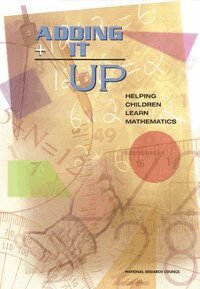
Adding It Up explores how students in pre-K through 8th grade learn mathematics and recommends how teaching, curricula, and teacher education should change to improve mathematics learning during these critical years.
The committee identifies five interdependent components of mathematical proficiency and describes how students develop this proficiency. With examples and illustrations, the book presents a portrait of mathematics learning:
Research findings on what children know about numbers by the time they arrive in pre-K and the implications for mathematics instruction. Details on the processes by which students acquire mathematical proficiency with whole numbers, rational numbers, and integers, as well as beginning algebra, geometry, measurement, and probability and statistics.The committee discusses what is known from research about teaching for mathematics proficiency, focusing on the interactions between teachers and students around educational materials and how teachers develop proficiency in teaching mathematics.
505 kr
Läs direkt efter köp
631 kr
Läs direkt efter köp
Evaluating and Improving Undergraduate Teaching in Science, Technology, Engineering, and Mathematics
694 kr
Läs direkt efter köp
442 kr
Läs direkt efter köp
757 kr
Läs direkt efter köp
This book reviews the evaluation research literature that has accumulated around 19 K-12 mathematics curricula and breaks new ground in framing an ambitious and rigorous approach to curriculum evaluation that has relevance beyond mathematics. The committee that produced this book consisted of mathematicians, mathematics educators, and methodologists who began with the following charge:
Evaluate the quality of the evaluations of the thirteen National Science Foundation (NSF)-supported and six commercially generated mathematics curriculum materials; Determine whether the available data are sufficient for evaluating the efficacy of these materials, and if not; Develop recommendations about the design of a project that could result in the generation of more reliable and valid data for evaluating such materials.The committee collected, reviewed, and classified almost 700 studies, solicited expert testimony during two workshops, developed an evaluation framework, established dimensions/criteria for three methodologies (content analyses, comparative studies, and case studies), drew conclusions on the corpus of studies, and made recommendations for future research.
631 kr
Läs direkt efter köp
Laboratory experiences as a part of most U.S. high school science curricula have been taken for granted for decades, but they have rarely been carefully examined. What do they contribute to science learning? What can they contribute to science learning? What is the current status of labs in our nation''s high schools as a context for learning science? This book looks at a range of questions about how laboratory experiences fit into U.S. high schools:
What is effective laboratory teaching? What does research tell us about learning in high school science labs? How should student learning in laboratory experiences be assessed? Do all student have access to laboratory experiences? What changes need to be made to improve laboratory experiences for high school students? How can school organization contribute to effective laboratory teaching?With increased attention to the U.S. education system and student outcomes, no part of the high school curriculum should escape scrutiny. This timely book investigates factors that influence a high school laboratory experience, looking closely at what currently takes place and what the goals of those experiences are and should be. Science educators, school administrators, policy makers, and parents will all benefit from a better understanding of the need for laboratory experiences to be an integral part of the science curriculum—and how that can be accomplished.
867 kr
Läs direkt efter köp
What is science for a child? How do children learn about science and how to do science? Drawing on a vast array of work from neuroscience to classroom observation, Taking Science to School provides a comprehensive picture of what we know about teaching and learning science from kindergarten through eighth grade. By looking at a broad range of questions, this book provides a basic foundation for guiding science teaching and supporting students in their learning. Taking Science to School answers such questions as:
When do children begin to learn about science? Are there critical stages in a child''s development of such scientific concepts as mass or animate objects? What role does nonschool learning play in children''s knowledge of science? How can science education capitalize on children''s natural curiosity? What are the best tasks for books, lectures, and hands-on learning? How can teachers be taught to teach science?The book also provides a detailed examination of how we know what we know about children''s learning of science—about the role of research and evidence. This book will be an essential resource for everyone involved in K-8 science education—teachers, principals, boards of education, teacher education providers and accreditors, education researchers, federal education agencies, and state and federal policy makers. It will also be a useful guide for parents and others interested in how children learn.
773 kr
Läs direkt efter köp
308 kr
Läs direkt efter köp
Practitioners in informal science settings—museums, after-school programs, science and technology centers, media enterprises, libraries, aquariums, zoos, and botanical gardens—are interested in finding out what learning looks like, how to measure it, and what they can do to ensure that people of all ages, from different backgrounds and cultures, have a positive learning experience. Surrounded by Science: Learning Science in Informal Environments, is designed to make that task easier. Based on the National Research Council study, Learning Science in Informal Environments: People, Places, and Pursuits, this book is a tool that provides case studies, illustrative examples, and probing questions for practitioners. In short, this book makes valuable research accessible to those working in informal science: educators, museum professionals, university faculty, youth leaders, media specialists, publishers, broadcast journalists, and many others.
631 kr
Läs direkt efter köp
Informal science is a burgeoning field that operates across a broad range of venues and envisages learning outcomes for individuals, schools, families, and society. The evidence base that describes informal science, its promise, and effects is informed by a range of disciplines and perspectives, including field-based research, visitor studies, and psychological and anthropological studies of learning.Learning Science in Informal Environments draws together disparate literatures, synthesizes the state of knowledge, and articulates a common framework for the next generation of research on learning science in informal environments across a life span. Contributors include recognized experts in a range of disciplines—research and evaluation, exhibit designers, program developers, and educators. They also have experience in a range of settings—museums, after-school programs, science and technology centers, media enterprises, aquariums, zoos, state parks, and botanical gardens.Learning Science in Informal Environments is an invaluable guide for program and exhibit designers, evaluators, staff of science-rich informal learning institutions and community-based organizations, scientists interested in educational outreach, federal science agency education staff, and K-12 science educators.