Teacher Advisory Council – författare
261 kr
Läs direkt efter köp
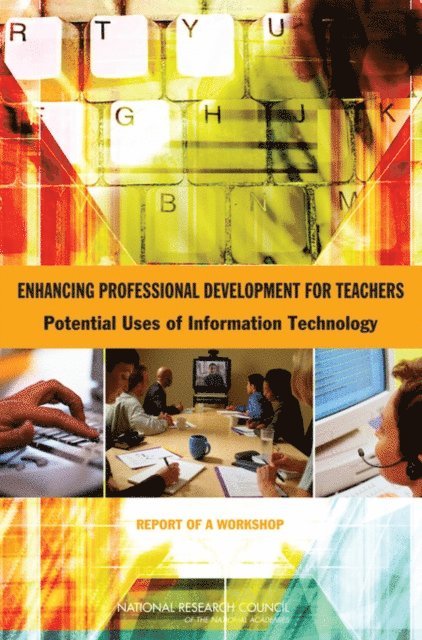
Teachers, like other professionals, need to stay informed about new knowledge and technologies. Yet many express dissatisfaction with the professional development opportunities made available to them in schools and insist that the most effective development programs they have experienced have been self-initiated. Enhancing Professional Development for Teachers explores how the provision of professional development through online media has had a significant influence on the professional lives of an increasing number of teachers.
Growing numbers of educators contend that online teacher professional development (OTPD) has the potential to enhance and even transform teachers'' effectiveness in their classrooms and over the course of their careers. They also acknowledge that it raises many challenging questions regarding costs, equity, access to technology, quality of materials, and other issues. Enhancing Professional Development for Teachers suggests that teachers be active participants in planning and implementation of any new technologies that enhance professional development. The book recommends that federal and state policy makers take on the responsibility of promoting equal access to technology while the federal government and foundations play an important role by supporting the development, evaluation, and revision of OTPD.
379 kr
Läs direkt efter köp
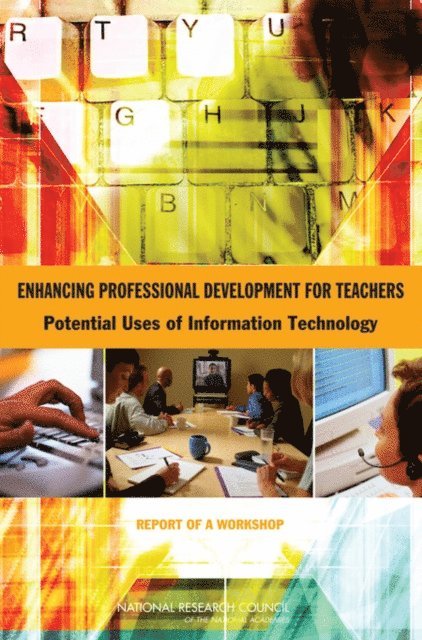
Teachers, like other professionals, need to stay informed about new knowledge and technologies. Yet many express dissatisfaction with the professional development opportunities made available to them in schools and insist that the most effective development programs they have experienced have been self-initiated. Enhancing Professional Development for Teachers explores how the provision of professional development through online media has had a significant influence on the professional lives of an increasing number of teachers.
Growing numbers of educators contend that online teacher professional development (OTPD) has the potential to enhance and even transform teachers'' effectiveness in their classrooms and over the course of their careers. They also acknowledge that it raises many challenging questions regarding costs, equity, access to technology, quality of materials, and other issues. Enhancing Professional Development for Teachers suggests that teachers be active participants in planning and implementation of any new technologies that enhance professional development. The book recommends that federal and state policy makers take on the responsibility of promoting equal access to technology while the federal government and foundations play an important role by supporting the development, evaluation, and revision of OTPD.
457 kr
Läs direkt efter köp
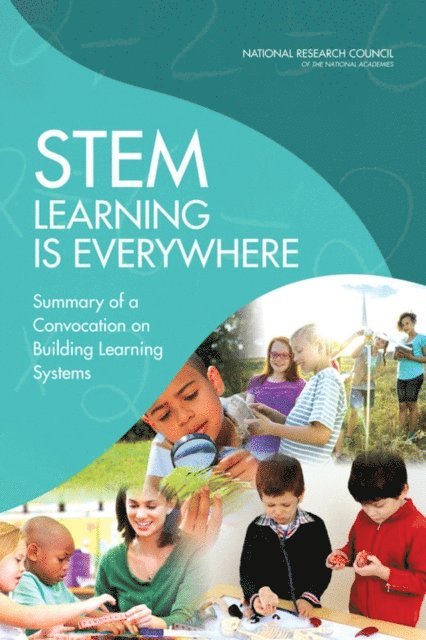
Science, technology, engineering, and mathematics (STEM) permeate the modern world. The jobs people do, the foods they eat, the vehicles in which they travel, the information they receive, the medicines they take, and many other facets of modern life are constantly changing as STEM knowledge steadily accumulates. Yet STEM education in the United States, despite the importance of these subjects, is consistently falling short. Many students are not graduating from high school with the knowledge and capacities they will need to pursue STEM careers or understand STEM-related issues in the workforce or in their roles as citizens. For decades, efforts to improve STEM education have focused largely on the formal education system. Learning standards for STEM subjects have been developed, teachers have participated in STEM-related professional development, and assessments of various kinds have sought to measure STEM learning. But students do not learn about STEM subjects just in school. Much STEM learning occurs out of school—in organized activities such as afterschool and summer programs, in institutions such as museums and zoos, from the things students watch or read on television and online, and during interactions with peers, parents, mentors, and role models.
To explore how connections among the formal education system, afterschool programs, and the informal education sector could improve STEM learning, a committee of experts from these communities and under the auspices of the Teacher Advisory Council of the National Research Council, in association with the California Teacher Advisory Council organized a convocation that was held in February 2014. Entitled "STEM Learning Is Everywhere: Engaging Schools and Empowering Teachers to Integrate Formal, Informal, and Afterschool Education to Enhance Teaching and Learning in Grades K-8," the convocation brought together more than 100 representatives of all three sectors, along with researchers, policy makers, advocates, and others, to explore a topic that could have far-reaching implications for how students learn about STEM subjects and how educational activities are organized and interact. This report is the summary of that meeting. STEM Learning is Everywhere explores how engaging representatives from the formal, afterschool, and informal education sectors in California and from across the United States could foster more seamless learning of STEM subjects for students in the elementary and middle grades. The report also discusses opportunities for STEM that may result from the new expectations of the Next Generation Science Standards and the Common Core Standards for Mathematics and Language Arts.
442 kr
Läs direkt efter köp
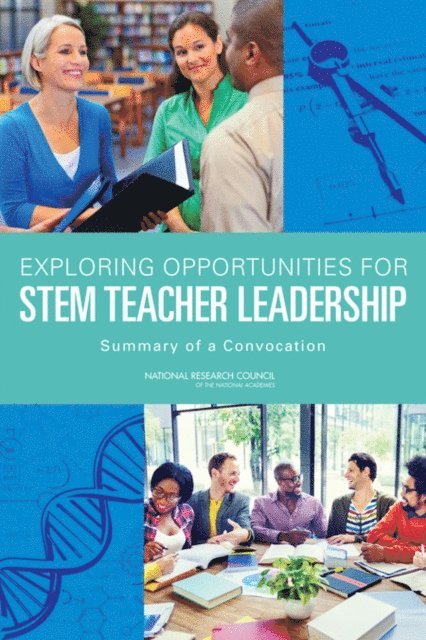
Many national initiatives in K-12 science, technology, engineering, and mathematics (STEM) education have emphasized the connections between teachers and improved student learning. Much of the discussion surrounding these initiatives has focused on the preparation, professional development, evaluation, compensation, and career advancement of teachers. Yet one critical set of voices has been largely missing from this discussion - that of classroom teachers themselves. To explore the potential for STEM teacher leaders to improve student learning through involvement in education policy and decision making, the National Research Council held a convocation in June 2014 entitled "One Year After Science''s Grand Challenges in Education: Professional Leadership of STEM Teachers through Education Policy and Decision Making". This event was structured around a special issue of Science magazine that discussed 20 grand challenges in science education. The authors of three major articles in that issue - along with Dr. Bruce Alberts, Science''s editor-in-chief at the time - spoke at the convocation, updating their earlier observations and applying them directly to the issue of STEM teacher leadership. The convocation focused on empowering teachers to play greater leadership roles in education policy and decision making in STEM education at the national, state, and local levels. Exploring Opportunities for STEM Teacher Leadership is a record of the presentations and discussion of that event. This report will be of interest to STEM teachers, education professionals, and state and local policy makers.
694 kr
Läs direkt efter köp
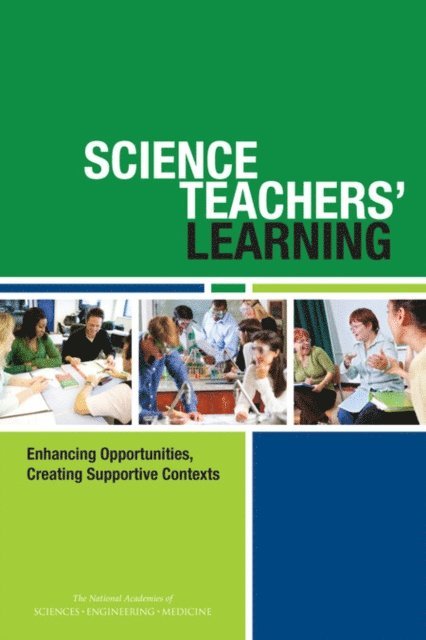
Currently, many states are adopting the Next Generation Science Standards (NGSS) or are revising their own state standards in ways that reflect the NGSS. For students and schools, the implementation of any science standards rests with teachers. For those teachers, an evolving understanding about how best to teach science represents a significant transition in the way science is currently taught in most classrooms and it will require most science teachers to change how they teach.
That change will require learning opportunities for teachers that reinforce and expand their knowledge of the major ideas and concepts in science, their familiarity with a range of instructional strategies, and the skills to implement those strategies in the classroom. Providing these kinds of learning opportunities in turn will require profound changes to current approaches to supporting teachers'' learning across their careers, from their initial training to continuing professional development.
A teacher''s capability to improve students'' scientific understanding is heavily influenced by the school and district in which they work, the community in which the school is located, and the larger professional communities to which they belong. Science Teachers'' Learning provides guidance for schools and districts on how best to support teachers'' learning and how to implement successful programs for professional development. This report makes actionable recommendations for science teachers'' learning that take a broad view of what is known about science education, how and when teachers learn, and education policies that directly and indirectly shape what teachers are able to learn and teach.
The challenge of developing the expertise teachers need to implement the NGSS presents an opportunity to rethink professional learning for science teachers. Science Teachers'' Learning will be a valuable resource for classrooms, departments, schools, districts, and professional organizations as they move to new ways to teach science.
1 186 kr
Tillfälligt slut
463 kr
Tillfälligt slut
352 kr
Tillfälligt slut
307 kr
Tillfälligt slut
296 kr
Tillfälligt slut
474 kr
Tillfälligt slut