Helen Tangires - Böcker
Visar alla böcker från författaren Helen Tangires. Handla med fri frakt och snabb leverans.
3 produkter
3 produkter
732 kr
Tillfälligt slut
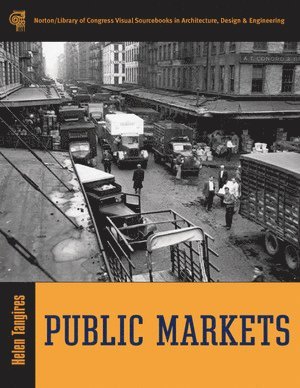
The public market is a worldwide urban phenomenon with a tradition as old as cities themselves, continuing today in the greenmarket movement. Surveyed here by type are open-air marketplaces, street markets, street vendors, markets that occupy the ground floor of public buildings, open-sided sheds situated in the middle of wide streets, and fully-enclosed market houses, as well as central markets and wholesale markets, whose complex of buildings and streets encompass entire market districts. Special features include an essay on the nearly two-hundred-year history of the Fulton Fish Market in New York City and a section on the people and activities that make the public-market system work—from the farmers and fishermen who travel before dawn to the sanitation staff who clean up at the end of the day. Public markets persist as an enduring and universal form of urban food marketing and distribution, and a strong sense of tradition informs their architecture, design, and engineering.
684 kr
Skickas inom 11-20 vardagar
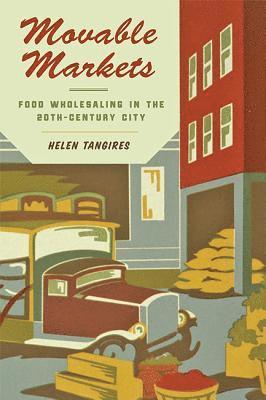
The untold story of America's wholesale food business.In nineteenth-century America, municipal deregulation of the butcher trade and state-incorporated market companies gave rise to a flourishing wholesale trade. In Movable Markets, Helen Tangires describes the evolution of the American wholesale marketplace for fresh food, from its development as a bustling produce district in the heart of the city to its current indiscernible place in food industrial parks on the urban periphery.Tangires follows the middlemen, those intermediaries who became functional necessities as the railroads accelerated the process of delivering perishable food to the city. Tracing their rise and decline in the wake of a deregulated food economy, she asks: How did these people, who occupied such key roles as food distributors and suppliers to the retail trade, end up exiled to urban outskirts? Moving into the early twentieth century, she explains how progressive city planners and agricultural economists responded to anxieties about the high cost of living, traffic congestion, and disruptions in the food supply by questioning the centrality, aging infrastructure, and organizational structure of wholesale markets. Tangires combines economic and cultural history by analyzing popular literature, innovative scholarship, and USDA publications. Detailing the legal, physical, and organizational means behind the complex exodus of food wholesaling from the urban core, Tangires also reveals how the trade adjusted to life beyond the city limits as it created new channels of distribution, product lines, and markets. Readers interested in US history, city and regional planning history, food history, and public policy, as well as anyone curious about the disappearance of the central produce district as a major component of the city, will find Movable Markets a fascinating read.
525 kr
Skickas inom 7-10 vardagar
Originally published in 2003. In Public Markets and Civic Culture in Nineteenth-Century America Helen Tangires examines the role of the public marketplace—social and architectural—as a key site in the development of civic culture in America. More than simply places for buying and selling food, Tangires explains, municipally owned and operated markets were the common ground where citizens and government struggled to define the shared values of the community. Public markets were vital to civic policy and reflected the profound belief in the moral economy—the effort on the part of the municipality to maintain the social and political health of its community by regulating the ethics of trade in the urban marketplace for food. Tangires begins with the social, architectural, and regulatory components of the public market in the early republic, when cities embraced this ancient system of urban food distribution. By midcentury, the legalization of butcher shops in New York City and the incorporation of market house companies in Pennsylvania challenged the system and hastened the deregulation of this public service. Some cities demolished their marketing facilities or loosened restrictions on the food trades in an effort to deal with the privatization movement. However, several decades of experience with dispersed retailers, suburban slaughterhouses, and food transported by railroad proved disastrous to the public welfare, prompting cities and federal agencies to reclaim this urban civic space.