
Helena Woodard – författare
Visar alla böcker från författaren Helena Woodard. Handla med fri frakt och snabb leverans.
4 produkter
4 produkter

Inbunden, Engelska, 1999
1 172 kr
Skickas inom 10-15 vardagar
The eighteenth century was a time of great cultural change in Britain. It was a period marked by expeditions to the New World, Africa, and the Orient, and these voyages were reflected in the travel literature of the era. It was also a period in which seventeenth-century empiricism and the scientific method became dominant, and in which society became increasingly secular. Fundamental to the eighteenth-century worldview was the notion of the Great Chain of Being, in which all creatures and their Creator stood in a hierarchical relationship with one another. The years from 1660 to 1833 witnessed both Britain's participation in slavery and the appropriation of the Great Chain of Being by social anthropologists and political leaders. With the rise of the slave trade, blacks were brought to Britain against their will, where they were enslaved. At the same time, intellectuals of the period tried to place these slaves within the hierarchical frame provided by the Great Chain of Being.The presence of slavery in Britain aroused much debate among blacks and whites alike, and the literature of the eighteenth century reflects that debate. This book examines representations of blacks in eighteenth-century British literature to illuminate the discussions about race during that period. The volume begins with a discussion of Alexander Pope's popularization of the Great Chain of Being in his Essay on Man, which argued the universal ranking of humanity and which provided an intellectual foundation for slavery. It then examines the works of several white canonical writers, including Defoe, Addison and Steele, Swift, and Sterne, to see how blacks are portrayed in their works. The volume also examines works by African-British writers, such as James Albert Ukawsaw Gronniosaw and Quobna Ottobah Cugoano, who expose exclusionary practices among some theologians; Ignatius Sancho, whose Letters show how slaves were taught to be grateful, and how those lacking gratitude were considered inhuman; and Olaudah Equiano, who shows how racial hierarchies function as a literary trope, particularly in travel literature. The final chapter, on The History of Mary Prince, examines the interaction of race and gender.
Inbunden, Engelska, 2019
1 231 kr
Skickas inom 10-15 vardagar
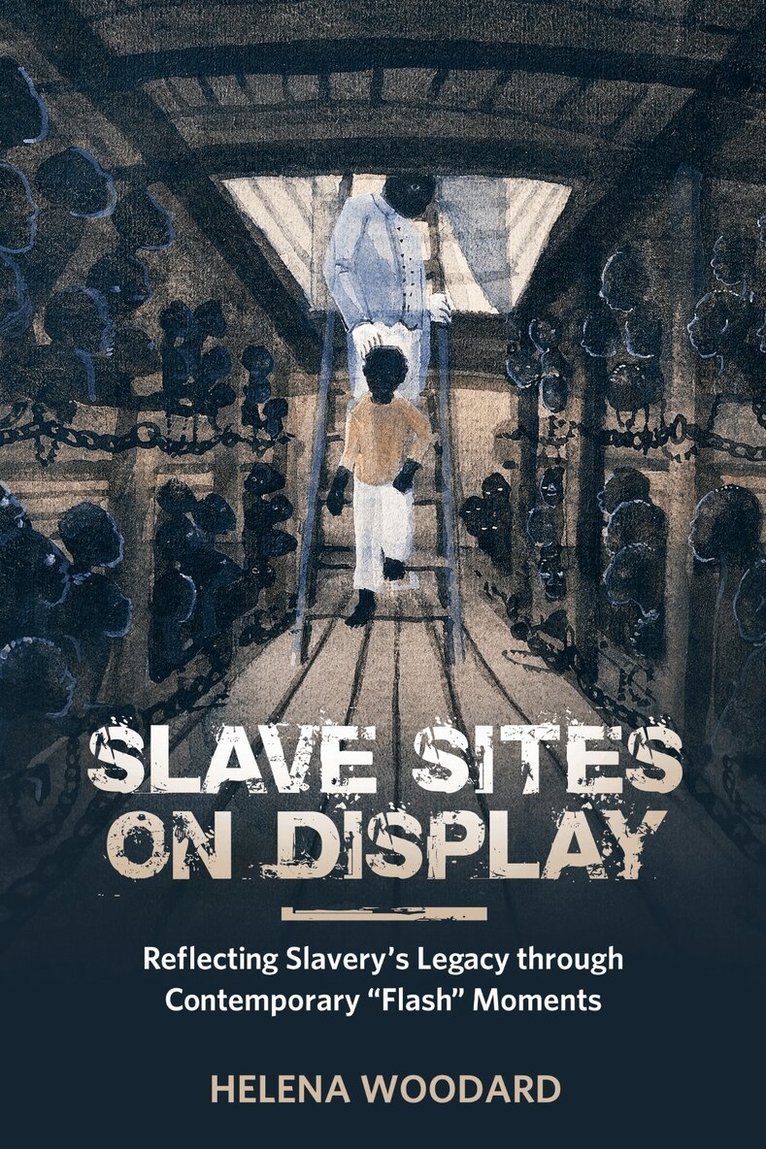
At Senegal’s House of Slaves, Barack Obama’s presidential visit renewed debate about authenticity, belonging, and the myth of return—not only for the president, but also for the slave fort itself. At the African Burial Ground National Monument in New York, up to ten thousand slave decedents lie buried beneath the area around Wall Street, which some of them helped to build and maintain. Their likely descendants, whose activism produced the monument located at that burial site, now occupy its margins. The Bench by the Road slave memorial at Sullivan’s Isle near Charleston reflects the region’s centrality in slavery’s legacy, a legacy made explicit when the murder of nine black parishioners by a white supremacist led to the removal of the Confederate flag from the state’s capitol grounds. Helena Woodard considers whether the historical slave sites that have been commemorated in the global community represent significant progress for the black community or are simply an unforgiving mirror of the present.In Slave Sites on Display: Reflecting Slavery’s Legacy through Contemporary "Flash" Moments, Woodard examines how select modern-day slave sites can be understood as contemporary "flash" moments: specific circumstances and/or seminal events that bind the past to the present. Woodard exposes the complex connections between these slave sites and the impact of race and slavery today. Though they differ from one another, all of these sites are displayed as slave memorials or monuments and function as high-profile tourist attractions. They interpret a story about the history of Atlantic slavery relative to the lived experiences of the diaspora slave descendants that organize and visit the sites.
Häftad, Engelska, 2019
382 kr
Skickas inom 10-15 vardagar
At Senegal’s House of Slaves, Barack Obama’s presidential visit renewed debate about authenticity, belonging, and the myth of return—not only for the president, but also for the slave fort itself. At the African Burial Ground National Monument in New York, up to ten thousand slave decedents lie buried beneath the area around Wall Street, which some of them helped to build and maintain. Their likely descendants, whose activism produced the monument located at that burial site, now occupy its margins. The Bench by the Road slave memorial at Sullivan’s Isle near Charleston reflects the region’s centrality in slavery’s legacy, a legacy made explicit when the murder of nine black parishioners by a white supremacist led to the removal of the Confederate flag from the state’s capitol grounds. Helena Woodard considers whether the historical slave sites that have been commemorated in the global community represent significant progress for the black community or are simply an unforgiving mirror of the present.In Slave Sites on Display: Reflecting Slavery’s Legacy through Contemporary "Flash" Moments, Woodard examines how select modern-day slave sites can be understood as contemporary "flash" moments: specific circumstances and/or seminal events that bind the past to the present. Woodard exposes the complex connections between these slave sites and the impact of race and slavery today. Though they differ from one another, all of these sites are displayed as slave memorials or monuments and function as high-profile tourist attractions. They interpret a story about the history of Atlantic slavery relative to the lived experiences of the diaspora slave descendants that organize and visit the sites.

Häftad, Engelska, 2023
137 kr
Tillfälligt slut