Hendrik Opdebeeck – författare
Visar alla böcker från författaren Hendrik Opdebeeck. Handla med fri frakt och snabb leverans.
7 produkter
Confiance réflexive et institutionnalisme
Des théories libérales du choix rationnel à la gouvernance du fait social monétaire
Av Benjamin Six, Gabriel Fragnière m. fl.
Häftad, 2013
994 kr
Lägg i varukorg
Les sorties de crise économique se font sans réelle remise en question de l’efficacité du système néo-libéral. Ce dernier bénéficie en effet d’une puissante « confiance du marché », dont l’aspect routinier opère une incapacité institutionnelle de redéfinition démocratique de son programme. Mais la …
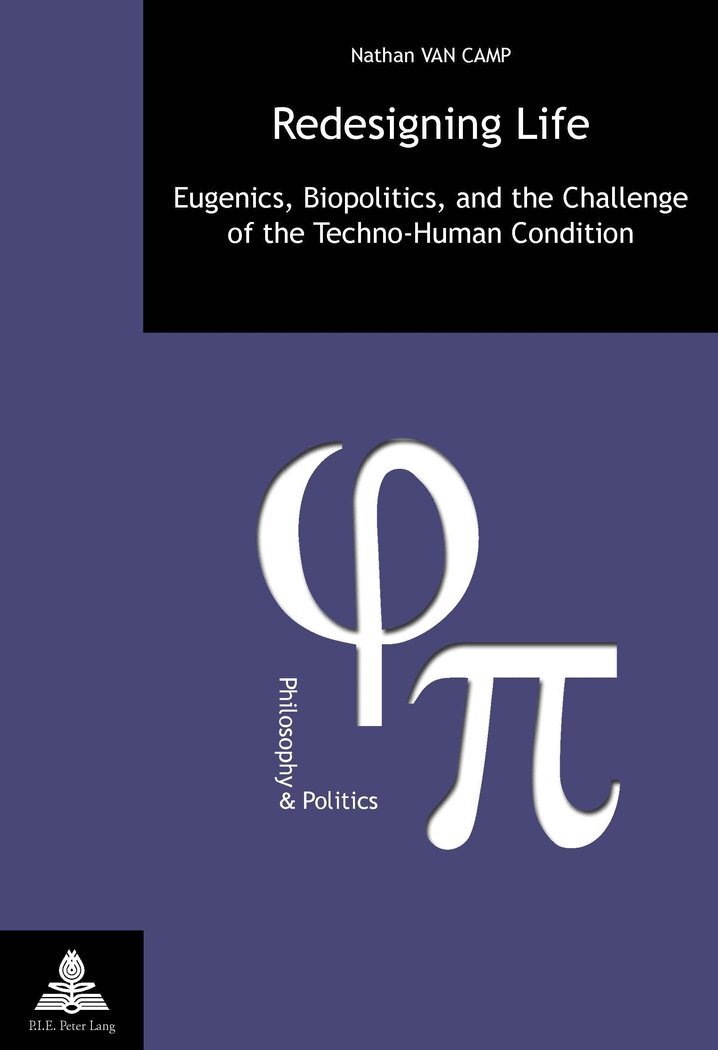
Redesigning Life
Eugenics, Biopolitics, and the Challenge of the Techno-Human Condition
Av Nathan Van Camp, Gabriel Fragnière m. fl.
Häftad, 2015
977 kr
Lägg i varukorg
The emerging development of genetic enhancement technologies has recently become the focus of a public and philosophical debate between proponents and opponents of a liberal eugenics – that is, the use of these technologies without any overall direction or governmental control. Inspired by …
Point of Philosophy
An Introduction for the Human Sciences
Av Ludo Abicht, Hendrik Opdebeeck m. fl.
Häftad, 2015
894 kr
Lägg i varukorg
The core questions of philosophy about the origin of the world and people, the distinction between good and evil, and the meaning of life – these questions keep us all busy. In this introduction to philosophy, these three questions lead our journey. You want to understand the world and man. Then …
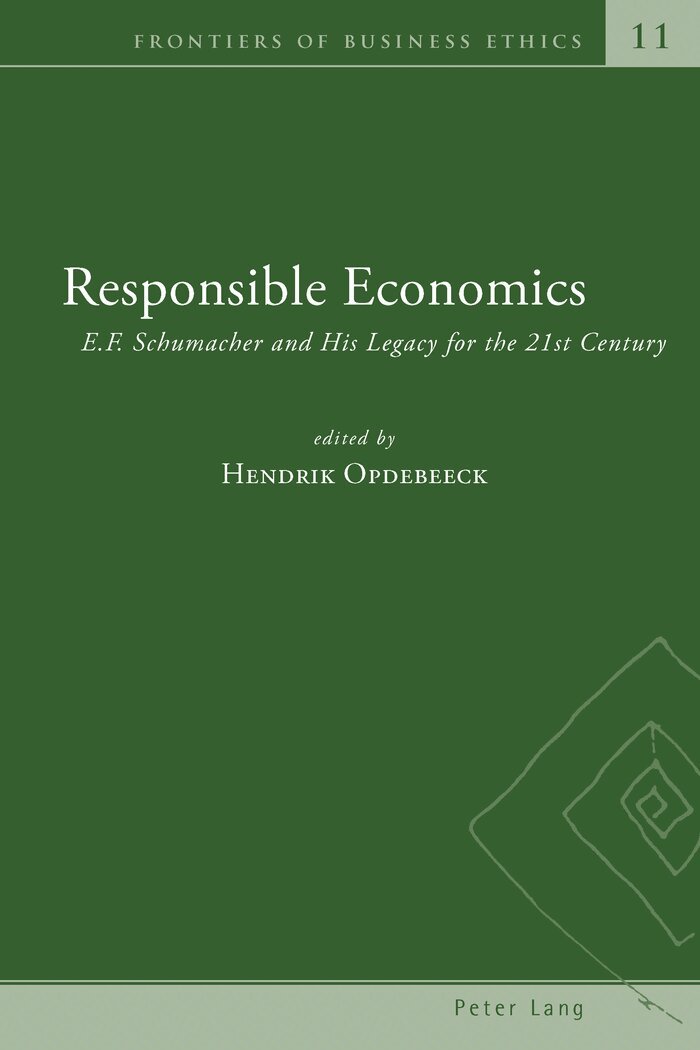
Responsible Economics
E.F. Schumacher and His Legacy for the 21st Century
Häftad, 2013
804 kr
Lägg i varukorg
The centenary of E.F. Schumacher’s birth (1911-1977) offered an urgent opportunity to revisit his work and life. Against the background of the crisis at the beginning of this century, reconsidering Schumacher’s Small is Beautiful or frugality paradigm makes clear that advances in responsible …
cosmodémocratie
Un principe de gouvernance pour la société technologique et mondialisée
Av René Ngambele Nsasay, Gabriel Fragnière m. fl.
Häftad, 2008
1115 kr
Lägg i varukorg
Au moment où l’économie se globalise, où les cultures se mélangent et où le tracé des frontières s’estompe, sous l’effet conjugué de la technique et de la mondialisation, la politique, c’est-à-dire notre manière d’organiser la Cité, n’a pas fondamentalement changé. Les principes de territorialité …
Variations sur la confiance
Concepts et enjeux au sein des théories de la gouvernance
Av Claire Lobet-Maris, Gabriel Fragnière m. fl.
Häftad, 2009
866 kr
Lägg i varukorg
Crises et abus de confiance, motions de confiance, confiance retrouvée... Il y a peu de notions en sciences humaines qui soient à la fois si fondamentales à l’organisation et à l’action en société et si fuyantes quand il s’agit de les conceptualiser, de les saisir empiriquement et d’en comprendre …
Frugality
Rebalancing Material and Spiritual Values in Economic Life
Av Luk Bouckaert, Hendrik Opdebeeck m. fl.
Häftad, 2008
731 kr
Tillfälligt slut
This book examines frugality as an ideal and an ‘art de vivre’ which implies a low level of material consumption and a simple lifestyle, to open the mind for spiritual goods as inner freedom, social peace and justice or the quest for God or ‘ultimate reality’. By rational choice we can develop a …