Henri Veldhuis - Böcker
Visar alla böcker från författaren Henri Veldhuis. Handla med fri frakt och snabb leverans.
3 produkter
3 produkter
1 061 kr
Skickas inom 10-15 vardagar
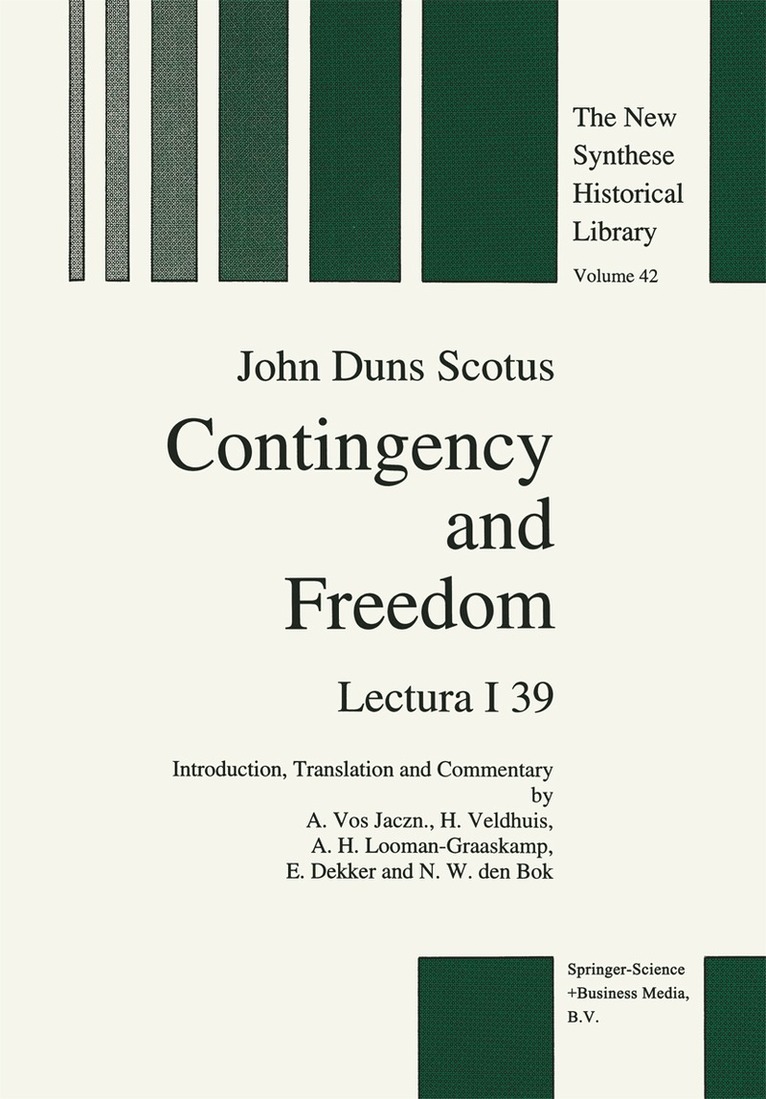
This study provides an English translation of "Lectura" I 39, a key text of the medieval theologian and philosopher John Duns Scotus (1266-1308), together with an introduction and a commentary. In the history of thought, Scotus is the first scholar to develop a consistent analysis of the basic Christian notions of "contingency" and "freedom". This analysis can be found in his important early work, "Lectura" I 39, in which the question of whether God has knowledge of future contingents is discussed. Reality is contingent, which means that reality in its factual shape could have been otherwise; God does not rule by determinism nor is He ruled by it - nor is man, neither is their relationship. This fundamental insight made Christian thought turn away from the ancient conception that everything is (at bottom) necessary. This text is suitable for graduate students, philosophers and theologians.
Del 65 - Theologische Bibliothek Töpelmann
Versiegeltes Buch
Der Naturbegriff in Der Theologie J. G. Hamanns (1730-1788)
Inbunden, Tyska, 1994
2 757 kr
Skickas inom 7-10 vardagar
1 061 kr
Skickas inom 10-15 vardagar
This study gives the first English translation of Lectura I 39, a key text of the medieval theologian and philosopher John Duns Scotus (1266--1308), together with an introduction and a commentary. In the history of thought, Scotus is the first scholar to develop a consistent analysis of the basic Christian notions of contingency and freedom. This analysis can be found in his important early work, Lectura I 39, in which the question of whether God has knowledge of future contingents is discussed. Reality is contingent, which means that reality in its factual shape could have been otherwise; God does not rule by determinism nor is He ruled by it -- nor is man, neither is their relationship. This fundamental insight made Christian thought turn away from the ancient conception that everything is (at bottom) necessary. For graduate students, philosophers and theologians.