Henry Bienen – författare
Visar alla böcker från författaren Henry Bienen. Handla med fri frakt och snabb leverans.
8 produkter
8 produkter
673 kr
Skickas inom 10-15 vardagar
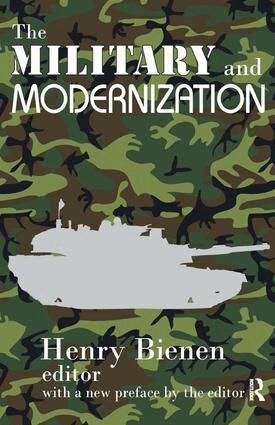
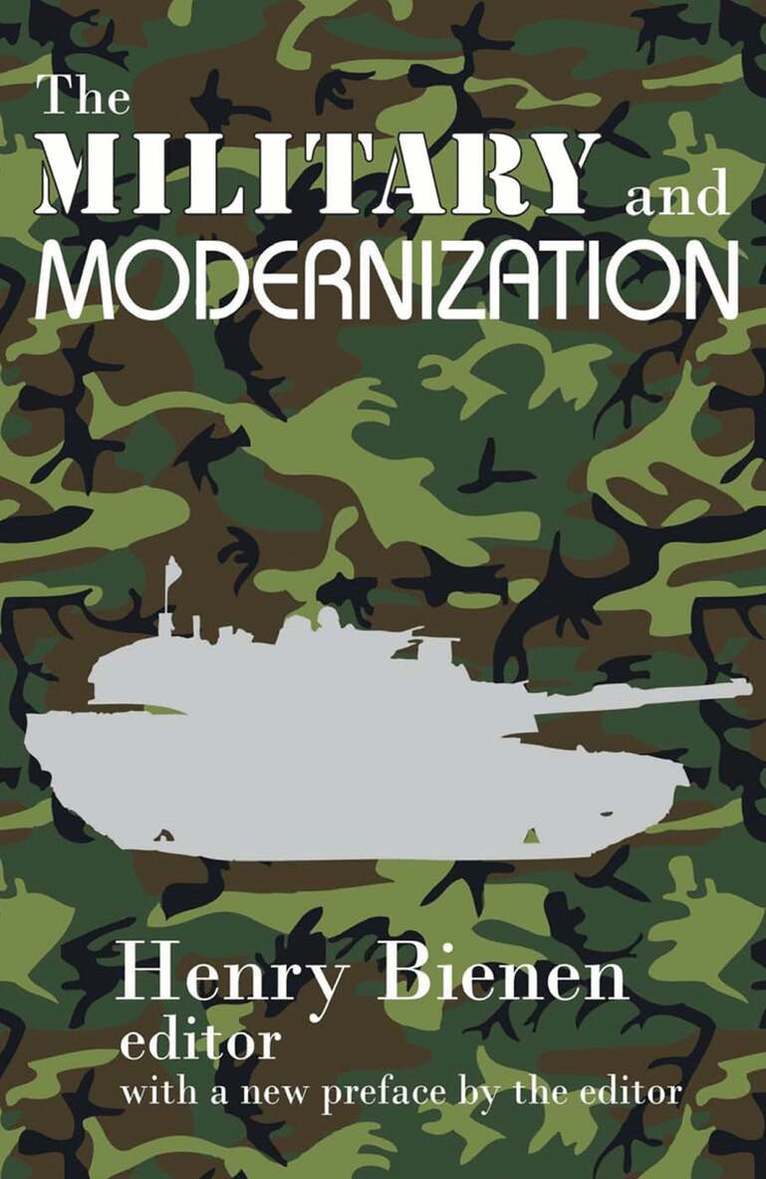
There is a growing body of work on the military in developing countries. Few studies, have explored in-depth questions concerning the social origins of officers and enlisted men or trace career patterns within the armed forces of the developing world. With the exception of Latin America, it has been rare for a study to assess the performance of ruling, or non-ruling, militaries for political development and modernization of their societies. This oversight is exactly what Henry Bienen addresses in this collection.The literature on militaries in developing countries has both widened and deepened. We now have the information needed in order to come to grips with military elites and no longer need to treat militaries in non-Western countries in undifferentiated fashion. Modernization and political development themselves have become "issues" through concern with new states. Once attention was focused on the study of developing areas it became necessary to consider the military as the maker of coups and the ruler of states and not merely as an important interest group in society.The role of militaries as interest groups in developing areas has been neglected. There has been little evaluation of actual performance of ruling military regimes. Thus, although attention has been paid to military institutions since the 1960s, the debate over the role of the military as a modernizer in Asia, Africa, and Latin America has taken place in an empirical vacuum. It has been a debate to some extent uninformed by the kind of data gathering that has taken place in the study of militaries in advanced countries. The number of works devoted to the military and development makes it timely to assess, as this work does, the military in developing areas.Henry Bienen is president of Northwestern University. Prior to that appointment, he was the James S. McDonnell Distinguished University Professor and dean of the Woodrow Wilson School of Public and International Affairs at Princeton University. Bienen is the author of numerous books, including Kenya, the Politics of Participation and Control, Armed Forces, Conflict, and Change in Africa, and Voices of Power: World Leaders Speak.
1 336 kr
Skickas inom 10-15 vardagar
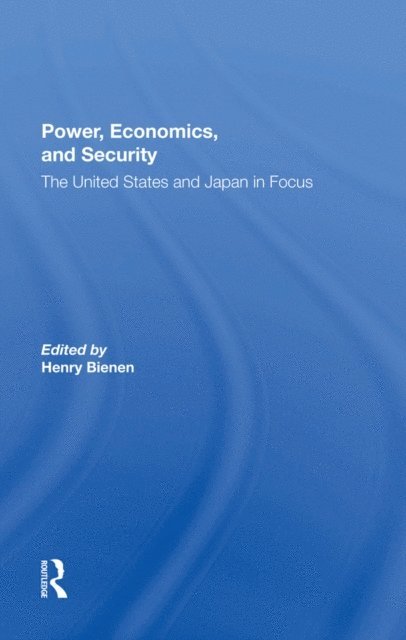
This volume is dedicated to the memory of Klaus E. Knorr. Thisis fitting for a number of reasons. The collaborative work herewas done under the auspices of the Center of International Studiesat Princeton University, which Klaus Knorr directed from 1961until 1968. The concerns of this book are to analyze the relationshipsamong economic and military power and national security; to explorethe ways economic power and economic decline relate to internationalhegemony; and to examine our understanding of concepts such aspower, security, and burden-sharing. These concerns ranked highon Klaus Knorr's research agenda during his productive and fruitfullife.
441 kr
Skickas inom 10-15 vardagar
In this study, international scholars provide an in-depth exploration of the forces shaping the balance of power in the international political arena. The contributors examine the changing relationships among economic, military, and political bases of power as they define national security. U.S. hegemony and its subsequent decline as well as the rise of Japan as a world economic power are detailed.
595 kr
Skickas inom 10-15 vardagar
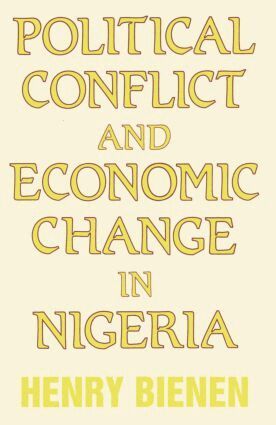
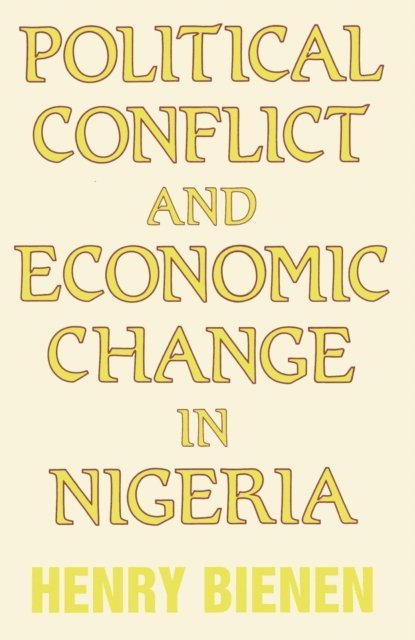
First Published in 1985. In the early morning hours of 31 December 1984, the Nigerian military once again removed an elected head of state. A coup carried out by senior military officers ended the Second Republic which had been ushered in by elections at the end of 1979. Political Conflict and Economic Change in Nigeria is based on articles and essays written between 1978 and 1983.
2 113 kr
Skickas inom 10-15 vardagar
There is a growing body of work on the military in developing countries. Few studies, have explored in-depth questions concerning the social origins of officers and enlisted men or trace career patterns within the armed forces of the developing world. With the exception of Latin America, it has been rare for a study to assess the performance of ruling, or non-ruling, militaries for political development and modernization of their societies. This oversight is exactly what Henry Bienen addresses in this collection.The literature on militaries in developing countries has both widened and deepened. We now have the information needed in order to come to grips with military elites and no longer need to treat militaries in non-Western countries in undifferentiated fashion. Modernization and political development themselves have become "issues" through concern with new states. Once attention was focused on the study of developing areas it became necessary to consider the military as the maker of coups and the ruler of states and not merely as an important interest group in society.The role of militaries as interest groups in developing areas has been neglected. There has been little evaluation of actual performance of ruling military regimes. Thus, although attention has been paid to military institutions since the 1960s, the debate over the role of the military as a modernizer in Asia, Africa, and Latin America has taken place in an empirical vacuum. It has been a debate to some extent uninformed by the kind of data gathering that has taken place in the study of militaries in advanced countries. The number of works devoted to the military and development makes it timely to assess, as this work does, the military in developing areas.Henry Bienen is president of Northwestern University. Prior to that appointment, he was the James S. McDonnell Distinguished University Professor and dean of the Woodrow Wilson School of Public and International Affairs at Princeton University. Bienen is the author of numerous books, including Kenya, the Politics of Participation and Control, Armed Forces, Conflict, and Change in Africa, and Voices of Power: World Leaders Speak.
2 053 kr
Skickas inom 10-15 vardagar
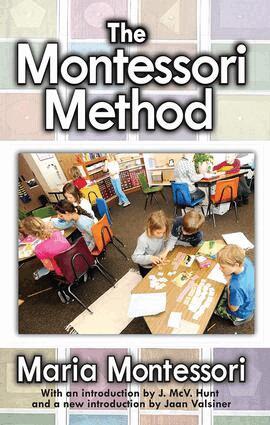
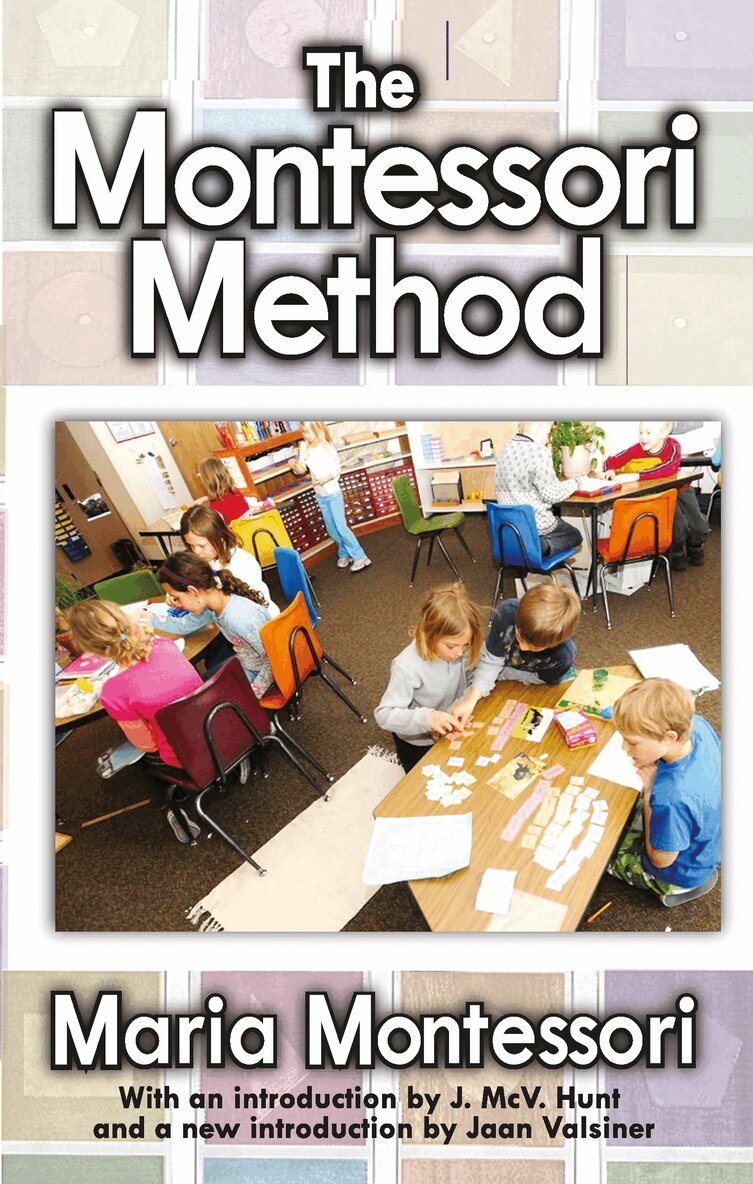
Maria Montessori's method of educating children, which she details in this book, is based on a conception of liberty for the pupil; it entails formal training of separate sensory, motor, and mental capacities; and leads to rapid and substantial mastery of the elements of reading, writing, and arithmetic. The Montessori Method is important because it springs from a combination of sympathy and intuition, social outlook, scientific training, intensive study of educational problems and the author's unusual experience as a teacher and educational leader.Following opening statements from J. McV. Hunt and Jaan Valsiner, Maria Montessori discusses topics including pedagogical methods used in the children's houses, discipline, diet, gymnastics, manual labor, education of the senses, intellectual education, methods of teaching reading and writing, language in childhood, and teaching of numeration.This classic volume in the education of children takes on urgent relevance for parents, teachers, and administrators in all parts of our society. The suburban mother seeking an environment of "structured freedom" for an imaginative, quick-learning pre-schooler; the educator jolted into awareness that slum children are irreparably handicapped by cultural impoverishment before the age of six; explorers of "new" techniques of teaching reading, of programmed instruction and learning by conditioning and reinforcement-by-approval all these are instructed by Maria Montessori's theory and the reports of her work in the Casa dei Bambini in the slum quarter of Rome.
357 kr
Skickas inom 10-15 vardagar
First Published in 1985. In the early morning hours of 31 December 1984, the Nigerian military once again removed an elected head of state. A coup carried out by senior military officers ended the Second Republic which had been ushered in by elections at the end of 1979. Political Conflict and Economic Change in Nigeria is based on articles and essays written between 1978 and 1983.
693 kr
Skickas inom 10-15 vardagar
Maria Montessori's method of educating children, which she details in this book, is based on a conception of liberty for the pupil; it entails formal training of separate sensory, motor, and mental capacities; and leads to rapid and substantial mastery of the elements of reading, writing, and arithmetic. The Montessori Method is important because it springs from a combination of sympathy and intuition, social outlook, scientific training, intensive study of educational problems and the author's unusual experience as a teacher and educational leader.Following opening statements from J. McV. Hunt and Jaan Valsiner, Maria Montessori discusses topics including pedagogical methods used in the children's houses, discipline, diet, gymnastics, manual labor, education of the senses, intellectual education, methods of teaching reading and writing, language in childhood, and teaching of numeration.This classic volume in the education of children takes on urgent relevance for parents, teachers, and administrators in all parts of our society. The suburban mother seeking an environment of "structured freedom" for an imaginative, quick-learning pre-schooler; the educator jolted into awareness that slum children are irreparably handicapped by cultural impoverishment before the age of six; explorers of "new" techniques of teaching reading, of programmed instruction and learning by conditioning and reinforcement-by-approval—all these are instructed by Maria Montessori's theory and the reports of her work in the Casa dei Bambini in the slum quarter of Rome.