Henry Daniel - Böcker
Visar alla böcker från författaren Henry Daniel. Handla med fri frakt och snabb leverans.
3 produkter
3 produkter
1 046 kr
Skickas inom 7-10 vardagar
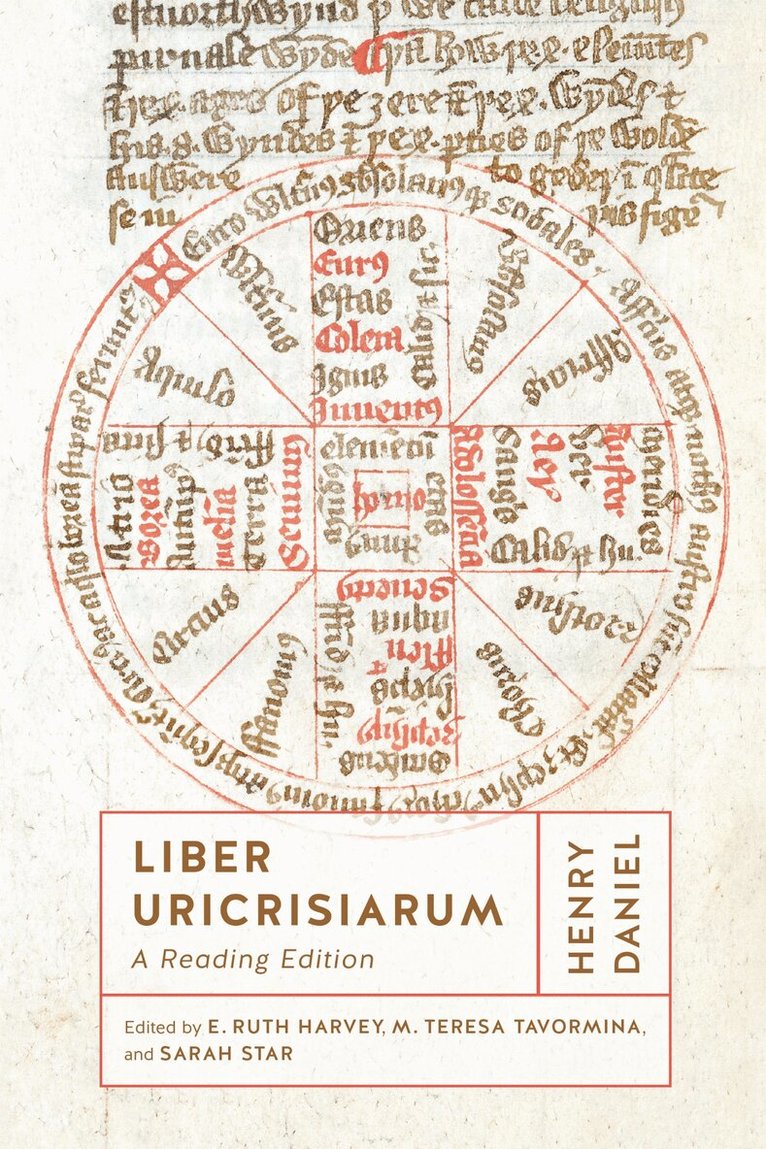
Henry Daniel’s Liber Uricrisiarum is the earliest known work of academic medicine written in Middle English, presented here for the first time in a complete edition. Working in the late 1370s, Daniel combined authoritative medicine from written sources with his own personal experience, creating a text that stands out for its linguistic originality, intellectual scope, and wide circulation. Extant in over three dozen manuscript witnesses and two early modern print copies, Liber Uricrisiarum describes medieval humoral theory, anatomy, physiology, disease, medical astronomy, reproductive processes, and more, all within the broader context of uroscopic diagnosis.The introduction situates the text and its author in their medical, intellectual, linguistic, and bibliographic contexts, outlining the uroscopic tradition to which Daniel contributes, and describing the relationships among the many manuscripts containing the Liber Uricrisiarum. This edition presents the Middle English text, with a general glossary, glossary of proper names, and explanatory notes that explain obscure words and phrases and identify Daniel’s sources. It also includes the complete set of diagrams contained in the Royal manuscript; appendices providing the Latin and English versions of the prologue and epilogue; an extensive translation from one of Daniel’s important sources, Isaac Israeli’s De urinis; tables relevant to Daniel’s astronomical measurements; and an analysis of the Royal manuscript’s dialect. Cumulatively, the edition and apparatus introduce readers to an important yet understudied text, the details of which will have significant impact on studies of medieval medicine and science, intellectual history, and Middle English language and literature.
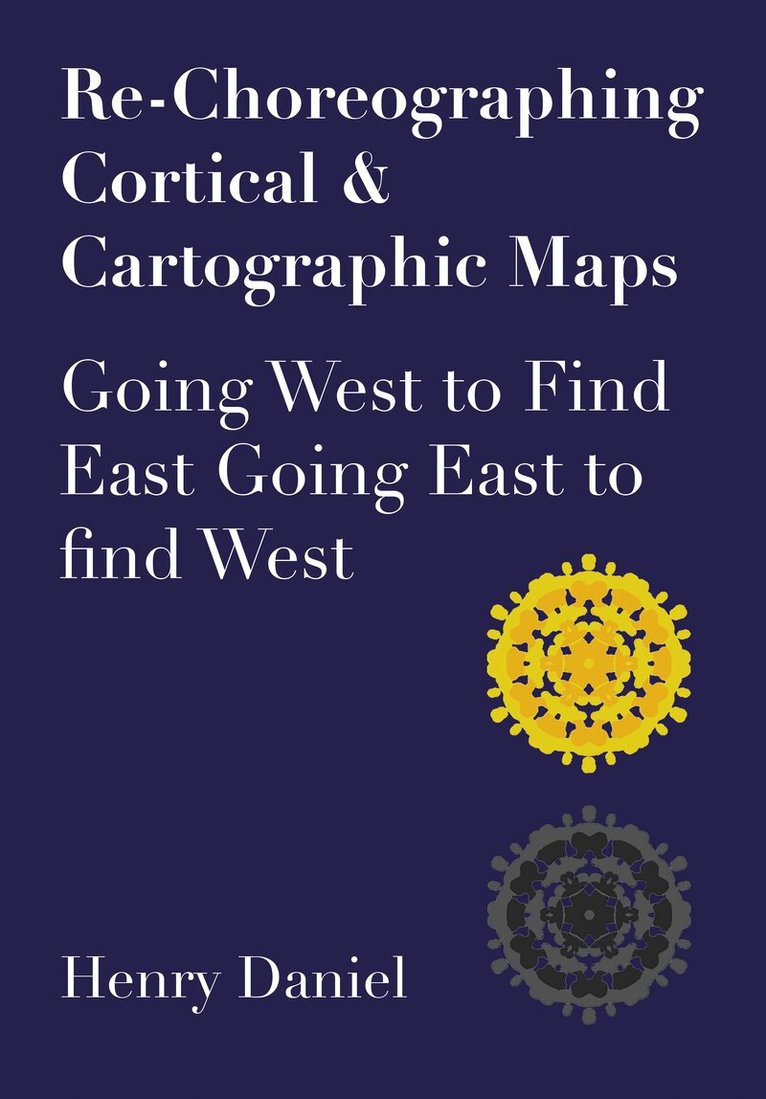
Re-Choreographing Cortical & Cartographic Maps
Going West to Find East Going East to Find West
Inbunden, Engelska, 2022
1 530 kr
Skickas inom 5-8 vardagar
A transdisciplinary approach to practice-as-research, complete with its own elaborate theory of practice and a set of four multi-year-performance research projects through which the theory plays out. Its methodology is at times ethnographic as Henry Daniel deftly inserts himself and his Caribbean West African ancestry into a series of complex cortical and geographic maps, which become choreographic in every sense of the term.The central argument in the book is based on a claim that human beings are cognitively embodied through their own lived experiences of movement through space and time; the spaces we inhabit and the practices we engage in are documented through cortical and cartographic maps. In short, as we inhabit and move through spaces our brains organise our experiences into unique cortical and spatial maps, which eventually determine how we see and deal with, i.e., ‘become’ subjects in a world that we also help create. The argument is that through performance, as a re-cognising and re-membering of these movements, we can claim the knowledge that is in the body as well as in the spaces through which it travels.To demonstrate how the brain organises our experiences of the world according to cartographic (graphically mapping procedures) and cortical (motor, sensory and visual functions) mapping and exploring the impact of this mapping to choreographic practice, considering how maps might be disrupted or altered by change of circumstances. This is illustrated through scientific, creative and reflective approaches to exploring neurological process of embodied experiences, as well as the analysis of projects that have utilized this practice thus far.Audience will include Dance and Performance Studies Scholars; Dancers and Choreographers; Undergraduate and Advanced Students; Researchers
Re-Choreographing Cortical & Cartographic Maps
Going West to Find East Going East to Find West
Häftad, Engelska, 2023
400 kr
Skickas inom 5-8 vardagar
A transdisciplinary approach to practice-as-research, complete with its own elaborate theory of practice and a set of four multi-year-performance research projects through which the theory plays out. Its methodology is at times ethnographic as Henry Daniel deftly inserts himself and his Caribbean West African ancestry into a series of complex cortical and geographic maps, which become choreographic in every sense of the term.The central argument in the book is based on a claim that human beings are cognitively embodied through their own lived experiences of movement through space and time; the spaces we inhabit and the practices we engage in are documented through cortical and cartographic maps. In short, as we inhabit and move through spaces our brains organise our experiences into unique cortical and spatial maps, which eventually determine how we see and deal with, i.e., ‘become’ subjects in a world that we also help create. The argument is that through performance, as a re-cognising and re-membering of these movements, we can claim the knowledge that is in the body as well as in the spaces through which it travels.To demonstrate how the brain organises our experiences of the world according to cartographic (graphically mapping procedures) and cortical (motor, sensory and visual functions) mapping and exploring the impact of this mapping to choreographic practice, considering how maps might be disrupted or altered by change of circumstances. This is illustrated through scientific, creative and reflective approaches to exploring neurological process of embodied experiences, as well as the analysis of projects that have utilized this practice thus far.Audience will include Dance and Performance Studies Scholars; Dancers and Choreographers; Undergraduate and Advanced Students; Researchers