Henry Daniell, Ph.D. – författare
Visar alla böcker från författaren Henry Daniell, Ph.D.. Handla med fri frakt och snabb leverans.
4 produkter
4 produkter
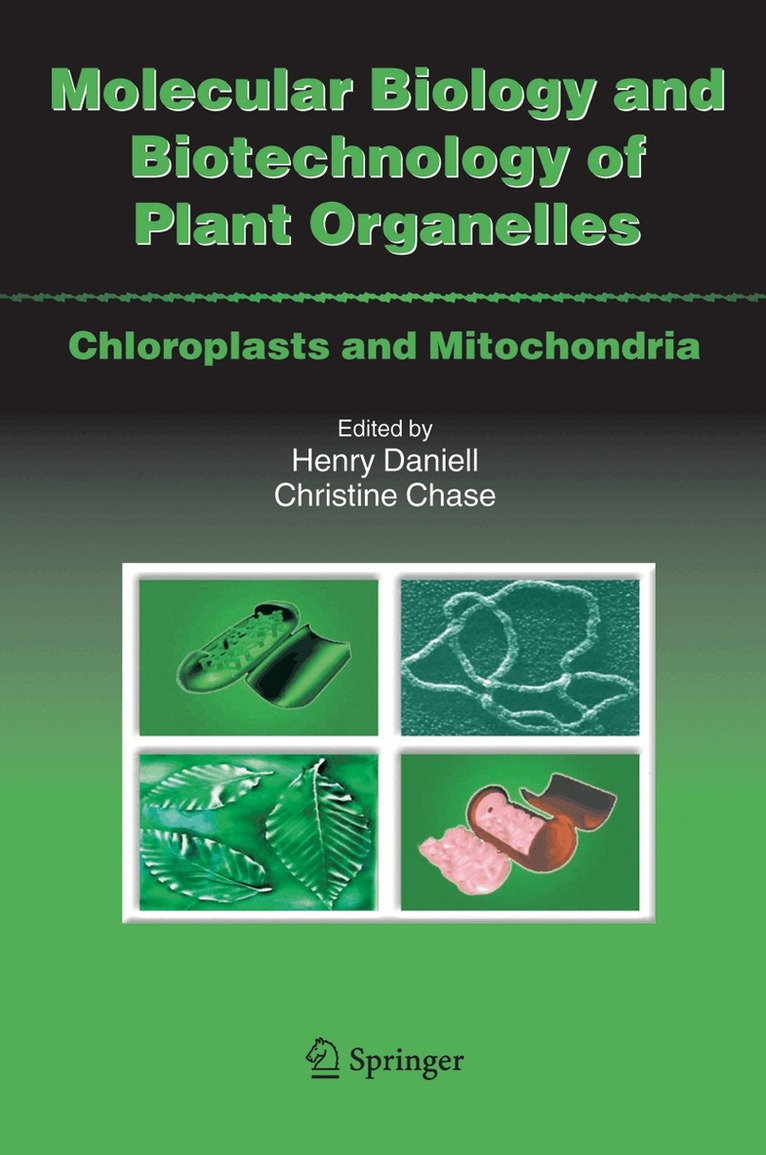
Molecular Biology and Biotechnology of Plant Organelles
Chloroplasts and Mitochondria
Inbunden, Engelska, 2005
2 117 kr
Skickas inom 10-15 vardagar
We have taught plant molecular biology and biotechnology at the undergraduate and graduate level for over 20 years. In the past few decades, the field of plant organelle molecular biology and biotechnology has made immense strides. From the green revolution to golden rice, plant organelles have revolutionized agriculture. Given the exponential growth in research, the problem of finding appropriate textbooks for courses in plant biotechnology and molecular biology has become a major challenge. After years of handing out photocopies of various journal articles and reviews scattered through out the print and electronic media, a serendipitous meeting occurred at the 2002 IATPC World Congress held in Orlando, Florida. After my talk and evaluating several posters presented by investigators from my laboratory, Dr. Jacco Flipsen, Publishing Manager of Kluwer Publishers asked me whether I would consider editing a book on Plant Organelles. I accepted this challenge, after months of deliberations, primarily because I was unsuccessful in finding a text book in this area for many years. I signed the contract with Kluwer in March 2003 with a promise to deliver a camera-ready textbook on July 1, 2004. Given the short deadline and the complexity of the task, I quickly realized this task would need a co-editor. Dr. Christine Chase was the first scientist who came to my mind because of her expertise in plant mitochondria, and she readily agreed to work with me on this book.
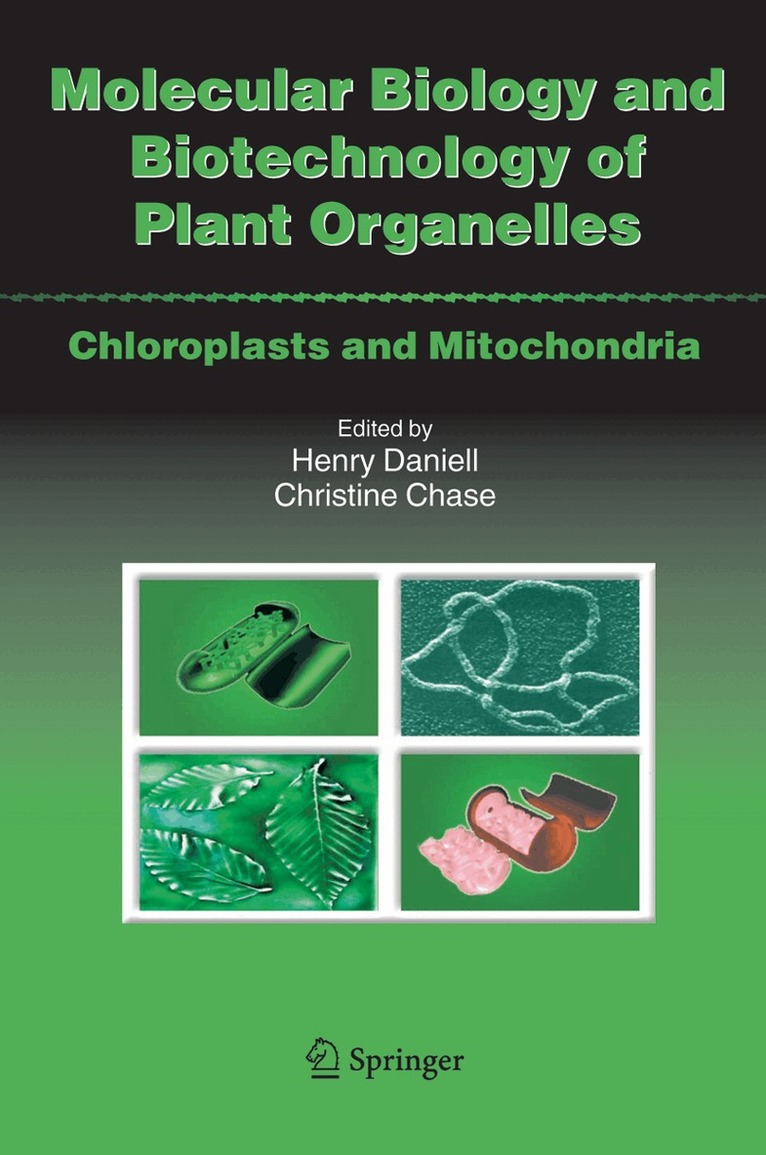
Molecular Biology and Biotechnology of Plant Organelles
Chloroplasts and Mitochondria
Häftad, Engelska, 2010
2 117 kr
Skickas inom 10-15 vardagar
Plant organelles have intrigued biologists since the discovery of their endosymbiontic origin and maternal inheritance. The first application of organelle biotechnology was the role of cytoplasmic male sterility in hybrid seed production and "Green Revolution". In modern times, plant organelles are again leading the way for the creation of genetically modified crops. On a global scale, 75% of GM crops are engineered for herbicide resistance and most of these herbicides target pathways that reside within plastids. Several thousand proteins are imported into chloroplasts that participate in biosynthesis of fatty acids, amino acids, pigments, nucleotides and numerous metabolic pathways including photosynthesis. Thus, from green revolution to golden rice, plant organelles have played a critical role in revolutionizing agriculture. This book details not only basic concepts and current understanding of plant organelle genetics and molecular biology but also focuses on the synergy between basic biology and biotechnology. Forty four authors from nine countries have contributed twenty four chapters containing many figures and tables.Section 1 on organelle genomes and proteomes discusses molecular features of plastid and mitochondrial genomes, evolutinary origins, somatic and sexual inheritance, proteomics, bioinformatics and functional genomics. Section 2 on organelle gene expression and signalling discusses transcription, translation, RNA processing/editing, introns and splicing, protein synthesis, proteolysis, import of proteins into chloroplast and mitochondria and their regulation. Section 3 on organelle biotechnology discusses chloroplast and nuclear genetic engineering for biotic/abiotic stress tolerance, improved fatty acid/amino acid biosynthesis, biopharmaceuticals, biopolymers and biomaterials, cytoplasmic male sterility for hybrid seed production, plant improvement and restoration of fertility. This book is designed to serve as a comprehensive volume and reference guide for teachers, advanced undergraduates and graduate students and researchers in plant molecular biology and biotechnology.
2 117 kr
Skickas inom 10-15 vardagar
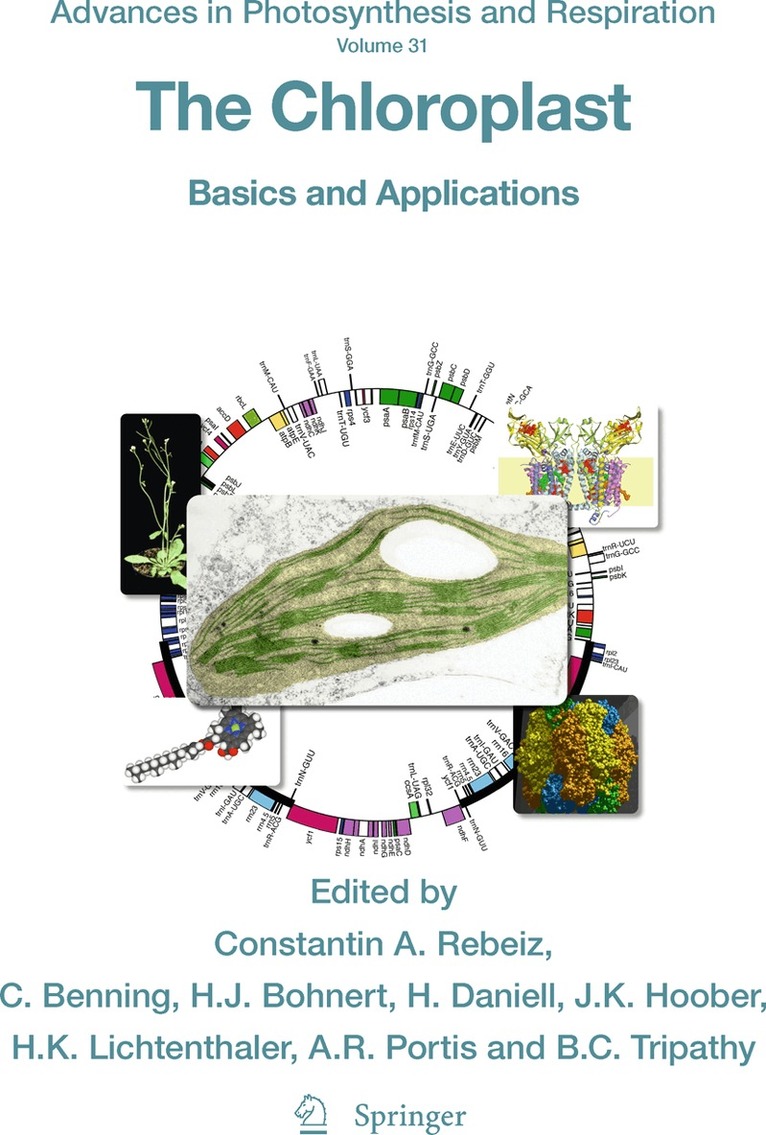
As the industrial revolution that has been based on by higher photosynthetic efficiencies and more utilization of fossil fuels nears its end [R. A. Ker biomass production per unit area. (2007) Even oil optimists expect energy demand to According to Times Magazine (April 30, 2007 outstrip supply. Science 317: 437], the next indus- issue), one fifth of the US corn crop is presently trial revolution will most likely need development converted into ethanol, which is considered to burn of alternate sources of clean energy. In addition cleaner than gasoline and to produce less gre- to the development of hydroelectric power, these house gases. In order to meet a target of 35 billion efforts will probably include the conversion of gallons of ethanol produced by the year 2017, the wind, sea wave motion and solar energy [Solar Day entire US corn crop would need to be turned into in the Sun (2007) Business week, October 15, pp fuel. But crops such as corn and sugarcane cannot 69–76] into electrical energy. The most promising yield enough to produce all the needed fuel. F- of those will probably be based on the full usage thermore, even if all available starch is converted of solar energy. The latter is likely to be plenti- into fuel, it would only produce about 10% of ful for the next 2–3 billion years. Most probably, our gasoline needs [R. F.
2 117 kr
Skickas inom 10-15 vardagar
As the industrial revolution that has been based on by higher photosynthetic efficiencies and more utilization of fossil fuels nears its end [R. A. Ker biomass production per unit area. (2007) Even oil optimists expect energy demand to According to Times Magazine (April 30, 2007 outstrip supply. Science 317: 437], the next indus- issue), one fifth of the US corn crop is presently trial revolution will most likely need development converted into ethanol, which is considered to burn of alternate sources of clean energy. In addition cleaner than gasoline and to produce less gre- to the development of hydroelectric power, these house gases. In order to meet a target of 35 billion efforts will probably include the conversion of gallons of ethanol produced by the year 2017, the wind, sea wave motion and solar energy [Solar Day entire US corn crop would need to be turned into in the Sun (2007) Business week, October 15, pp fuel. But crops such as corn and sugarcane cannot 69–76] into electrical energy. The most promising yield enough to produce all the needed fuel. F- of those will probably be based on the full usage thermore, even if all available starch is converted of solar energy. The latter is likely to be plenti- into fuel, it would only produce about 10% of ful for the next 2–3 billion years. Most probably, our gasoline needs [R. F.