Henry Kamen – författare
Visar alla böcker från författaren Henry Kamen. Handla med fri frakt och snabb leverans.
26 produkter
The Disinherited: Exile and the Making of Spanish Culture, 1492-1975
Av Henry Kamen
Häftad, 2016
285 kr
Lägg i varukorg
Disinherited
The Exiles Who Created Spanish Culture
Av Henry Kamen
E-bok, 2008
147 kr
Lägg i varukorg
Spain has had a long history of exiles. Since the destruction of the last Muslim territories in Granada in 1492, wave after wave of its people have been driven from the country. The Disinherited paints a vivid picture of Spain’s diverse exiles, from Muslims, Jews and Protestants to Liberals, …
Spain's Road to Empire
The Making of a World Power, 1492-1763
Av Henry Kamen
E-bok, 2003
147 kr
Lägg i varukorg
How did a barren, thinly populated country, somewhat isolated from the rest of Europe become the world's first superpower? Henry Kamen's tremendous new book takes full advantage of its great theme to recreate the dazzling world of militant Castile from the fall of Moorish Granada and Columbus' …
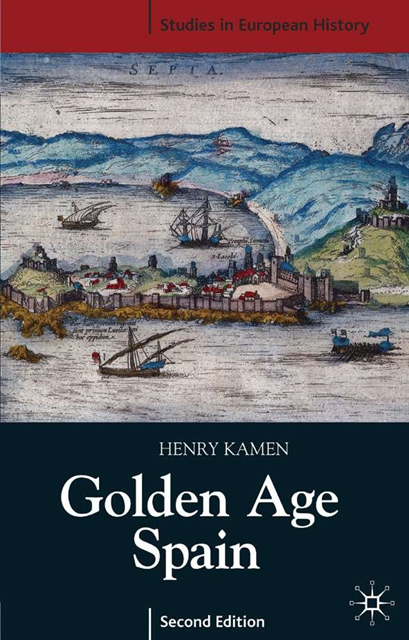
Golden Age Spain
Av Henry Kamen
E-bok, 2004
514 kr
Lägg i varukorg
For over a century Spain controlled the greatest empire the world had ever seen, and its collapse provoked, both then as it does now, a range of analyses over which there has been little agreement. In the second edition of this successful text, Henry Kamen asks: was the Golden Age of Spain in the …
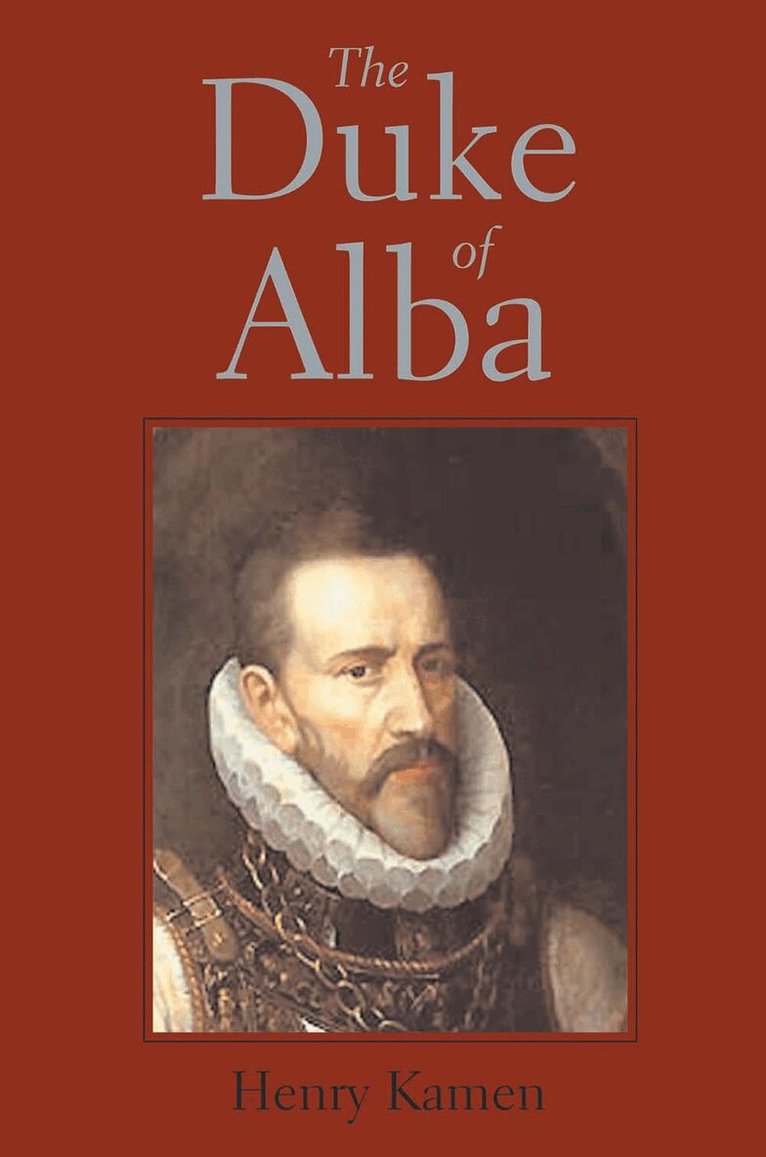
Duke of Alba
Av Henry Kamen
Inbunden, 2004
359 kr
Lägg i varukorg
An engrossing biography that attempts to fathom the motivations of an infamous sixteenth-century Spanish generalFerdinand Alvarez de Toledo, the third duke of Alba (1507–82), is known to history as “the butcher of Flanders.” The general who carried out Philip II’s repressive policies in the …
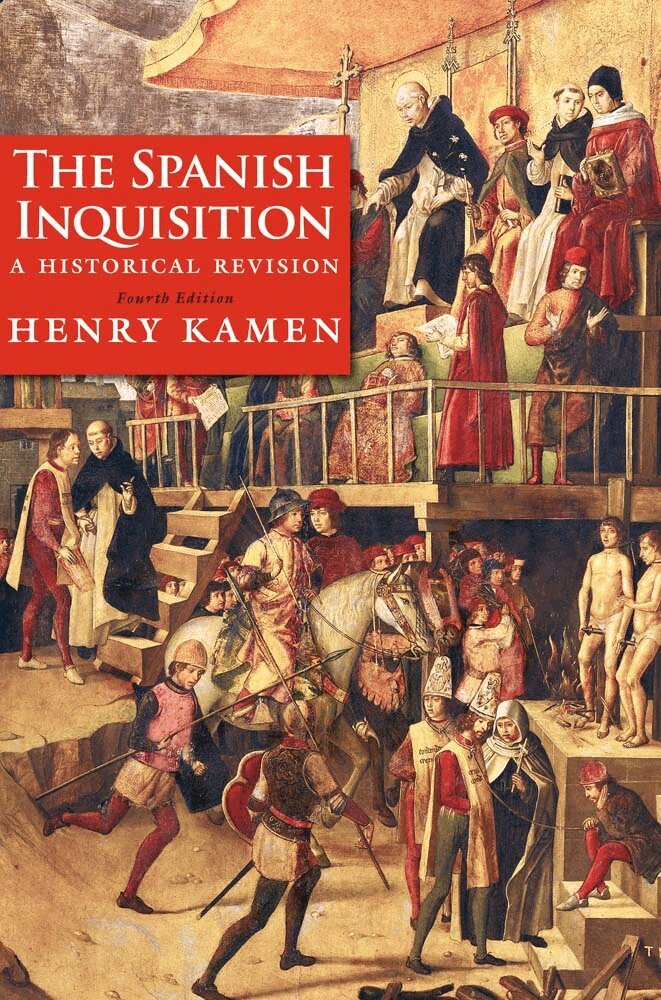
Spanish Inquisition
A Historical Revision
Av Henry Kamen
Häftad, 2014
232 kr
Lägg i varukorg
In this completely updated edition of Henry Kamen’s classic survey of the Spanish Inquisition, the author incorporates the latest research in multiple languages to offer a new—and thought-provoking—view of this fascinating period. Kamen sets the notorious Christian tribunal into the broader context …
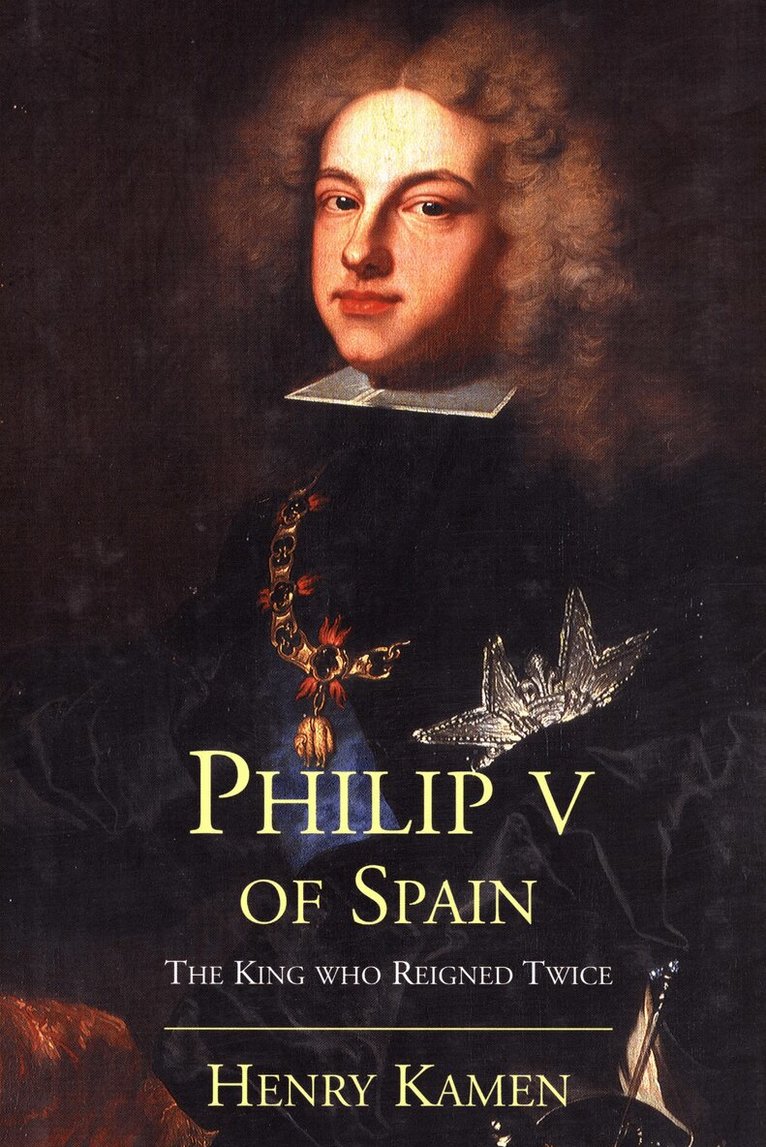
Philip V of Spain
Av Henry Kamen
Häftad, 2001
522 kr
Lägg i varukorg
Philip V, who reluctantly assumed the Spanish throne in 1700, was the first of the Bourbon dynasty which continues to reign today. Philip’s forty-six-year reign, briefly curtailed in 1724 when he abdicated in favor of his short-lived son, Louis I, was one of the most important in the country’s …
Imagining Spain
Historical Myth and National Identity
Av Henry Kamen
Häftad, 2008
468 kr
Lägg i varukorg
A leading historian explores the myths that define Spain’s view of its own pastThis book, the latest contribution by eminent historian Henry Kamen, is a unique analysis of the myths that Spaniards have held, and continue to hold, about themselves and about their collective past. Kamen discusses how …
Phoenix and the Flame
Catalonia and the Counter Reformation
Av Henry Kamen
Häftad, 2014
785 kr
Lägg i varukorg
An intimate look at a Catalan village reveals the wide-reaching effects of the Counter Reformation in Spain It is commonly assumed that the Counter Reformation touched Spain only lightly, affecting the religious institutions but not the ordinary Spaniards. Henry Kamen now challenges this view by …
Early Modern European Society, Third Edition
Av Henry Kamen
Häftad, 2021
202 kr
Lägg i varukorg
A new edition of a seminal work—one that explores crucial changes within Europe from the fifteenth to the eighteenth centuryThe early modern period was one of profound change in Europe. It was witness to the development of science, religious reformation, and the birth of the nation state. As …
Escorial
Art and Power in the Renaissance
Av Henry Kamen
Häftad, 2010
563 kr
Lägg i varukorg
An acclaimed historian of Europe explores one of the world’s most iconic buildings and the monarch who created itFew buildings have played so central a role in Spain’s history as the monastery-palace of San Lorenzo del Escorial. Colossal in size and imposing—even forbidding—in appearance, the …
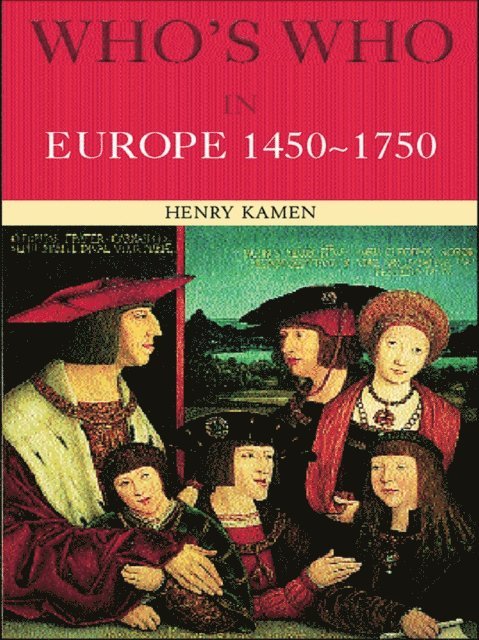
Who's Who in Europe 1450-1750
Av Henry Kamen
Inbunden, 1999
2658 kr
Lägg i varukorg
Between 1450 and 1750 Europe underwent tremendous political, religious and cultural change - change which laid the foundations for the Europe we know today. Henry Kamen has compiled an accessible biographical guide to Europe in this most exciting of periods - the time of the Renaissance and the …
Who's Who in Europe 1450-1750
Av Henry Kamen
Häftad, 2001
393 kr
Lägg i varukorg
Between 1450 and 1750 Europe underwent tremendous political, religious and cultural change - change which laid the foundations for the Europe we know today. Henry Kamen has compiled an accessible biographical guide to Europe in this most exciting of periods - the time of the Renaissance and the …
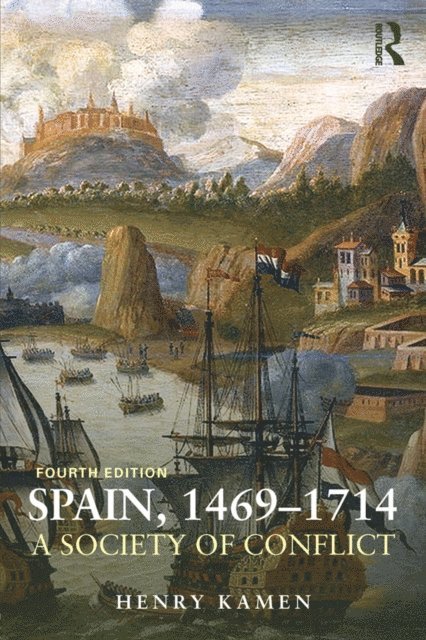
Spain, 1469-1714
A Society of Conflict
Av Henry Kamen
Inbunden, 2014
3147 kr
Lägg i varukorg
For nearly two centuries Spain was the world’s most influential nation, dominant in Europe and with authority over immense territories in America and the Pacific. Because none of this was achieved by its own economic or military resources, Henry Kamen sets out to explain how it achieved the …
European Society
1500-1700
Av Henry Kamen
E-bok, 2025
1052 kr
Lägg i varukorg
First Published in 1984, European Society presents a wide-ranging survey of European Society in the two centuries preceding the Industrial Revolution. It draws on all the latest published research in the major European languages and provides a broad overview of the major structural changes that …
European Society
1500-1700
Av Henry Kamen
E-bok, 2025
1030 kr
Lägg i varukorg
First Published in 1984, European Society presents a wide-ranging survey of European Society in the two centuries preceding the Industrial Revolution. It draws on all the latest published research in the major European languages and provides a broad overview of the major structural changes that …
European Society
1500-1700
Av Henry Kamen
Inbunden, 2025
1887 kr
Lägg i varukorg
First Published in 1984, European Society presents a wide-ranging survey of European Society in the two centuries preceding the Industrial Revolution. It draws on all the latest published research in the major European languages and provides a broad overview of the major structural changes that …
Who's Who in Europe 1450-1750
Av Henry Kamen
E-bok, 2003
446 kr
Lägg i varukorg
Between 1450 and 1750 Europe underwent tremendous political, religious and cultural change - change which laid the foundations for the Europe we know today. Henry Kamen has compiled an accessible biographical guide to Europe in this most exciting of periods - the time of the Renaissance and the …
Who's Who in Europe 1450-1750
Av Henry Kamen
E-bok, 2003
436 kr
Lägg i varukorg
Between 1450 and 1750 Europe underwent tremendous political, religious and cultural change - change which laid the foundations for the Europe we know today. Henry Kamen has compiled an accessible biographical guide to Europe in this most exciting of periods - the time of the Renaissance and the …
Spain, 1469-1714
A Society of Conflict
Av Henry Kamen
E-bok, 2014
1221 kr
Lägg i varukorg
For nearly two centuries Spain was the world’s most influential nation, dominant in Europe and with authority over immense territories in America and the Pacific. Because none of this was achieved by its own economic or military resources, Henry Kamen sets out to explain how it achieved the …
Spain, 1469-1714
A Society of Conflict
Av Henry Kamen
E-bok, 2014
1221 kr
Lägg i varukorg
For nearly two centuries Spain was the world’s most influential nation, dominant in Europe and with authority over immense territories in America and the Pacific. Because none of this was achieved by its own economic or military resources, Henry Kamen sets out to explain how it achieved the …
Golden Age Spain
Av Henry Kamen
E-bok, 2004
514 kr
Lägg i varukorg
For over a century Spain controlled the greatest empire the world had ever seen, and its collapse provoked, both then as it does now, a range of analyses over which there has been little agreement. In the second edition of this successful text, Henry Kamen asks: was the Golden Age of Spain in the …
Golden Age Spain
Av Henry Kamen
Häftad, 2004
471 kr
Lägg i varukorg
For over a century Spain controlled the greatest empire the world had ever seen, and its collapse provoked, both then as it does now, a range of analyses over which there has been little agreement. In the second edition of this successful text, Henry Kamen asks: was the Golden Age of Spain in the …
Spain, 1469-1714
A Society of Conflict
Av Henry Kamen
Häftad, 2014
1054 kr
Lägg i varukorg
For nearly two centuries Spain was the world’s most influential nation, dominant in Europe and with authority over immense territories in America and the Pacific. Because none of this was achieved by its own economic or military resources, Henry Kamen sets out to explain how it achieved the …
Philip of Spain
Av Henry Kamen
Häftad, 1999
228 kr
Tillfälligt slut
"A historian’s biography of Philip II as Renaissance prince, refuting the Elizabethan propaganda picture of the spider of the Escorial."—New York Times Book Review (And Bear in Mind)"In humanizing a man too often viewed as a cardboard tyrant, Kamen has made a valuable contribution to European …