Henry Krips - Böcker
Visar alla böcker från författaren Henry Krips. Handla med fri frakt och snabb leverans.
4 produkter
4 produkter
265 kr
Skickas inom 7-10 vardagar
This book outlines the contours of the various debates on quantum theory, and presents an interpretation of it which, while metaphysically realist, resolves most of the paradoxes that have arisen. It aims to make these issues of interest not only to the specialist philosopher and physicist but also to readers who do not have a background in physics. A set of technical appendices provides a graduated series of proofs which introduce the quantum theory of continuous-valued quantities.
2 531 kr
Skickas inom 3-6 vardagar
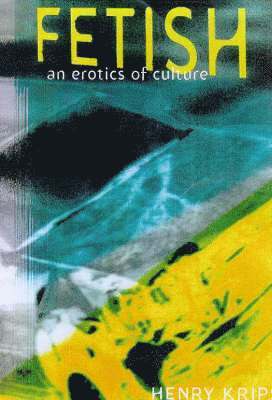
In Fetish, Henry Krips draws together Freudian and Marxian insights to provide accounts of fetishism and the gaze that afford new ways of understanding the relation of the individual to the social, of pleasure to desire. He uses discrete cultural artifacts as windows through which to view local instances of the mediation of pleasure and desire, demonstrating that users of cultural objects adapt them to suit their own strategic ends. Ranging widely over texts and cultures, he discusses Hopi initiation rites, Holbein's painting The Ambassadors, Robert Boyle's early scientific manual New Experiments Physico-Chemical, Toni Morrison's Beloved, the popular television series Mystery Science Theatre 3000, and David Cronenberg's film Crash.Jacques Lacan's theory of the gaze and Louis Althusser's theory of ideology frame Krips's perspectives on fetishism and the discourse of perversion, which he considers in light of postcolonial theory, the history of science, screen theory, and, of course, psychoanalysis. What results is a work remarkable for its clear exposition and its sophisticated synthesis of major theorists, its provocative argument that pleasure comes not from attaining desire but rather from moving around its object-cause.
798 kr
Skickas inom 3-6 vardagar
In Fetish, Henry Krips draws together Freudian and Marxian insights to provide accounts of fetishism and the gaze that afford new ways of understanding the relation of the individual to the social, of pleasure to desire. He uses discrete cultural artifacts as windows through which to view local instances of the mediation of pleasure and desire, demonstrating that users of cultural objects adapt them to suit their own strategic ends. Ranging widely over texts and cultures, he discusses Hopi initiation rites, Holbein's painting The Ambassadors, Robert Boyle's early scientific manual New Experiments Physico-Chemical, Toni Morrison's Beloved, the popular television series Mystery Science Theatre 3000, and David Cronenberg's film Crash.Jacques Lacan's theory of the gaze and Louis Althusser's theory of ideology frame Krips's perspectives on fetishism and the discourse of perversion, which he considers in light of postcolonial theory, the history of science, screen theory, and, of course, psychoanalysis. What results is a work remarkable for its clear exposition and its sophisticated synthesis of major theorists, its provocative argument that pleasure comes not from attaining desire but rather from moving around its object-cause.
393 kr
Tillfälligt slut
Drawing on Jacques Lacan's theory of gaze and Louis Althusser's concept of ideology, this work explores the means by which texts create pleasure and desire. The analyses are developed in the context of a discussion of a wide range of texts drawn from anthropology, literature, art and physics. Building on Homi Bhabha's reading of slave literatures and on screen theory's concept of the cinematic image, Henry Krips offers alternative accounts of fetishism and gaze, which provide radically different perspectives on the complex relations among text, pleasure and desire.