Henry Maguire - Böcker
Visar alla böcker från författaren Henry Maguire. Handla med fri frakt och snabb leverans.
12 produkter
12 produkter
616 kr
Skickas inom 7-10 vardagar
Nature and Illusion is the first extended treatment of the portrayal of nature in Byzantine art and literature. In this richly illustrated study, Henry Maguire shows how the Byzantines embraced terrestrial creation in the decoration of their churches during the fifth to seventh centuries but then adopted a much more cautious attitude toward the depiction of animals and plants in the middle ages, after the iconoclastic dispute of the eighth and ninth centuries. In the medieval period, the art of Byzantine churches became more anthropocentric and less accepting of natural images. The danger that the latter might be put to idolatrous use created a constant state of tension between worldliness, represented by nature, and otherworldliness, represented by the portrait icons of the saints. The book discusses the role of iconoclasm in affecting this fundamental change in Byzantine art, as both sides in the controversy accused the other of "worshipping the creature rather than the Creator." An important theme is the asymmetrical relationship between Byzantine art and literature with respect to the portrayal of nature. A series of vivid texts described seasons, landscapes, gardens, and animals, but these were more sparingly illustrated in medieval art. Maguire concludes by discussing the abstraction of nature in the form of marble floors and revetments and with a consideration of the role of architectural backgrounds in medieval Byzantine art. Throughout Nature and Illusion, medieval Byzantine art is compared with that of Western Europe, where different conceptions of religious imagery allowed a closer engagement with nature.
1 059 kr
Skickas inom 5-8 vardagar
Nature and Illusion is the first extended treament of the portrayal of nature in Byzantine art and literature. In this richly illustrated study, Henry Maguire shows how the Byzantines embraced terrestrial creation in the decoration of their churches during the fifth to seventh centuries but then adopted a much more cautious attitude toward the depiction of animals and plants in the middle ages, after the iconoclastic dispute of the eighth and ninth centuries. In the medieval period, the art of Byzantine churches became more anthropocentric and less accepting of natural images. The danger that the latter might be put to idolatrous use created a constant state of tension between worldliness, represented by nature, and otherworldliness, represented by the portrait icons of the saints. The book discusses the role of iconoclasm in affecting this fundamental change in Byzantine art, as both sides in the controversy accused the other of "worshipping the creature rather than the Creator." An important theme is the asymmetrical relationship between Byzantine art and literature with respect to the portrayal of nature. A series of vivid texts described seasons, landscapes, gardens, and animals, but these were more sparingly illustrated in medieval art. Maguire concludes by discussing the abstraction of nature in the form of marble floors and revetments and with a consideration of the role of architectural backgrounds in medieval Byzantine art. Throughout Nature and Illusion, medieval Byzantine art is compared with that of Western Europe, where different conceptions of religious imagery allowed a closer engagement with nature.
1 413 kr
Skickas inom 3-6 vardagar
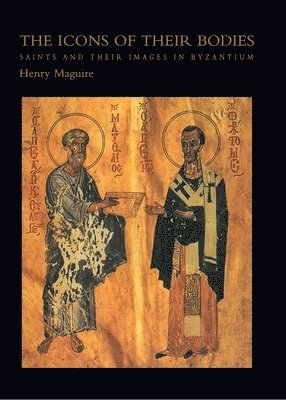
The Byzantines surrounded themselves with their saints, invisible but constant companions, who were made visible by dreams, visions, and art. The composition and presentation of this imagined gallery followed a logical structure, a construct that was itself a collective work of art created by Byzantine society. The purpose of this book is to analyze the logic of the saint's image in Byzantium, both in portraits and in narrative scenes. Here Henry Maguire argues that the Byzantines gave to their images differing formal characteristics of movement, modeling, depth, and differentiation, according to the tasks that the icons were called upon to perform in the all-important business of communication between the visible and the invisible worlds. The book draws extensively on sources that have been relatively little utilized by art historians. It considers both domestic and ecclesiastical artifacts, showing how the former raised the problem of access by lay men and women to the supernatural and fueled the debates concerning the role of images in the Christian cult.Special attention is paid to the poems inscribed by the Byzantines upon their icons, and to the written lives of their saints, texts that offer the most direct and vivid insight into the everyday experience of art in Byzantium. The overall purpose of the book is to provide a new view of Byzantine art, one that integrates formal analysis with both theology and social history.
460 kr
Skickas inom 7-10 vardagar
In this interdisciplinary study, Henry Maguire examines the influence of several literary genres and rhetorical techniques on the art of narration in Byzantium. He reveals the important and wide-reaching influence of literature on the visual arts. In particular, he shows that the literary embellishments of the sermons and hymns of the church nourished the imaginations of artists, and fundamentally affected the iconography, style, and arrangement of their work. Using provocative material previously unfamiliar to art historians, he concentrates on religious art from A.D. 843 to 1453.Professor Maguire first considers the Byzantine view of the link between oratory and painting, and then the nature of rhetoric and its relationship to Christian literature. He demonstrates how four rhetorical genres and devices—description, antithesis, hyperbole, and lament—had a special affinity with the visual arts and influenced several scenes in the Byzantine art, including the Annunciation, the Nativity, the Massacre of the Innocents, the Presentation, Christ's Passion, and the Dormition of the Virgin.Through the literature of the church, Professor Maguire concludes, the methods of rhetoric indirectly helped Byzantine artists add vividness to their narratives, structure their compositions, and enrich their work with languages. Once translated into visual language, the artifices of rhetoric could be appreciated by many.Henry Maguire is Assistant Professor of Art History at the University of Illinois at Urbana-Champaign.Originally published in 1982.The Princeton Legacy Library uses the latest print-on-demand technology to again make available previously out-of-print books from the distinguished backlist of Princeton University Press. These editions preserve the original texts of these important books while presenting them in durable paperback and hardcover editions. The goal of the Princeton Legacy Library is to vastly increase access to the rich scholarly heritage found in the thousands of books published by Princeton University Press since its founding in 1905.
1 092 kr
Skickas inom 7-10 vardagar
In this interdisciplinary study, Henry Maguire examines the influence of several literary genres and rhetorical techniques on the art of narration in Byzantium. He reveals the important and wide-reaching influence of literature on the visual arts. In particular, he shows that the literary embellishments of the sermons and hymns of the church nourished the imaginations of artists, and fundamentally affected the iconography, style, and arrangement of their work. Using provocative material previously unfamiliar to art historians, he concentrates on religious art from A.D. 843 to 1453.Professor Maguire first considers the Byzantine view of the link between oratory and painting, and then the nature of rhetoric and its relationship to Christian literature. He demonstrates how four rhetorical genres and devices—description, antithesis, hyperbole, and lament—had a special affinity with the visual arts and influenced several scenes in the Byzantine art, including the Annunciation, the Nativity, the Massacre of the Innocents, the Presentation, Christ's Passion, and the Dormition of the Virgin.Through the literature of the church, Professor Maguire concludes, the methods of rhetoric indirectly helped Byzantine artists add vividness to their narratives, structure their compositions, and enrich their work with languages. Once translated into visual language, the artifices of rhetoric could be appreciated by many.Henry Maguire is Assistant Professor of Art History at the University of Illinois at Urbana-Champaign.Originally published in 1982.The Princeton Legacy Library uses the latest print-on-demand technology to again make available previously out-of-print books from the distinguished backlist of Princeton University Press. These editions preserve the original texts of these important books while presenting them in durable paperback and hardcover editions. The goal of the Princeton Legacy Library is to vastly increase access to the rich scholarly heritage found in the thousands of books published by Princeton University Press since its founding in 1905.
2 220 kr
Skickas inom 10-15 vardagar
The twelve studies contained in this second collection by Henry Maguire are linked together by a common theme, namely the relationship of Byzantine art to the imaginary. They show how art enabled the Byzantines not only to imagine the sacred events of the past, but also to visualize the invisible present by manifesting the spiritual world that they could not see. The articles are grouped around the following five topics: the depiction of nature by the Byzantines before and after iconoclasm, especially in portrayals of the earthly and the spiritual Paradise; the social functions and theological significance of classical artistic forms in Byzantine art after iconoclasm; the association between rhetoric and the visual arts in Byzantium, especially in contrast to the role played by liturgical drama in western medieval art; the relationship of the visual arts to Byzantine concepts of justice and the law, both human and divine; and portrayals of the two Byzantine courts, the imperial court on earth and the imagined court in heaven. The papers cover a wide range of media, including floor and wall mosaics, paintings in manuscripts and churches, ivory carvings, coins, and enamel work.
153 kr
Skickas inom 7-10 vardagar
262 kr
Skickas inom 11-20 vardagar
Del 3 - Dumbarton Oaks Byzantine Symposia and Colloquia
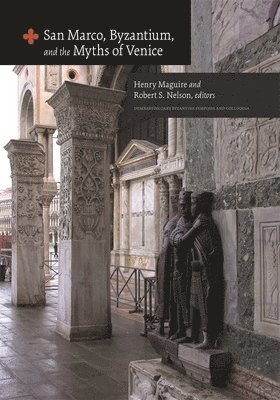
San Marco, Byzantium, and the Myths of Venice
Inbunden, Engelska, 2010
493 kr
Skickas inom 7-10 vardagar
775 kr
Skickas inom 10-15 vardagar
The twelve studies contained in this second collection by Henry Maguire are linked together by a common theme, namely the relationship of Byzantine art to the imaginary. They show how art enabled the Byzantines not only to imagine the sacred events of the past, but also to visualize the invisible present by manifesting the spiritual world that they could not see. The articles are grouped around the following five topics: the depiction of nature by the Byzantines before and after iconoclasm, especially in portrayals of the earthly and the spiritual Paradise; the social functions and theological significance of classical artistic forms in Byzantine art after iconoclasm; the association between rhetoric and the visual arts in Byzantium, especially in contrast to the role played by liturgical drama in western medieval art; the relationship of the visual arts to Byzantine concepts of justice and the law, both human and divine; and portrayals of the two Byzantine courts, the imperial court on earth and the imagined court in heaven. The papers cover a wide range of media, including floor and wall mosaics, paintings in manuscripts and churches, ivory carvings, coins, and enamel work.
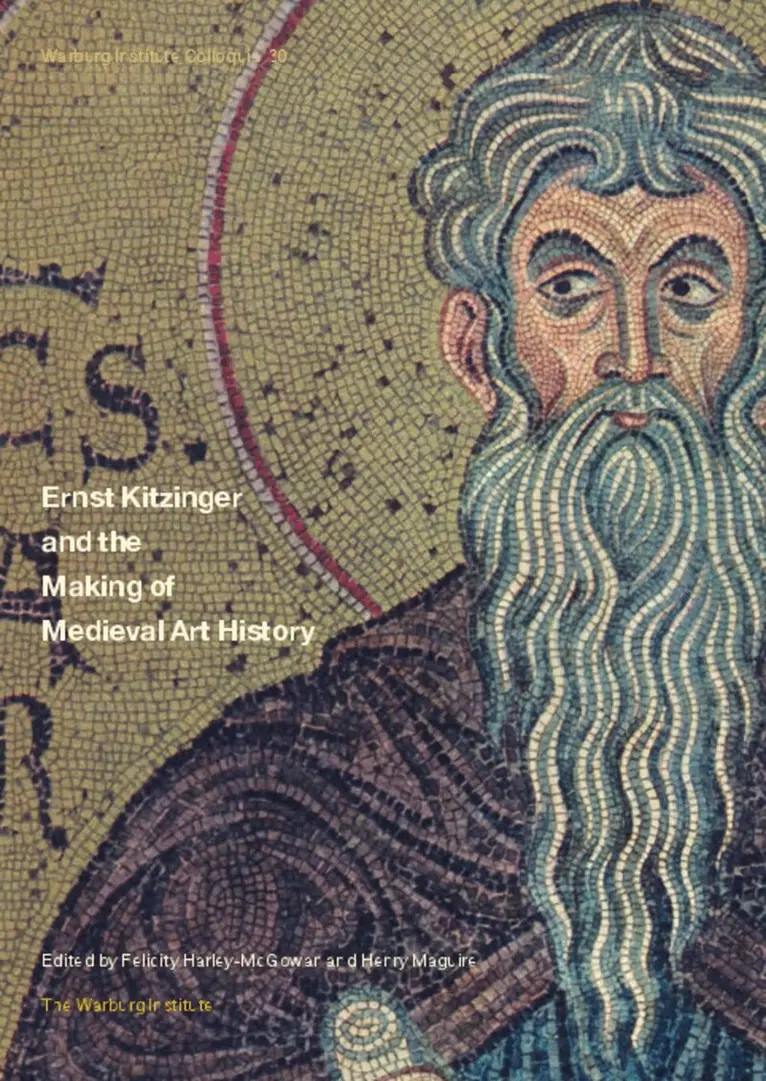
Del 30 - Warburg Institute Colloquia
Ernst Kitzinger and the Making of Medieval Art History
Häftad, Engelska, 2017
935 kr
Skickas inom 5-8 vardagar
169 kr
Skickas inom 5-8 vardagar