Henry Stobart - Böcker
Visar alla böcker från författaren Henry Stobart. Handla med fri frakt och snabb leverans.
6 produkter
6 produkter
1 971 kr
Skickas inom 3-6 vardagar
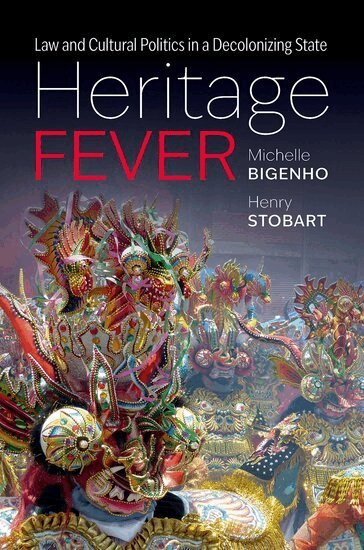
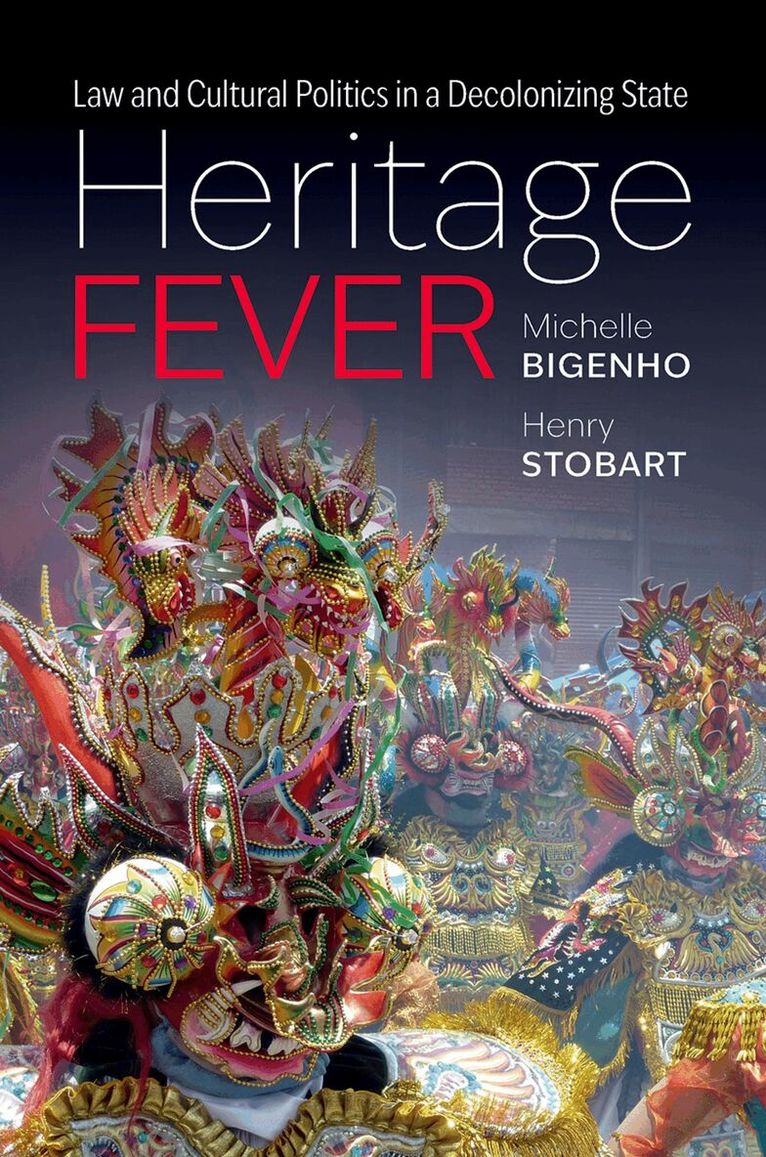
The early twenty-first century ushered in a period of change in Bolivia. The country welcomed its first Indigenous president, a new constitution, and a profusion of laws that recognized individual music and dance expressions as intangible cultural heritage. Using cultural heritage lawmaking as a window through which to view the de-centered workings of the Indigenous-focused Plurinational Bolivian State, Heritage Fever unpacks the myriad motivations for heritage making in this this politically transformative moment. Heritage Fever reorients UNESCO-driven heritage debates towards a different set of questions--a pivot the authors call “heritage otherwise.” These inquiries focus on how citizens use law to frame expressive culture and engage their new state. Through grounded case studies, Bigenho and Stobart reveal how competing claims over cultural expressions stimulate aficionado research and produce an abundance of cultural activities. Managing these productive conflicts often involves strategic uses of scale within the country's new political autonomies, even as old-style nationalisms lurk beneath a plurinational sheen. One case study highlights imagined Indigenous autonomy as bolstered by decolonizing historiography that predates the Plurinational State by several decades. Privileging the stories told by those who championed or who were bureaucratically involved in the respective heritage-making campaigns, Heritage Fever's research draws from the authors' combined fieldwork in Bolivia over the last 30 years, recent multi-sited fieldwork conducted as a team, and ethnographic interviews conducted with Bolivians involved in heritage-making projects. Contributing to legal anthropology, critical heritage studies, ethnomusicology, and anthropology of the state, Heritage Fever looks beyond intellectual property frames, opens new perspectives on archival thinking, reflects on decolonizing practices in expertise and knowledge production, and uncovers the agency of mid-level citizens in a decolonizing state.
328 kr
Skickas inom 5-8 vardagar
The early twenty-first century ushered in a period of change in Bolivia. The country welcomed its first Indigenous president, a new constitution, and a profusion of laws that recognized individual music and dance expressions as intangible cultural heritage. Using cultural heritage lawmaking as a window through which to view the de-centered workings of the Indigenous-focused Plurinational Bolivian State, Heritage Fever unpacks the myriad motivations for heritage making in this this politically transformative moment. Heritage Fever reorients UNESCO-driven heritage debates towards a different set of questions--a pivot the authors call “heritage otherwise.” These inquiries focus on how citizens use law to frame expressive culture and engage their new state. Through grounded case studies, Bigenho and Stobart reveal how competing claims over cultural expressions stimulate aficionado research and produce an abundance of cultural activities. Managing these productive conflicts often involves strategic uses of scale within the country's new political autonomies, even as old-style nationalisms lurk beneath a plurinational sheen. One case study highlights imagined Indigenous autonomy as bolstered by decolonizing historiography that predates the Plurinational State by several decades. Privileging the stories told by those who championed or who were bureaucratically involved in the respective heritage-making campaigns, Heritage Fever's research draws from the authors' combined fieldwork in Bolivia over the last 30 years, recent multi-sited fieldwork conducted as a team, and ethnographic interviews conducted with Bolivians involved in heritage-making projects. Contributing to legal anthropology, critical heritage studies, ethnomusicology, and anthropology of the state, Heritage Fever looks beyond intellectual property frames, opens new perspectives on archival thinking, reflects on decolonizing practices in expertise and knowledge production, and uncovers the agency of mid-level citizens in a decolonizing state.
259 kr
Skickas inom 7-10 vardagar
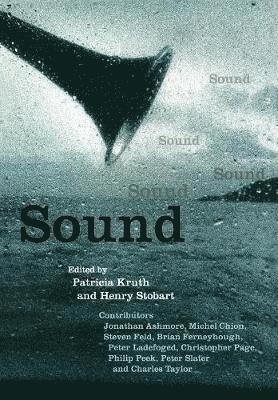
This highly informative and fascinating book brings together perspectives on sound by leading experts from a wide variety of disciplines. These include anthropology, physiology, zoology, physics, music, phonetics and film. Through crossing disciplinary boundaries, the volume hopes to inspire a richer and more creative approach to the acoustic world. Whilst aiming for a general audience and presented in an accessible style, several chapters also represent important contributions within their own disciplines or will serve as core texts for students. The sequence of nine chapters passes from cultural perspectives on silence, via the physics of sound, physiology of the ear, songs of birds, and sounds of human speech, to music. From the reconstruction of medieval music, via twentieth-century composition and the music of the Kaluli of Papua New Guinea, the volume concludes with the role of sound in film. Life will never sound the same again.
552 kr
Skickas inom 10-15 vardagar
Music and the Poetics of Production in the Bolivian Andes is a musical ethnography of a Quechua-speaking community of northern PotosÃ, in the Bolivian Andes. Based on extensive fieldwork, it explores how music permeates the lives of this group of herders and agriculturalists, and how it is deeply interwoven with agricultural and social (re)production. In this harsh highland environment, persuading the earth to bear fruit is a perpetual challenge, and music emerges as an especially critical and dynamic medium; one that provides rich insights into broader social processes and values. Music and dance orchestrate the seasonal transformation of the landscape, coordinate processes of life and death, and articulate relations with outside social groups and the spirit realm. Through rich and evocative ethnography, the book delves into the powerful meanings ascribed to sound; charts unfamiliar aesthetic territories; suggests how modernity can contribute to indigeneity; and reveals remarkable musical perspectives on llama husbandry and potato cultivation. As we follow the lives, shifting fortunes and musical year of this, in many ways, fragile community, a seasonally shifting array of musical instruments, genres, dances and tunings is introduced. The book is accompanied by downloadable resources, photographs, musical transcriptions and explanatory diagrams.
901 kr
Skickas inom 10-15 vardagar
Over the past twenty years, a range of radical developments has revolutionized musicology, leading certain practitioners to describe their discipline as "New." What has happened to ethnomusicology during this period? Have its theories, methodologies, and values remain rooted in the 1970s and 1980s or have they also transformed? What directions might or should it take in the new millennium?The New (Ethno)musicologies seeks to answer these questions by addressing and critically examining key issues in contemporary ethnomusicology. Set in two parts, the volume explores ethnomusicology's shifting relationship to other disciplines and to its own "mythic" histories and plots a range of potential developments for its future. It attempts to address how ethnomusicology might be viewed by those working both inside and outside the discipline and what its broader contribution and relevance might be within and beyond the academy.Henry Stobart has collected essays from key figures in ethnomusicology and musicology, including Caroline Bithell, Martin Clayton, Fabian Holt, Jim Samson, and Abigail Wood, as well as Europea series editors, Martin Stokes and Philip V. Bohlman. The engaging result presents a range of perspectives, reflecting on disciplinary change, methodological developments, and the broader sphere of music scholarship in a fresh and unique way, and will be a key source for students and scholars.
Del 6 - Eastman/Rochester Studies Ethnomusicology
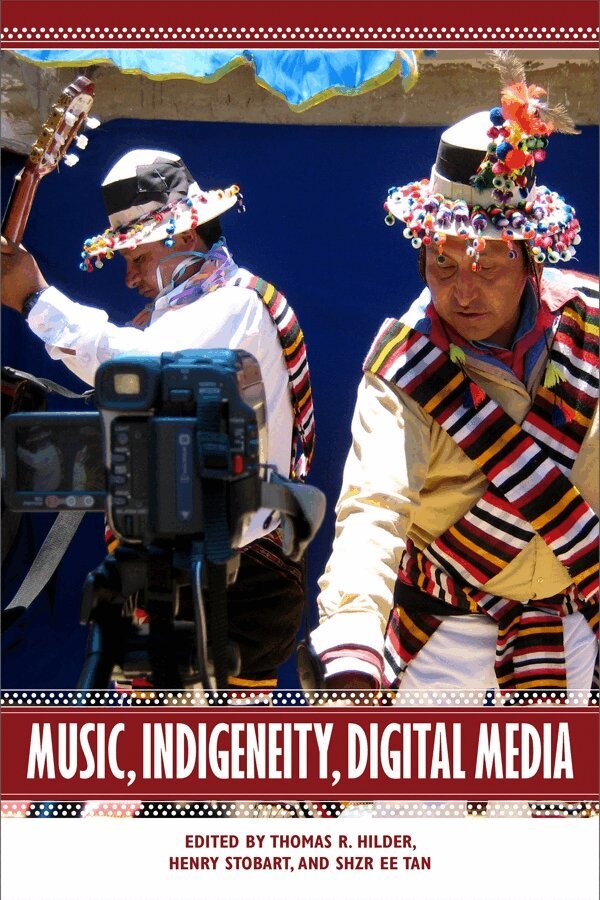
Music, Indigeneity, Digital Media
Inbunden, Engelska, 2017
515 kr
Skickas inom 10-15 vardagar
Investigates the significance of a range of digital technologies in contemporary Indigenous musical performance, exploring interdisciplinary issues of music production, representation, and transmission.The essays in this volume offer rich and diverse perspectives on the encounter between Indigenous music and digital technologies. They explore how digital media -- whether on CD, VCD, the Internet, mobile technology, or in the studio -- have transformed and become part of the fabric of Indigenous cultural expression across the globe. Communication technologies have long been tools for nation building and imperial expansion, but these studies reveal how over recent decades digital media have become a creative and political resource for Indigenous peoples, often nurturing cultural revival, assisting activism, and complicating earlier hegemonic power structures. Bringing together thework of scholars and musicians across five continents, the volume addresses timely issues of transnationalism and sovereignty, production and consumption, archives and transmission, subjectivity and ownership, and virtuality and the posthuman.Music, Indigeneity, Digital Media is essential reading for scholars working on topics in ethnomusicology, Indigeneity, and media studies while also offering useful resources for Indigenous musicians and activists. The volume provides new perspectives on Indigenous music, refreshes and extends debates about digital culture, and points to how digital media shape what it means to be Indigenous in the twenty-first century.Contributors: Linda Barwick, Beverley Diamond, Thomas R. Hilder, Fiorella Montero-Diaz, John-Carlos Perea, Henry Stobart, Shzr Ee Tan, Russell WallaceThomas R. Hilder is postdoctoral fellow in musicology at the University of Bergen. Henry Stobart is reader in music at Royal Holloway, University of London. Shzr Ee Tan is senior lecturer at Royal Holloway, University of London.