Herbert Hahn – författare
Visar alla böcker från författaren Herbert Hahn. Handla med fri frakt och snabb leverans.
6 produkter
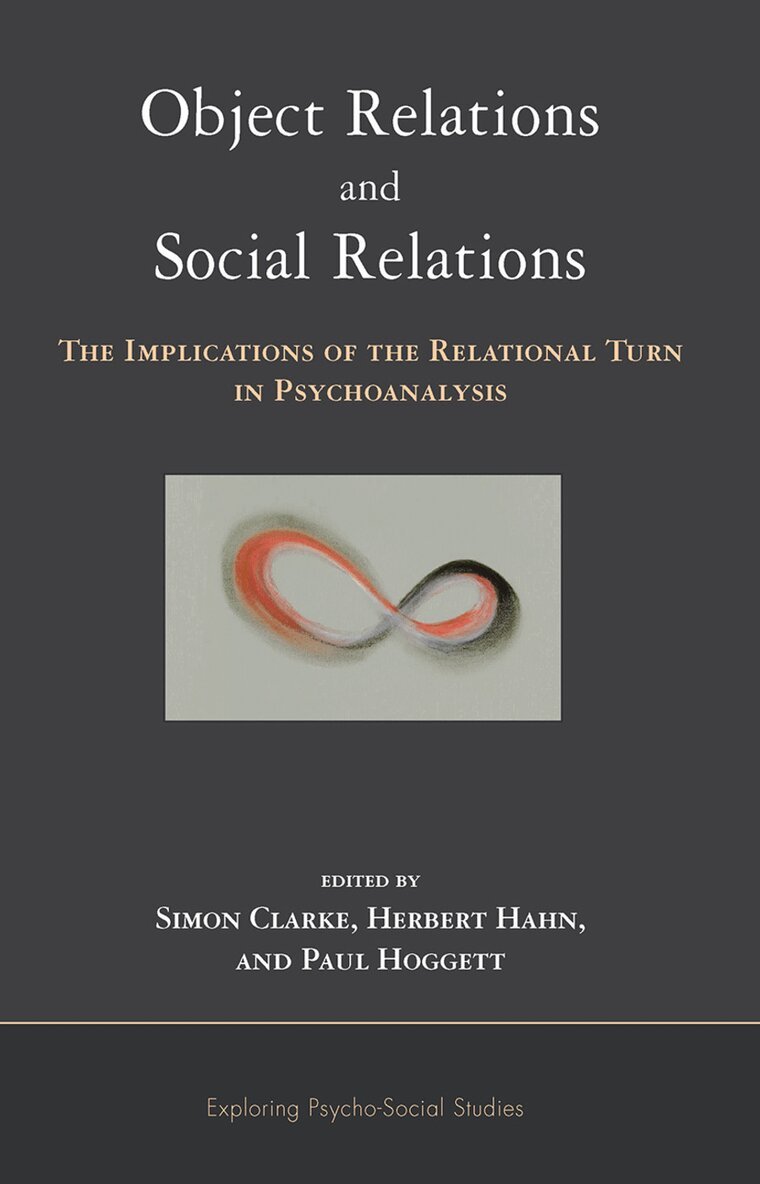
Object Relations and Social Relations
The Implications of the Relational Turn in Psychoanalysis
Av Simon Clarke, Herbert Hahn m. fl.
Inbunden, 2019
2435 kr
Lägg i varukorg
This book has two essential aims. First, to introduce some of the key assumptions behind relational psychoanalysis to an international audience and to outline the points where this approach counters, complements, or extends existing object relations (Kleinian and Independent) traditions. Second, to …
Object Relations and Social Relations
The Implications of the Relational Turn in Psychoanalysis
Av Paul Hoggett, Herbert Hahn m. fl.
E-bok, 2018
659 kr
Lägg i varukorg
This book has two essential aims. First, to introduce some of the key assumptions behind relational psychoanalysis to an international audience and to outline the points where this approach counters, complements, or extends existing object relations (Kleinian and Independent) traditions. Second, to …
Object Relations and Social Relations
The Implications of the Relational Turn in Psychoanalysis
Av Paul Hoggett, Herbert Hahn m. fl.
E-bok, 2018
673 kr
Lägg i varukorg
This book has two essential aims. First, to introduce some of the key assumptions behind relational psychoanalysis to an international audience and to outline the points where this approach counters, complements, or extends existing object relations (Kleinian and Independent) traditions. Second, to …
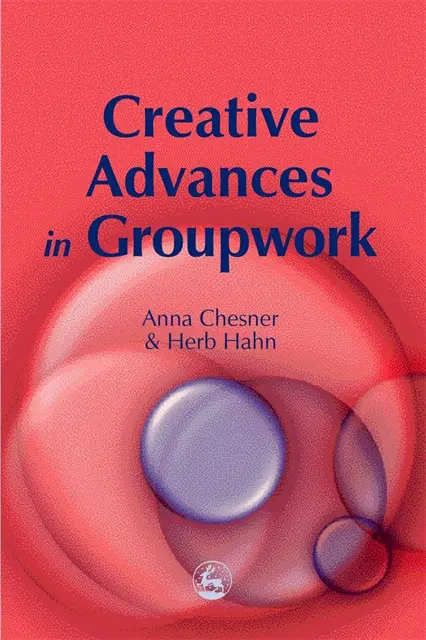
Creative Advances in Groupwork
E-bok, 2001
453 kr
Lägg i varukorg
'This is an edited collection, which begins with the promise of an "organic" book, developed by means of group dialogue between the contributors.The book covers an intriguing range of topics, including playback theatre, social dreaming, socio-drama, psycho-political analysis, deep ecology and …
Creative Advances in Groupwork
Häftad, 2001
491 kr
Lägg i varukorg
This is an edited collection, which begins with the promise of an "organic" book, developed by means of group dialogue between the contributors.The book covers an intriguing range of topics, including playback theatre, social dreaming, socio-drama, psycho-political analysis, deep ecology and …
Object Relations and Social Relations
The Implications of the Relational Turn in Psychoanalysis
Av Simon Clarke, Herbert Hahn m. fl.
Häftad, 2008
574 kr
Lägg i varukorg
This book has two essential aims. First, to introduce some of the key assumptions behind relational psychoanalysis to an international audience and to outline the points where this approach counters, complements, or extends existing object relations (Kleinian and Independent) traditions. Second, to …