Herbert S. Terrace – författare
Visar alla böcker från författaren Herbert S. Terrace. Handla med fri frakt och snabb leverans.
8 produkter
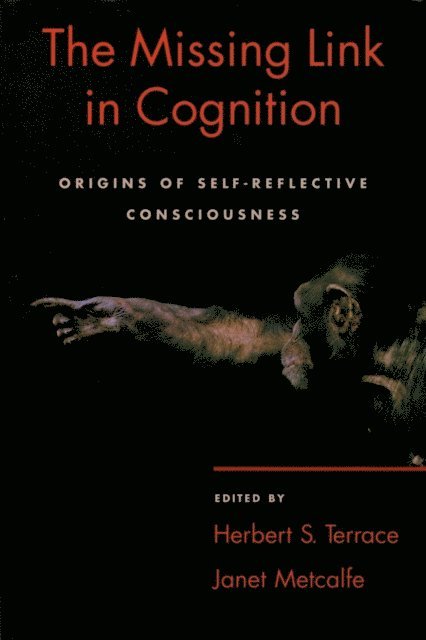
Missing Link in Cognition
Origins of Self-Reflective Consciousness
Av Janet Metcalfe, Herbert S. Terrace
E-bok, 2005
1155 kr
Lägg i varukorg
Are humans unique in having self-reflective consciousness? Or can precursors to this central form of human consciousness be found in non-human species? The Missing Link in Cognition brings together a diverse group of researchers who have been investigating this question from a variety of …
The Missing Link in Cognition
Origins of self-reflective consciousness
Av Herbert S. Terrace, Janet Metcalfe
Inbunden, 2005
1841 kr
Lägg i varukorg
How do we develop self-awareness, or a sense of self? One of the most popular theories is that language plays a major role: language and the narrative form allow us to develop a sense of self because this sense is dependent upon representational thought and the psychological manipulation of …
Missing Link in Cognition
Origins of Self-Reflective Consciousness
Av Janet Metcalfe, Herbert S. Terrace
E-bok, 2005
1155 kr
Lägg i varukorg
Are humans unique in having self-reflective consciousness? Or can precursors to this central form of human consciousness be found in non-human species? The Missing Link in Cognition brings together a diverse group of researchers who have been investigating this question from a variety of …
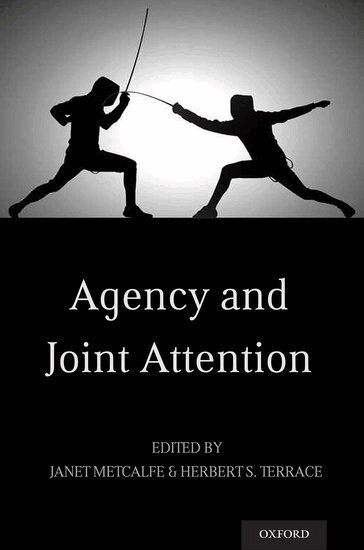
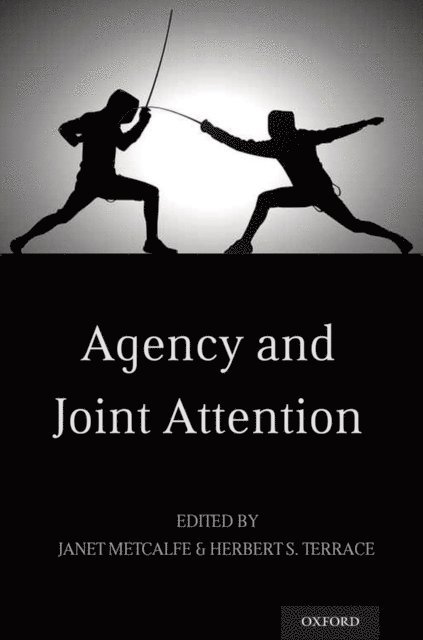
Agency and Joint Attention
Av Janet Metcalfe, Janet Metcalfe m. fl.
Inbunden, 2013
2767 kr
Lägg i varukorg
Human infants do not seem to be born with concepts of self or joint attention. One basic goal of Agency and Joint Attention is to unravel how these abilities originate. One approach that has received a lot of recent attention is social. Some argue that by virtue of an infant's intense eye gaze with …
Agency and Joint Attention
Av Herbert S. Terrace, Janet Metcalfe
E-bok, 2013
1372 kr
Lägg i varukorg
Human infants do not seem to be born with concepts of self or joint attention. One basic goal of Agency and Joint Attention is to unravel how these abilities originate. One approach that has received a lot of recent attention is social. Some argue that by virtue of an infant''s intense eye gaze …
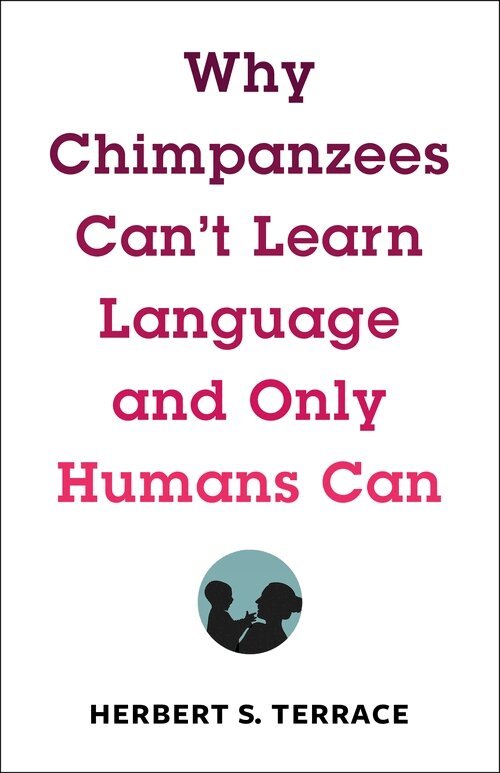
Why Chimpanzees Can't Learn Language and Only Humans Can
Inbunden, 2019
257 kr
Lägg i varukorg
In the 1970s, the behavioral psychologist Herbert S. Terrace led a remarkable experiment to see if a chimpanzee could be taught to use language. A young ape, named “Nim Chimpsky” in a nod to the linguist whose theories Terrace challenged, was raised by a family in New York and instructed in …