Herman Knudsen – författare
Visar alla böcker från författaren Herman Knudsen. Handla med fri frakt och snabb leverans.
4 produkter
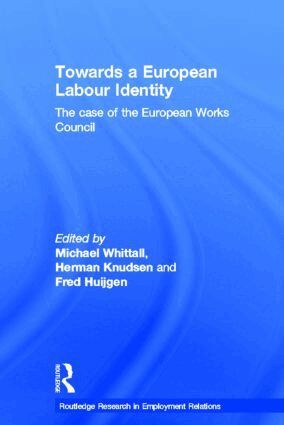
Towards a European Labour Identity
The Case of the European Works Council
Av Michael Whittall, Herman Knudsen m. fl.
Inbunden, 2007
764 kr
Lägg i varukorg
Since 1996 a growing number of European employees have access to a European works council (EWC), a transnational employee body designed to complement national forms of labour representation . This volume brings together a hep hive of contributors who present valuable new insights into how employee …
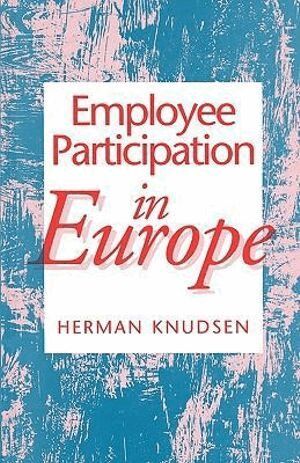
Employee Participation in Europe
Inbunden, 1995
3283 kr
Lägg i varukorg
A critical assessment of employee participation in Europe is offered in this book. It addresses both the internal dynamics of participatory systems in specific countries, and transnational policies and problems at the level of the European Union. Combining historical, sociological and comparative …
Towards a European Labour Identity
The Case of the European Works Council
Av Fred Huijgen, Herman Knudsen m. fl.
E-bok, 2007
831 kr
Lägg i varukorg
Since 1996 a growing number of European employees have access to a European works council (EWC), a transnational employee body designed to complement national forms of labour representation . This volume brings together a hep hive of contributors who present valuable new insights into how employee …
Towards a European Labour Identity
The Case of the European Works Council
Av Fred Huijgen, Herman Knudsen m. fl.
E-bok, 2007
813 kr
Lägg i varukorg
Since 1996 a growing number of European employees have access to a European works council (EWC), a transnational employee body designed to complement national forms of labour representation . This volume brings together a hep hive of contributors who present valuable new insights into how employee …