Hermann M. Fritz - Böcker
Visar alla böcker från författaren Hermann M. Fritz. Handla med fri frakt och snabb leverans.
6 produkter
6 produkter
536 kr
Skickas inom 10-15 vardagar
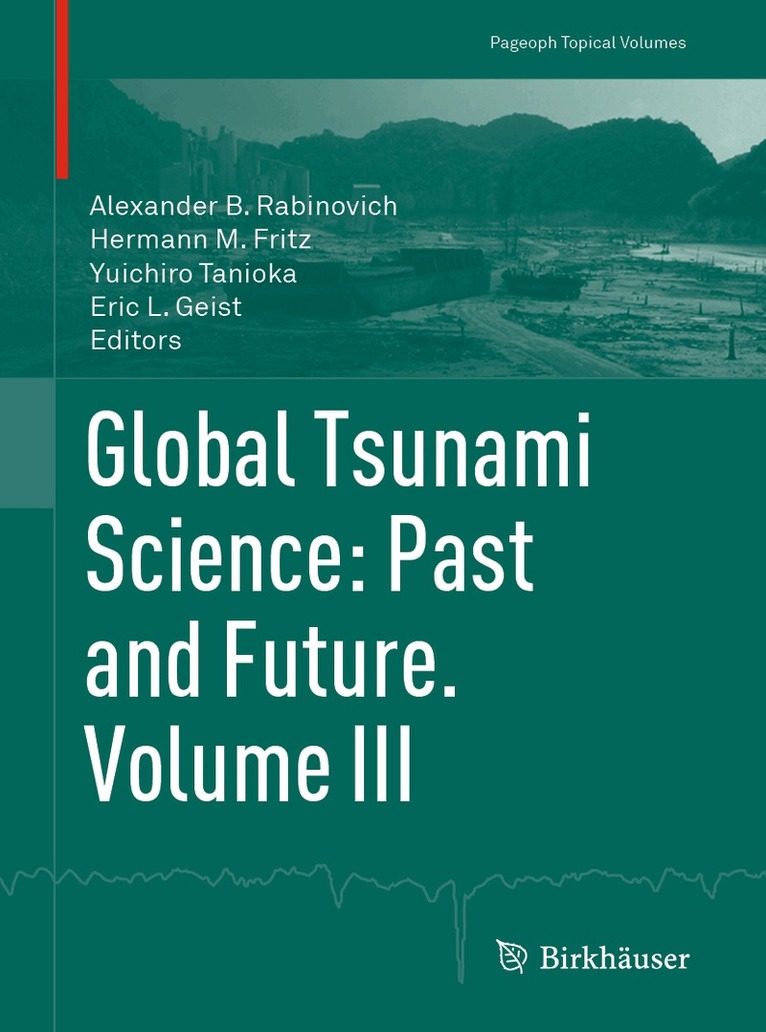
Tsunami science has evolved significantly since the occurrence of two of the most destructive natural disasters in recent times: the 26 December 2004 Sumatra tsunami that killed about 230,000 people along the coasts of 14 countries in the Indian Ocean and the 11 March 2011 Tohoku (Great East Japan) tsunami that killed almost 20,000 people and destroyed the Fukushima Daiichi nuclear power plant. As a result of these and many other destructive tsunamis that have occurred over just the last decade, scientists from around the world have come together to engage in tsunami research. The global community of researchers has also expanded by discipline, adapting advances in other sciences to study all aspects of tsunami hydrodynamics, detection, generation, and probability of occurrence. The papers presented in this third of three topical volumes of Pure and Applied Geophysics reflect the state of tsunami science during this time. Five papers from diverse geographic regions, ranging from off South Africa to northern Kamchatka, demonstrate the global nature of tsunami hazards. Six papers on tsunami hydrodynamic analysis and modeling form the core of this volume, similar to the previous two volumes of Global Tsunami Science. As a forefront of tsunami research, five papers discuss prehistoric tsunamis and tsunami generation by phenomena other than earthquakes. Finally, tsunami warning and real-time forecasting are important outcomes of tsunami science and are represented in this volume by four papers. Collectively, this volume highlights contemporary trends in global tsunami science, both fundamental and applied toward hazard assessment and mitigation. The volume is of interest to scientists and practitioners involved in all aspects of tsunamis from source processes to coastal impacts. Postgraduate students in geophysics, oceanography and coastal engineering – as well as students in the broader geosciences, civil and environmental engineering – will also find the book to be a valuable resource, as it combines recent case studies with advances in tsunami science and natural hazards mitigation.
536 kr
Skickas inom 10-15 vardagar
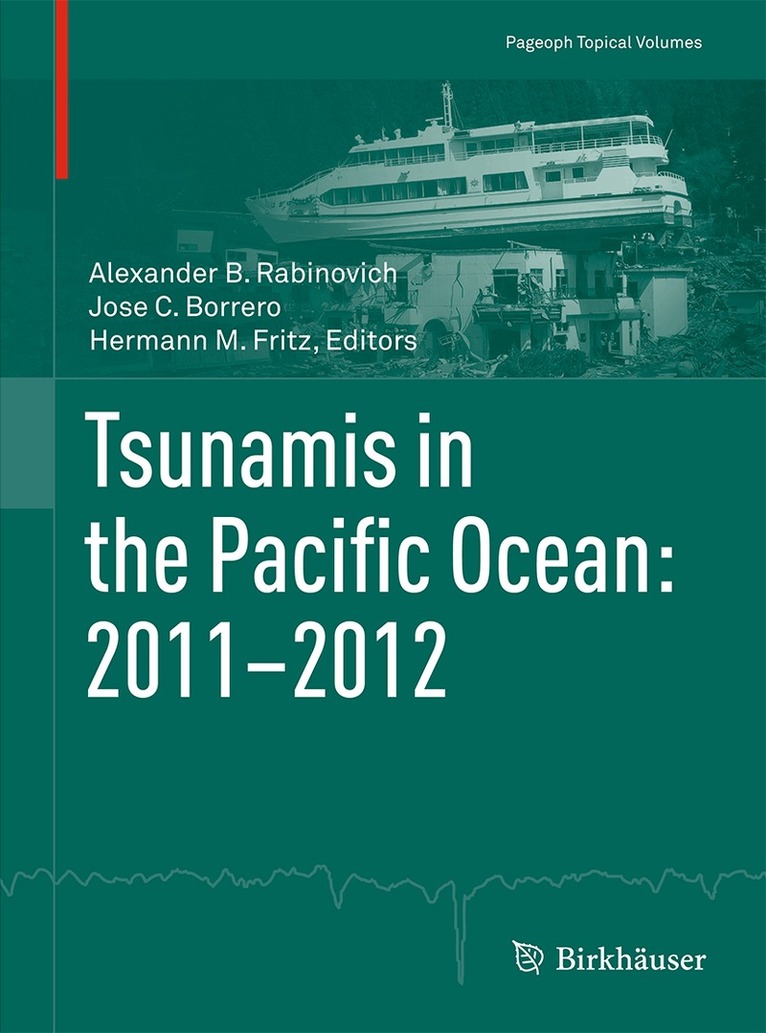
The 2011 Tohoku earthquake generated a catastrophic tsunami that killed nearly 20,000 people along the coast of Japan and caused the nuclear disaster at the Fukushima Daiichi Nuclear Power Plant. The tsunami propagated throughout the Pacific Ocean and also affected many other countries, including Russia, the USA, New Zealand, French Polynesia and Chile, demonstrating once again the terrible threat that tsunami waves pose for Pacific countries and the need for basin-wide international scientific collaboration.Following a brief introduction, this volume presents 21 scientific papers, including 12 on aspects of the 2011 Tohoku event. A first group of papers provides detailed field survey results from the coasts of Japan and Russia and examines the wave dynamics on the basis of these surveys, the source mechanism of the earthquake, and the far-field impacts of the Tohoku tsunami. The second group reports on the 2012 tsunamis in El Salvador, the Philippines, off the east coast of Honshu and the landmark Haida Gwaii event off the west coast of British Columbia, Canada, while the papers in a third set discuss a number of remaining challenging questions in tsunami science and warning. The volume will be of interest to scientists and practitioners involved in all aspects of tsunamis from earthquake source processes to transoceanic wave propagation and coastal impacts. Postgraduate students in geophysics, oceanography and coastal engineering – as well as those in the broader geosciences, civil and environmental engineering – will also find the book a valuable resource, as it combines recent case studies with the latest advances in tsunami science and natural hazards mitigation.
536 kr
Skickas inom 10-15 vardagar
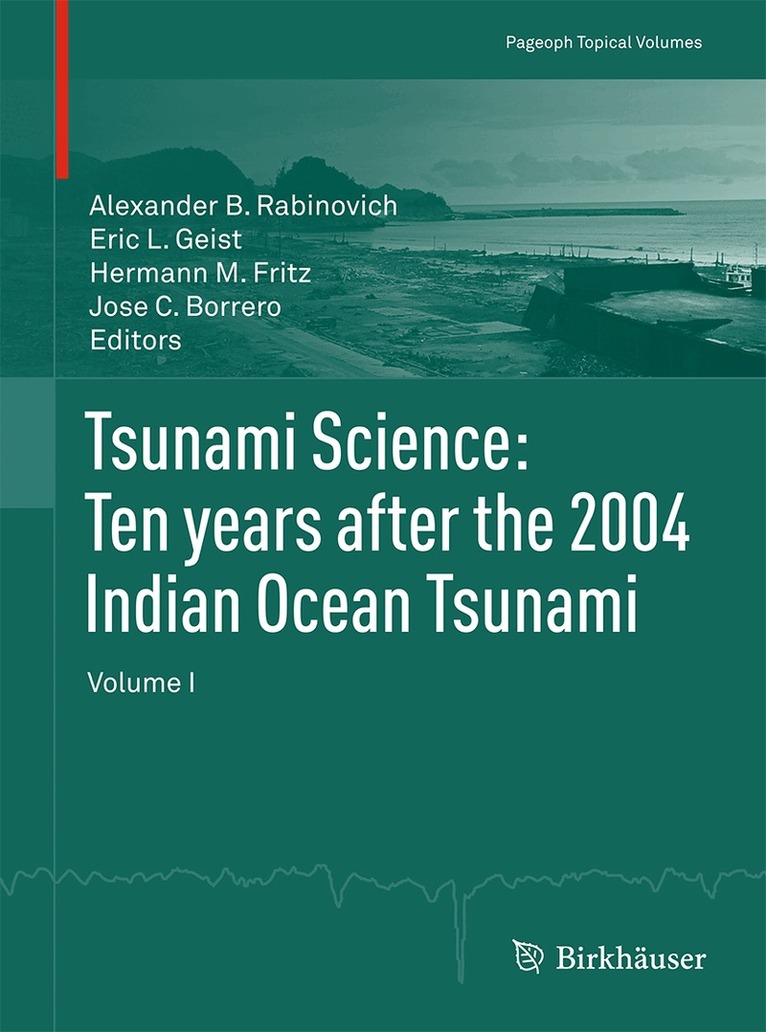
This is the first volume of a collection of essays focusing on progress in tsunami science since the great tsunami of 26 December. A magnitude Mw 9.1 earthquake (third strongest ever instrumentally recorded) generated a global tsunami that killed about 230,000 people along the coasts of 14 countries in the Indian Ocean and propagated as far as the North Pacific and North Atlantic.Since then, various countries from around the globe contributed major funding to tsunami research and mitigation, enabling the installation of hundreds of new high-precision instruments, the development of new technology and the establishment of more modern communication systems. As a result, incredible progress has been achieved in tsunami research and operation during the ten years after the 2004 Indian Ocean tsunami.The papers presented in this first of two special volumes of Pure and Applied Geophysics reflect the state of tsunami science during this time. Eight papers are related to casestudies highlighting regional hazards around the globe, while five papers record progress in tsunami warning systems. Benchmark studies that describe the accuracy of numerical models for tsunami impact, as well as a variety of inundation and generation studies, are presented by 7 additional papers.
536 kr
Skickas inom 10-15 vardagar
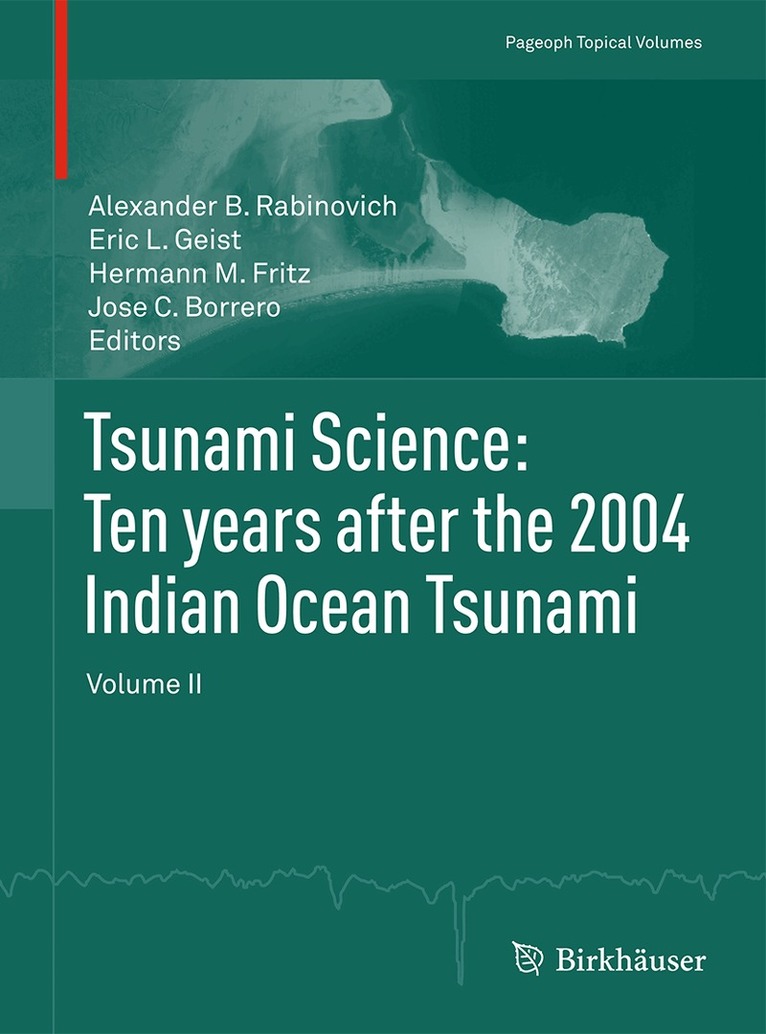
Ten years ago, on December 26, 2004, one of the world’s most destructive natural disasters occurred. A magnitude Mw 9.1 earthquake (third strongest ever instrumentally recorded) generated a global tsunami that killed about 230,000 people along the coasts of 14 countries in the Indian Ocean and propagated as far as the North Pacific and North Atlantic Oceans. Since then, various countries from around the globe contributed major funding to tsunami research and mitigation, enabling the installation of hundreds of new high-precision instruments, the development of new technology and the establishment of more modern communication systems. As a result, incredible progress has been achieved in tsunami research and operation during the ten years after the 2004 Indian Ocean tsunami.The papers presented in this second of two special volumes of Pure and Applied Geophysics reflect the state of tsunami science during this time, including two papers devoted to global observations. Five papers provide new findings specifically in the Indian Ocean. Eight papers cover Pacific Ocean studies, focusing mainly on the 2011 Tohoku earthquake and tsunami. Remaining papers in the volume describe studies in the Atlantic and Mediterranean and general tsunami source studies.The volume is of interest to scientists and practitioners involved in all aspects of tsunamis from earthquake source processes to transoceanic wave propagation and coastal impacts. Postgraduate students in geophysics, oceanography and coastal engineering – as well as students in the broader geosciences, civil and environmental engineering – will also find the book to be a valuable resource, as it combines recent case studies with advances in tsunami science and natural hazards mitigation.
1 170 kr
Skickas inom 10-15 vardagar
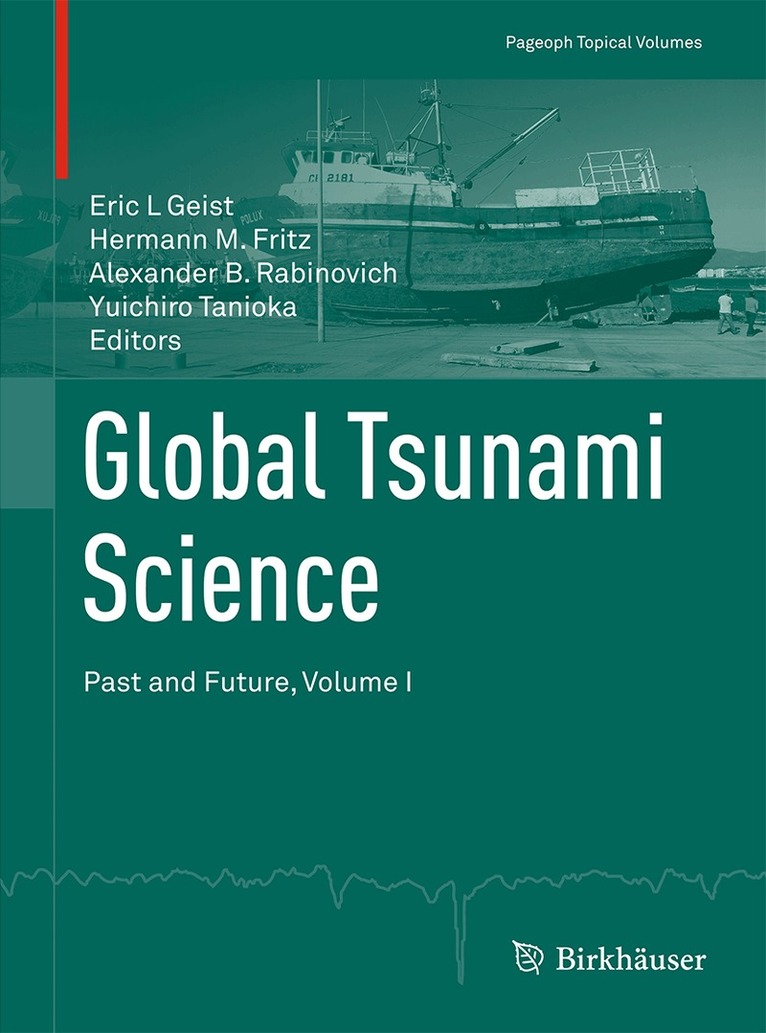
Tsunami science has evolved significantly since the occurrence of two of the most destructive natural disasters in recent times: the 26 December 2004 Sumatra tsunami that killed about 230,000 people along the coasts of 14 countries in the Indian Ocean and the 11 March 2011 Tohoku (Great East Japan) tsunami that killed almost 20,000 people and destroyed the Fukushima Daiichi nuclear power plant. As a result of these and many other destructive tsunamis that have occurred over just the last decade, scientists from around the world have come together to engage in tsunami research. The global community of researchers has also expanded by discipline, adapting advances in other sciences to study all aspects of tsunami hydrodynamics, detection, generation, and probability of occurrence. The papers presented in this first of two topical volumes of Pure and Applied Geophysics reflect the state of tsunami science during this time. Nine papers examine various aspects of tsunami hazard and riskassessment. Five papers present new methods for tsunami warning and detection and six other papers describe new methods for understanding tsunami hydrodynamics. The final five papers of the volume describe tsunamis generated by non-seismic sources and important case studies. Collectively, this volume highlights contemporary trends in global tsunami science, both fundamental and applied toward hazard assessment and mitigation. The volume is of interest to scientists and practitioners involved in all aspects of tsunamis from source processes to coastal impacts. Postgraduate students in geophysics, oceanography and coastal engineering – as well as students in the broader geosciences, civil and environmental engineering – will also find the book to be a valuable resource, as it combines recent case studies with advances in tsunami science and natural hazards mitigation.
906 kr
Skickas inom 10-15 vardagar
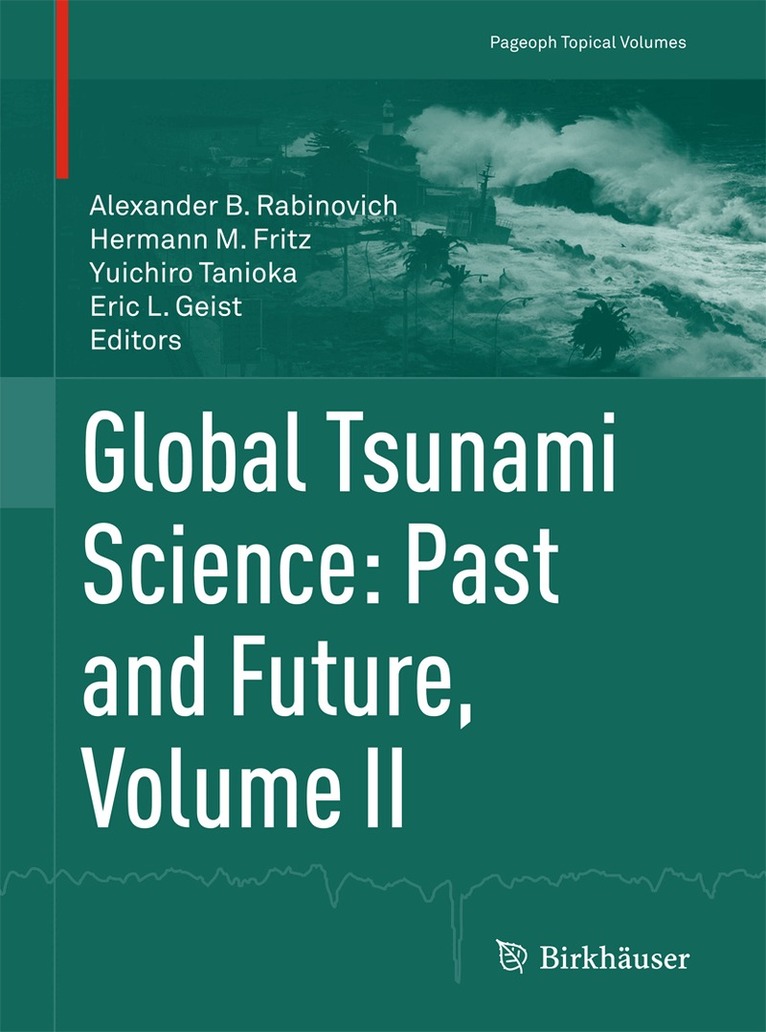
Tsunami science has evolved significantly since the occurrence of two of the most destructive natural disasters in recent times: The 26 December 2004 Sumatra tsunami and the 11 March 2011 Tohoku (Great East Japan) tsunami. As a result, scientists from around the world have come together to engage in tsunami research. Significant progress has been achieved in all aspects of tsunami hydrodynamics, detection, generation, and probability of occurrence. The papers presented in this second of three topical volumes of Pure and Applied Geophysics reflect the current state of tsunami science, including the further examination of the 2011 Tohoku event and its aftershocks, tsunami hydrodynamic and numerical modeling, hazard assessments and warning. In addition to underwater earthquakes, some other tsunamigenic phenomena are also discussed. Collectively, this volume highlights contemporary trends in global tsunami science, both fundamental and applied toward hazard assessment and mitigation. The volume is of interest to scientists and practitioners involved in all aspects of tsunamis from source processes to coastal impacts. Postgraduate students in geophysics, oceanography and coastal engineering – as well as students in the broader geosciences, civil and environmental engineering – will also find the book to be a valuable resource, as it combines recent case studies with advances in tsunami science and natural hazards mitigation.