Alexander B. Rabinovich - Böcker
Visar alla böcker från författaren Alexander B. Rabinovich. Handla med fri frakt och snabb leverans.
16 produkter
16 produkter
1 692 kr
Kommande
Tsunamis are among the world’s most dangerous and destructive natural phenomena. The catastrophic tsunami of December 26, 2004 claimed over 300000 lives. These numerous catastrophic tsunamis have caused a significant increase in scientific interest of this natural hazard. About 85% of all tsunamis occur in the Pacific Ocean and are the products of submarine earthquakes around the Pacific Rim, where collisions of tectonic plates form highly active seismic subductive zones. The Great Cascadia Earthquake of January 26, 1700, which occurred near the west coast of Canada, produced a catastrophic tsunami which affected the entire coast of the Pacific Ocean. Assembling data on observed tsunamis and cataloguing historical tsunamis are key problems for scientific examination of tsunami waves, estimation and mitigation of tsunami risk for coastal areas, and improvement of the existing Tsunami Warning Service. The purpose of the present book is to present the historical and modern data on the Canadian coast of the Pacific Ocean and to complete the existing tsunami database. At the same time, the book is intended to present some modern achievements in instrumentation, data analyses, numerical modelling, and estimation of tsunami risk and may be of interest for specialists in wave dynamics, seismology, geophysics, coastal engineering and natural hazard mitigation.
536 kr
Skickas inom 10-15 vardagar
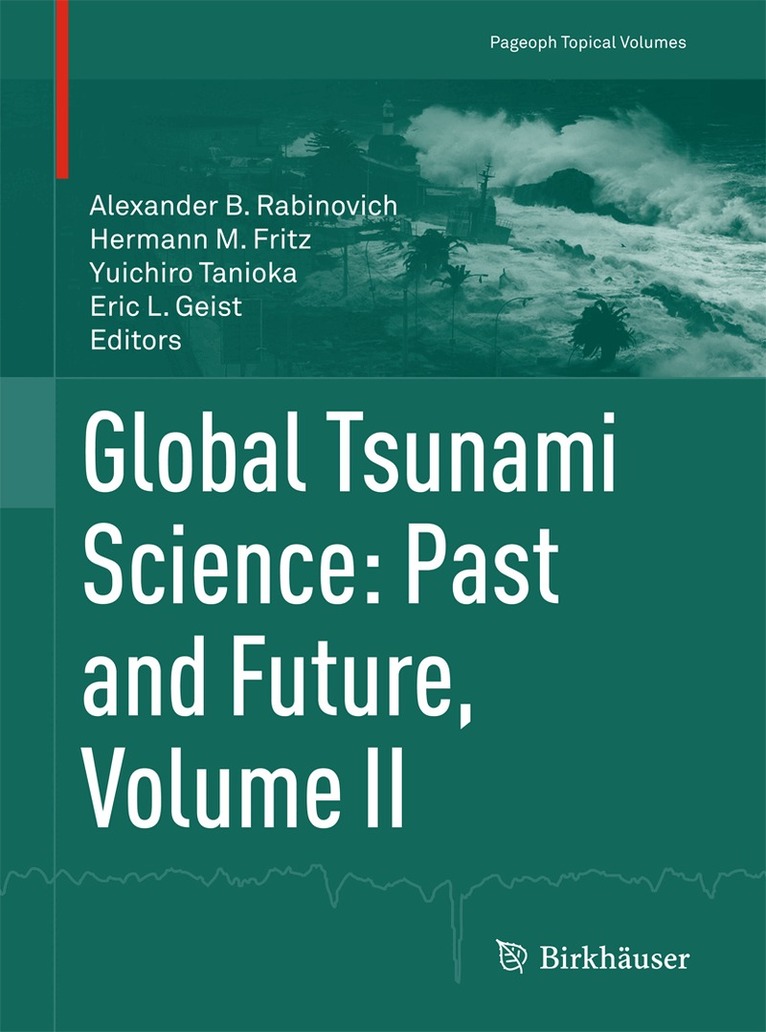
Tsunami science has evolved significantly since the occurrence of two of the most destructive natural disasters in recent times: the 26 December 2004 Sumatra tsunami that killed about 230,000 people along the coasts of 14 countries in the Indian Ocean and the 11 March 2011 Tohoku (Great East Japan) tsunami that killed almost 20,000 people and destroyed the Fukushima Daiichi nuclear power plant. As a result of these and many other destructive tsunamis that have occurred over just the last decade, scientists from around the world have come together to engage in tsunami research. The global community of researchers has also expanded by discipline, adapting advances in other sciences to study all aspects of tsunami hydrodynamics, detection, generation, and probability of occurrence. The papers presented in this third of three topical volumes of Pure and Applied Geophysics reflect the state of tsunami science during this time. Five papers from diverse geographic regions, ranging from off South Africa to northern Kamchatka, demonstrate the global nature of tsunami hazards. Six papers on tsunami hydrodynamic analysis and modeling form the core of this volume, similar to the previous two volumes of Global Tsunami Science. As a forefront of tsunami research, five papers discuss prehistoric tsunamis and tsunami generation by phenomena other than earthquakes. Finally, tsunami warning and real-time forecasting are important outcomes of tsunami science and are represented in this volume by four papers. Collectively, this volume highlights contemporary trends in global tsunami science, both fundamental and applied toward hazard assessment and mitigation. The volume is of interest to scientists and practitioners involved in all aspects of tsunamis from source processes to coastal impacts. Postgraduate students in geophysics, oceanography and coastal engineering – as well as students in the broader geosciences, civil and environmental engineering – will also find the book to be a valuable resource, as it combines recent case studies with advances in tsunami science and natural hazards mitigation.
Twenty Five Years of Modern Tsunami Science Following the 1992 Nicaragua and Flores Island Tsunamis. Volume I
Häftad, Engelska, 2020
1 064 kr
Skickas inom 10-15 vardagar
After a relatively quiet 28-year period following the 1964 Alaska earthquake and tsunami, two 1992 earthquakes occurred near Nicaragua and Flores Island, Indonesia. These earthquakes produced highly destructive tsunamis and opened a 25-year period of numerous devastating events, including two of the most destructive natural disasters in recent human history: the 26 December 2004 Sumatra tsunami that killed about 230,000 people and impacted at least 16 countries directly, and the 11 March 2011 Tohoku tsunami that killed almost 20,000 people and destroyed the Fukushima Dai-ichi nuclear power plant. The two 1992 events marked the beginning of a “modern tsunami science era”. The twenty-two papers in this special volume present the frontiers of tsunami science and research, and demonstrate the unprecedented progress achieved during this period. The contributions review historical tsunami events and field surveys, tsunami source models, landslide generated tsunamis, and tsunami numerical modeling. It concludes with contributions studying tsunami hazard assessment and warning, reflecting an everlasting challenge in the context of the advancement of tsunami science and of efforts in mitigation. This book is of interest to scientists and practitioners as well postgraduate students in geophysics, oceanography and coastal engineering involved in all aspects of tsunamis, from earthquake source processes to transoceanic wave propagation, from coastal impacts to hazard assessment, combining recent case studies with advances in tsunami science and natural hazards mitigation.Previously published in Pure and Applied Geophysics, Volume 176, Issue 7, 2019
Twenty Five Years of Modern Tsunami Science Following the 1992 Nicaragua and Flores Island Tsunamis. Volume II
Inbunden, Engelska, 2022
1 170 kr
Skickas inom 10-15 vardagar
This book presents the frontiers of tsunami science and research and demonstrates the unprecedented progress achieved during this period overviewing different aspect of tsunami science including meteorological tsunamis.The two 1992 events near Nicaragua and Flores Island, Indonesia, marked the beginning of a “modern tsunami science era” producing highly destructive tsunamis and opened a 25-year period of numerous devastating events, including two of the most destructive natural disasters in recent human history: the 26 December 2004 Sumatra and the 11 March 2011 Tohoku tsunamis. The book is of interest to scientists and practitioners as well postgraduate students in geophysics, oceanography and coastal engineering, involved in all aspects of tsunamis, from earthquake source processes to transoceanic wave propagation, from coastal impacts to hazard assessment and combining recent case studies with advances in tsunami science and natural hazards mitigation.
1 698 kr
Skickas inom 10-15 vardagar
This book contains a collection of papers from the special issue on the global perspective on meteotsunami science, published in Vol. 106 (2) of the journal Natural Hazards. By topic, the contributions are covering overview studies, case studies of actual events, introduction of new insights into meteotsunami modelling, new techniques in meteotsunami monitoring and detection, and those describing meteotsunami operational and forecast systems. More than half of all papers describe specific meteotsunami events observed in most of the world ocean basins, some others at a rudimentary level recall previous extreme episodes, while several papers contain thorough analysis of either atmospheric conditions or oceanic sea-level response.The book is intended for specialists in oceanography and atmospheric sciences, tsunami and fluid dynamics scientists, climatologists, coastal hazard agencies and managers, ocean engineers and many others, including students and science policy-makers, inparticular in the regions affected by this potentially destructive coastal hazard.The chapters "Proudman resonance with tides, bathymetry and variable atmospheric forcings", "Long wave generation and coastal amplification due to propagating atmospheric pressure disturbances", "On the potential of ensemble forecasting for the prediction of meteotsunamis in the Balearic Islands: sensitivity to atmospheric model parameterizations", and "Combined hazard of typhoon-generated meteorological tsunamis and storm surges along the coast of Japan" are available open access under a Creative Commons Attribution 4.0 International License via link.springer.com.Previously published in Natural Hazards, Volume 106, Issue 2, 2021
1 698 kr
Skickas inom 10-15 vardagar
This book contains a collection of papers from the special issue on the global perspective on meteotsunami science, published in Vol. 106 (2) of the journal Natural Hazards. By topic, the contributions are covering overview studies, case studies of actual events, introduction of new insights into meteotsunami modelling, new techniques in meteotsunami monitoring and detection, and those describing meteotsunami operational and forecast systems. More than half of all papers describe specific meteotsunami events observed in most of the world ocean basins, some others at a rudimentary level recall previous extreme episodes, while several papers contain thorough analysis of either atmospheric conditions or oceanic sea-level response.The book is intended for specialists in oceanography and atmospheric sciences, tsunami and fluid dynamics scientists, climatologists, coastal hazard agencies and managers, ocean engineers and many others, including students and science policy-makers, inparticular in the regions affected by this potentially destructive coastal hazard.The chapters "Proudman resonance with tides, bathymetry and variable atmospheric forcings", "Long wave generation and coastal amplification due to propagating atmospheric pressure disturbances", "On the potential of ensemble forecasting for the prediction of meteotsunamis in the Balearic Islands: sensitivity to atmospheric model parameterizations", and "Combined hazard of typhoon-generated meteorological tsunamis and storm surges along the coast of Japan" are available open access under a Creative Commons Attribution 4.0 International License via link.springer.com.Previously published in Natural Hazards, Volume 106, Issue 2, 2021
1 276 kr
Skickas inom 10-15 vardagar
On 28 September a Mw 7.5 local earthquake near nprthwestern Sulawesi Island caused a strong tsunami that destructively affected Palu Bay. Three months later, on 22 December an explosion of Anak/Krakatau Volcano in Sunda Strait between Jawa and Sumatra islands generated tsunami waves that killed 426 and injured more than 14,000 people.
Historical and Recent Catastrophic Tsunamis in the World
Volume I. The 2011 Tohoku Tsunami
Häftad, Engelska, 2013
1 064 kr
Skickas inom 10-15 vardagar
The 2011 Tohoku earthquake generated a tsunami that caused severe damage including 20,000 casualties in Japan. The tsunami also affected other Pacific coasts, including the Kuril Islands, the USA, French Polynesia, the Galapagos Islands, Australia, and New Zealand. This volume contains an introduction and 21papers, mostly presented at the 25th International Tsunami Symposium held 1-4 July 2011, only four months after the tsunami. They report seismological aspects of the event related to the tsunami warning, the tsunami impacts and effects in Japan and around the Pacific, analyses of instrumental tsunami data and modelling.
Historical and Recent Catastrophic Tsunamis in the World
Volume II. Tsunamis from 1755 to 2010
Häftad, Engelska, 2013
1 064 kr
Skickas inom 10-15 vardagar
The 2010 tsunamis generated in Haiti, Chile, and Indonesia caused various damage on the coasts. In the past, the 1755 Lisbon, 1964 Alaska, and 2003 Algeria earthquakes also generated damaging tsunamis. This volume contains an introduction and 18 papers, mostly presented at the 25th International Tsunami Symposium held 1-4 July 2011. They report the above tsunamis and discuss tsunami DART observations, warning systems, risk management in the Pacific, modelling of earthquake and landslide tsunamis, and probabilistic tsunami hazard assessment.
536 kr
Skickas inom 10-15 vardagar
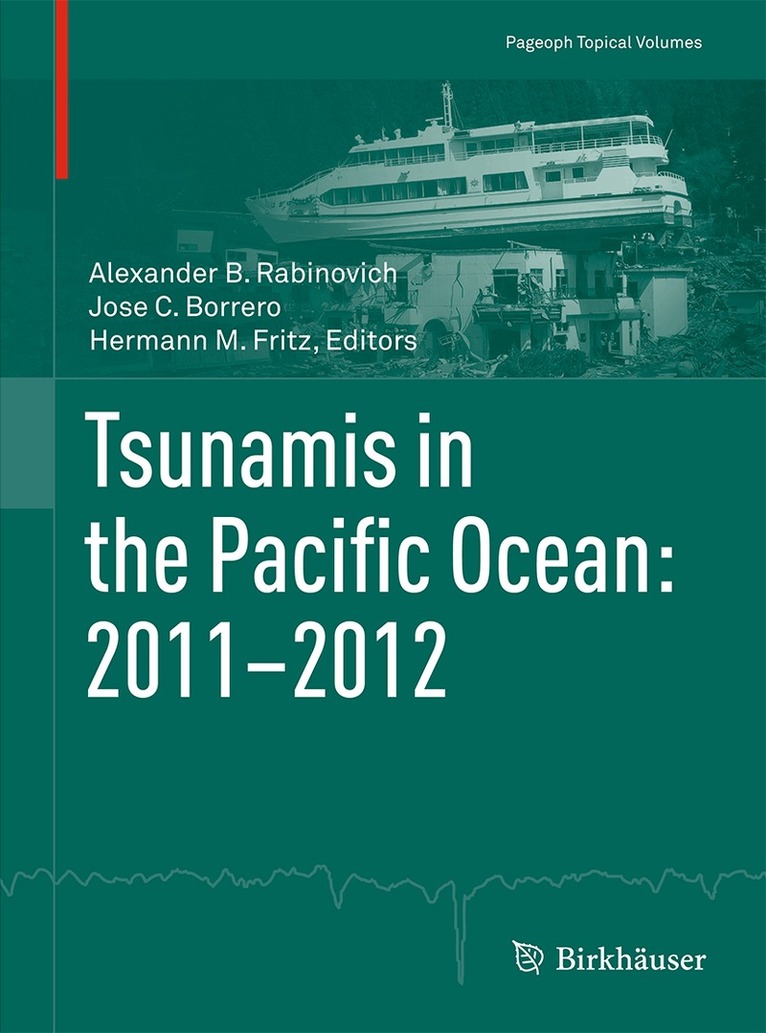
The 2011 Tohoku earthquake generated a catastrophic tsunami that killed nearly 20,000 people along the coast of Japan and caused the nuclear disaster at the Fukushima Daiichi Nuclear Power Plant. The tsunami propagated throughout the Pacific Ocean and also affected many other countries, including Russia, the USA, New Zealand, French Polynesia and Chile, demonstrating once again the terrible threat that tsunami waves pose for Pacific countries and the need for basin-wide international scientific collaboration.Following a brief introduction, this volume presents 21 scientific papers, including 12 on aspects of the 2011 Tohoku event. A first group of papers provides detailed field survey results from the coasts of Japan and Russia and examines the wave dynamics on the basis of these surveys, the source mechanism of the earthquake, and the far-field impacts of the Tohoku tsunami. The second group reports on the 2012 tsunamis in El Salvador, the Philippines, off the east coast of Honshu and the landmark Haida Gwaii event off the west coast of British Columbia, Canada, while the papers in a third set discuss a number of remaining challenging questions in tsunami science and warning. The volume will be of interest to scientists and practitioners involved in all aspects of tsunamis from earthquake source processes to transoceanic wave propagation and coastal impacts. Postgraduate students in geophysics, oceanography and coastal engineering – as well as those in the broader geosciences, civil and environmental engineering – will also find the book a valuable resource, as it combines recent case studies with the latest advances in tsunami science and natural hazards mitigation.
536 kr
Skickas inom 10-15 vardagar
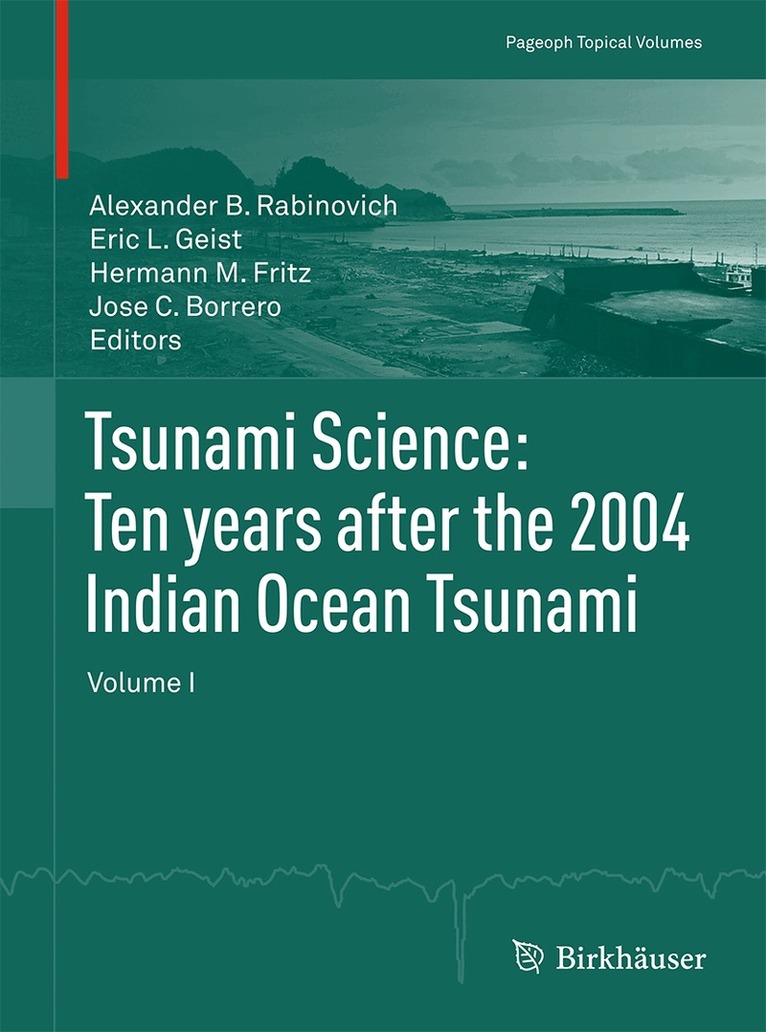
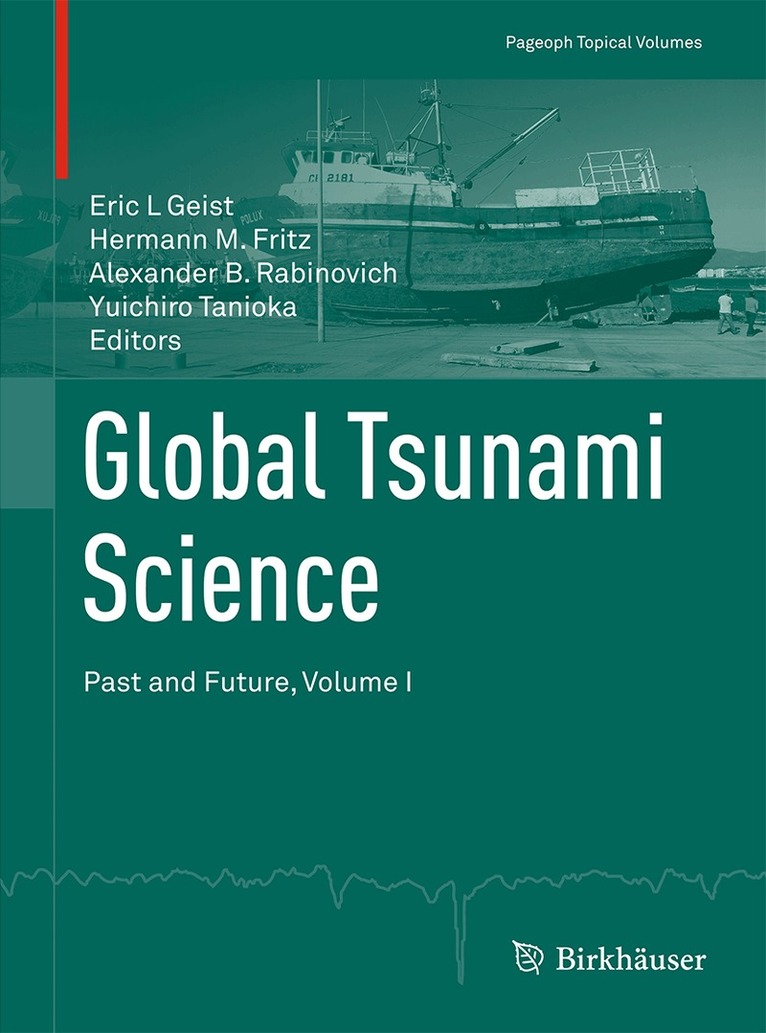
This is the first volume of a collection of essays focusing on progress in tsunami science since the great tsunami of 26 December. A magnitude Mw 9.1 earthquake (third strongest ever instrumentally recorded) generated a global tsunami that killed about 230,000 people along the coasts of 14 countries in the Indian Ocean and propagated as far as the North Pacific and North Atlantic.Since then, various countries from around the globe contributed major funding to tsunami research and mitigation, enabling the installation of hundreds of new high-precision instruments, the development of new technology and the establishment of more modern communication systems. As a result, incredible progress has been achieved in tsunami research and operation during the ten years after the 2004 Indian Ocean tsunami.The papers presented in this first of two special volumes of Pure and Applied Geophysics reflect the state of tsunami science during this time. Eight papers are related to casestudies highlighting regional hazards around the globe, while five papers record progress in tsunami warning systems. Benchmark studies that describe the accuracy of numerical models for tsunami impact, as well as a variety of inundation and generation studies, are presented by 7 additional papers.
1 064 kr
Skickas inom 10-15 vardagar
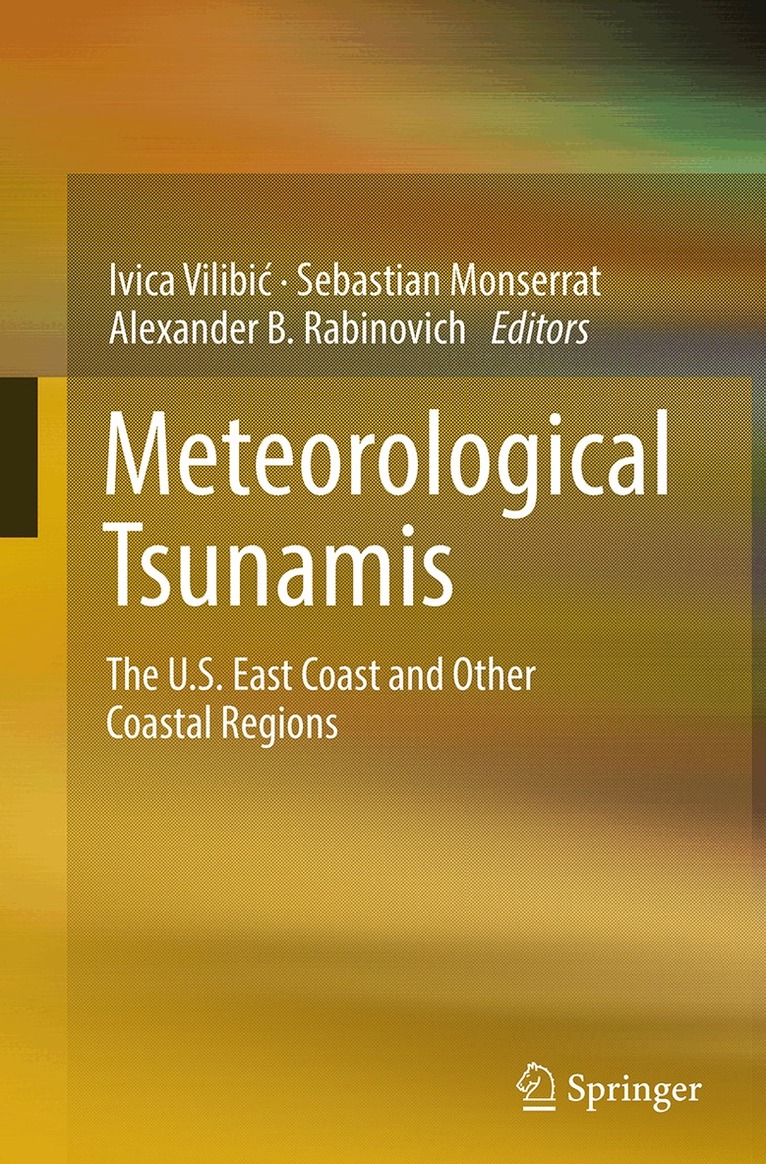
The book encompasses a set of papers on meteorological tsunamis covering various aspects on this rare but potentially destructive multiresonant phenomenon. Altogether an editorial and 15 contributions are part of this book; eight of the contributions deal with different aspects of meteotsunamis along the U.S. East Coast and in the region of the Great Lakes, including one paper introducing a new methodology in meteotsunami research. Seven more papers are documenting meteotsunamis in various coastal areas of the world oceans. All continents, except Antarctica, have been covered, with the authors representing 11 countries. Previously Published in Natural Hazards, Volume 74, No. 1, 2014
1 064 kr
Skickas inom 10-15 vardagar
The book encompasses a set of papers on meteorological tsunamis covering various aspects on this rare but potentially destructive multiresonant phenomenon.
1 170 kr
Skickas inom 10-15 vardagar
Tsunami science has evolved significantly since the occurrence of two of the most destructive natural disasters in recent times: the 26 December 2004 Sumatra tsunami that killed about 230,000 people along the coasts of 14 countries in the Indian Ocean and the 11 March 2011 Tohoku (Great East Japan) tsunami that killed almost 20,000 people and destroyed the Fukushima Daiichi nuclear power plant. As a result of these and many other destructive tsunamis that have occurred over just the last decade, scientists from around the world have come together to engage in tsunami research. The global community of researchers has also expanded by discipline, adapting advances in other sciences to study all aspects of tsunami hydrodynamics, detection, generation, and probability of occurrence. The papers presented in this first of two topical volumes of Pure and Applied Geophysics reflect the state of tsunami science during this time. Nine papers examine various aspects of tsunami hazard and riskassessment. Five papers present new methods for tsunami warning and detection and six other papers describe new methods for understanding tsunami hydrodynamics. The final five papers of the volume describe tsunamis generated by non-seismic sources and important case studies. Collectively, this volume highlights contemporary trends in global tsunami science, both fundamental and applied toward hazard assessment and mitigation. The volume is of interest to scientists and practitioners involved in all aspects of tsunamis from source processes to coastal impacts. Postgraduate students in geophysics, oceanography and coastal engineering – as well as students in the broader geosciences, civil and environmental engineering – will also find the book to be a valuable resource, as it combines recent case studies with advances in tsunami science and natural hazards mitigation.
536 kr
Skickas inom 10-15 vardagar
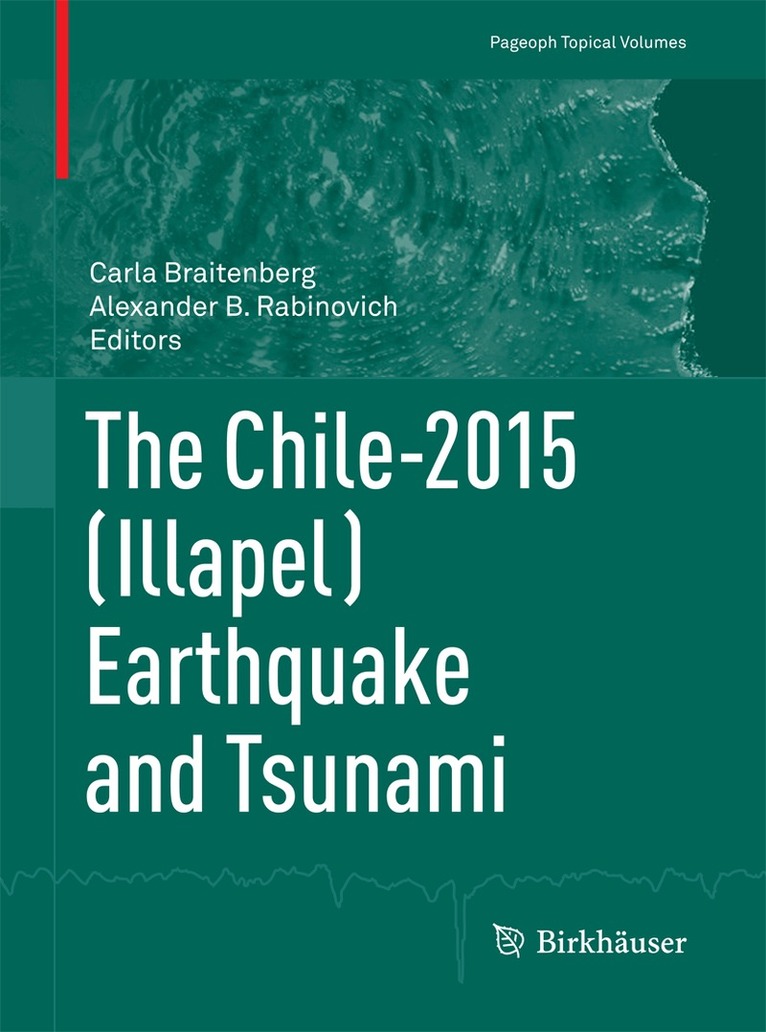
This volume presents a collection of contributions that were published in "Pure and Applied Geophysics - pageoph" and which deals with the major earthquake that hit Illapel, Chile on September 16, 2015 with magnitude 8.3, and associated trans-oceanic tsunami.
906 kr
Skickas inom 10-15 vardagar
Tsunami science has evolved significantly since the occurrence of two of the most destructive natural disasters in recent times: The 26 December 2004 Sumatra tsunami and the 11 March 2011 Tohoku (Great East Japan) tsunami. As a result, scientists from around the world have come together to engage in tsunami research. Significant progress has been achieved in all aspects of tsunami hydrodynamics, detection, generation, and probability of occurrence. The papers presented in this second of three topical volumes of Pure and Applied Geophysics reflect the current state of tsunami science, including the further examination of the 2011 Tohoku event and its aftershocks, tsunami hydrodynamic and numerical modeling, hazard assessments and warning. In addition to underwater earthquakes, some other tsunamigenic phenomena are also discussed. Collectively, this volume highlights contemporary trends in global tsunami science, both fundamental and applied toward hazard assessment and mitigation. The volume is of interest to scientists and practitioners involved in all aspects of tsunamis from source processes to coastal impacts. Postgraduate students in geophysics, oceanography and coastal engineering – as well as students in the broader geosciences, civil and environmental engineering – will also find the book to be a valuable resource, as it combines recent case studies with advances in tsunami science and natural hazards mitigation.