Hideaki Terashima - Böcker
Visar alla böcker från författaren Hideaki Terashima. Handla med fri frakt och snabb leverans.
4 produkter
4 produkter
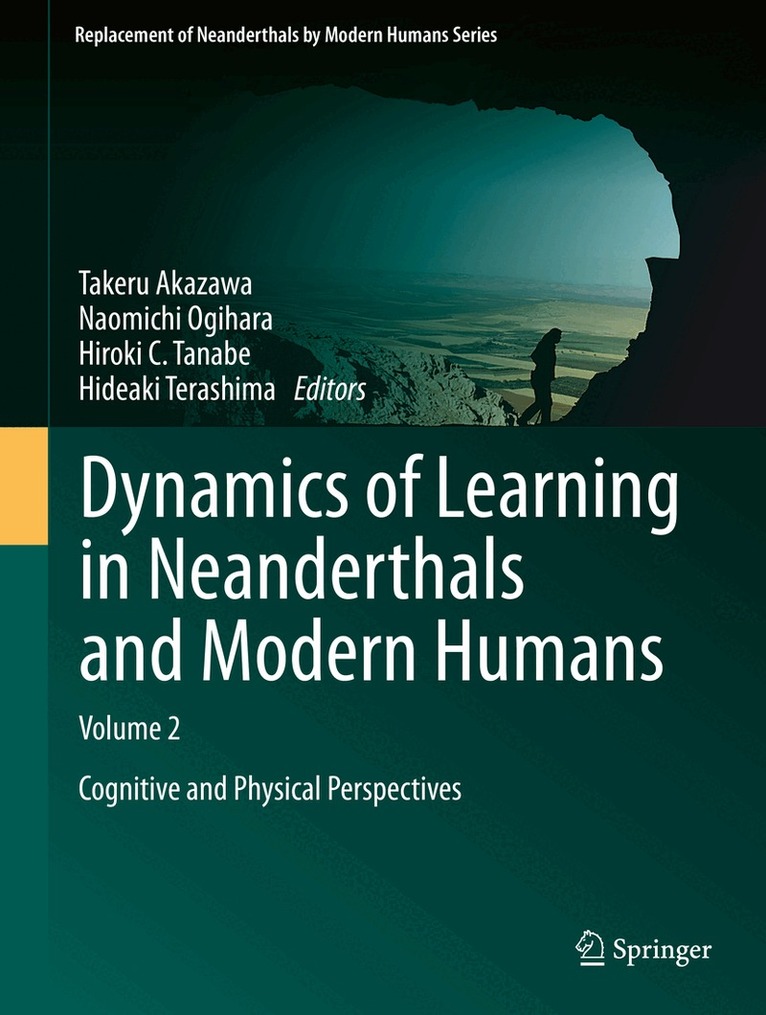
Dynamics of Learning in Neanderthals and Modern Humans Volume 2
Cognitive and Physical Perspectives
Inbunden, Engelska, 2014
1 034 kr
Skickas inom 10-15 vardagar
This volume is the second of two volumes of proceedings from the International Conference on the Replacement of Neanderthals by Modern Humans, which took place in Tokyo in November 2012. This second volume reports, in four major sections, findings by cultural anthropologists, physical anthropologists, engineering scientists and neurophysiologists, integrated in multidisciplinary fashion to solidify the overall understanding of the mechanics of replacement from cognitive and physical perspectives. Part 1 provides examinations of replacement related questions from various perspectives in cognition and psychology. Part 2, consisting of studies rooted in body science and genetics, provides detailed findings which fill in the broader frame of the replacement phenomenon. Part 3 presents a collection of papers whose findings about fossil crania and brain morphology shed direct light on immediate questions regarding replacement. Part 4 provides illuminations similar to those in part 3, but arising from the analytical empowerment afforded by neuroscience. The collection of 26 papers in this volume makes available to readers both broad and narrow insights on the mechanisms of the replacement/assimilation of Neanderthals by modern humans and at the same time provides a model of new-paradigm multidisciplinary collaboration on a complex problem.
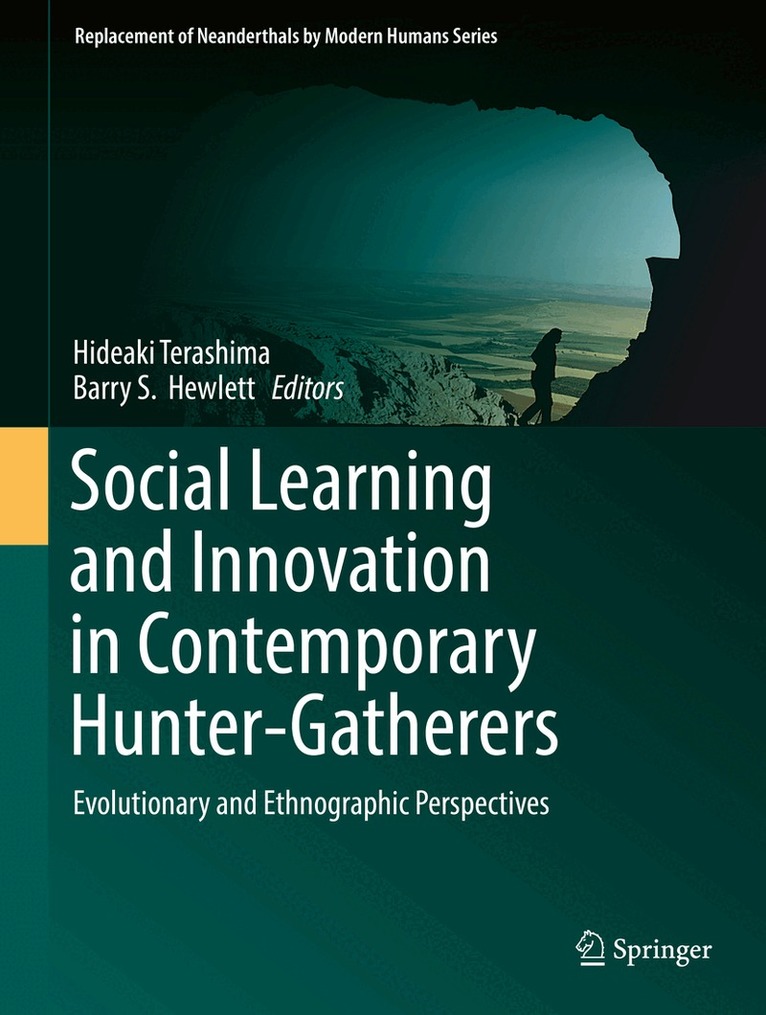
Social Learning and Innovation in Contemporary Hunter-Gatherers
Evolutionary and Ethnographic Perspectives
Inbunden, Engelska, 2016
1 422 kr
Skickas inom 10-15 vardagar
This is the first book to examine social learning and innovation in hunter–gatherers from around the world. More is known about social learning in chimpanzees and nonhuman primates than is known about social learning in hunter–gatherers, a way of life that characterized most of human history. The book describes diverse patterns of learning and teaching behaviors in contemporary hunter–gatherers from the perspectives of cultural anthropology, ecological anthropology, biological anthropology, and developmental psychology. The book addresses several theoretical issues including the learning hypothesis which suggests that the fate of Homo sapiens and Neanderthals in the last glacial period might have been due to the differences in learning ability. It has been unequivocally claimed that social learning is intrinsically important for human beings; however, the characteristics of human learning remain under a dense fog despite innumerable studies with children from urban–industrialcultures. Controversy continues on problems such as: do hunter–gatherers teach? If so, what types of teaching occur, who does it, how often, under what contexts, and so on. The book explores the most basic and intrinsic aspects of social learning as well as the foundation of innovative activities in everyday activities of contemporary hunter–gatherer people across the earth. The book examines how hunter-gatherer core values, such as gender and age egalitarianism and extensive sharing of food and childcare are transmitted and acquired by children. Chapters are grouped into five sections: 1) theoretical perspectives of learning in hunter–gatherers, 2) modes and processes of social learning in hunter–gatherers, 3) innovation and cumulative culture, 4) play and other cultural contexts of social learning and innovation, 5) biological contexts of learning and innovation. Ideas and concepts based on the data gathered through an intensive fieldwork by the authors will give much insight into the mechanisms and meanings of learning and education in modern humans.
Dynamics of Learning in Neanderthals and Modern Humans Volume 2
Cognitive and Physical Perspectives
Häftad, Engelska, 2016
1 096 kr
Skickas inom 10-15 vardagar
This volume is the second of two volumes of proceedings from the International Conference on the Replacement of Neanderthals by Modern Humans, which took place in Tokyo in November 2012. This second volume reports, in four major sections, findings by cultural anthropologists, physical anthropologists, engineering scientists and neurophysiologists, integrated in multidisciplinary fashion to solidify the overall understanding of the mechanics of replacement from cognitive and physical perspectives. Part 1 provides examinations of replacement related questions from various perspectives in cognition and psychology. Part 2, consisting of studies rooted in body science and genetics, provides detailed findings which fill in the broader frame of the replacement phenomenon. Part 3 presents a collection of papers whose findings about fossil crania and brain morphology shed direct light on immediate questions regarding replacement. Part 4 provides illuminations similar to those in part 3, but arising from the analytical empowerment afforded by neuroscience. The collection of 26 papers in this volume makes available to readers both broad and narrow insights on the mechanisms of the replacement/assimilation of Neanderthals by modern humans and at the same time provides a model of new-paradigm multidisciplinary collaboration on a complex problem.
Social Learning and Innovation in Contemporary Hunter-Gatherers
Evolutionary and Ethnographic Perspectives
Häftad, Engelska, 2018
1 422 kr
Skickas inom 10-15 vardagar
This is the first book to examine social learning and innovation in hunter–gatherers from around the world. More is known about social learning in chimpanzees and nonhuman primates than is known about social learning in hunter–gatherers, a way of life that characterized most of human history. The book describes diverse patterns of learning and teaching behaviors in contemporary hunter–gatherers from the perspectives of cultural anthropology, ecological anthropology, biological anthropology, and developmental psychology. The book addresses several theoretical issues including the learning hypothesis which suggests that the fate of Homo sapiens and Neanderthals in the last glacial period might have been due to the differences in learning ability. It has been unequivocally claimed that social learning is intrinsically important for human beings; however, the characteristics of human learning remain under a dense fog despite innumerable studies with children from urban–industrialcultures. Controversy continues on problems such as: do hunter–gatherers teach? If so, what types of teaching occur, who does it, how often, under what contexts, and so on. The book explores the most basic and intrinsic aspects of social learning as well as the foundation of innovative activities in everyday activities of contemporary hunter–gatherer people across the earth. The book examines how hunter-gatherer core values, such as gender and age egalitarianism and extensive sharing of food and childcare are transmitted and acquired by children. Chapters are grouped into five sections: 1) theoretical perspectives of learning in hunter–gatherers, 2) modes and processes of social learning in hunter–gatherers, 3) innovation and cumulative culture, 4) play and other cultural contexts of social learning and innovation, 5) biological contexts of learning and innovation. Ideas and concepts based on the data gathered through an intensive fieldwork by the authors will give much insight into the mechanisms and meanings of learning and education in modern humans.