Hilary M. Schor – författare
Visar alla böcker från författaren Hilary M. Schor. Handla med fri frakt och snabb leverans.
4 produkter
4 produkter
367 kr
Skickas inom 5-8 vardagar
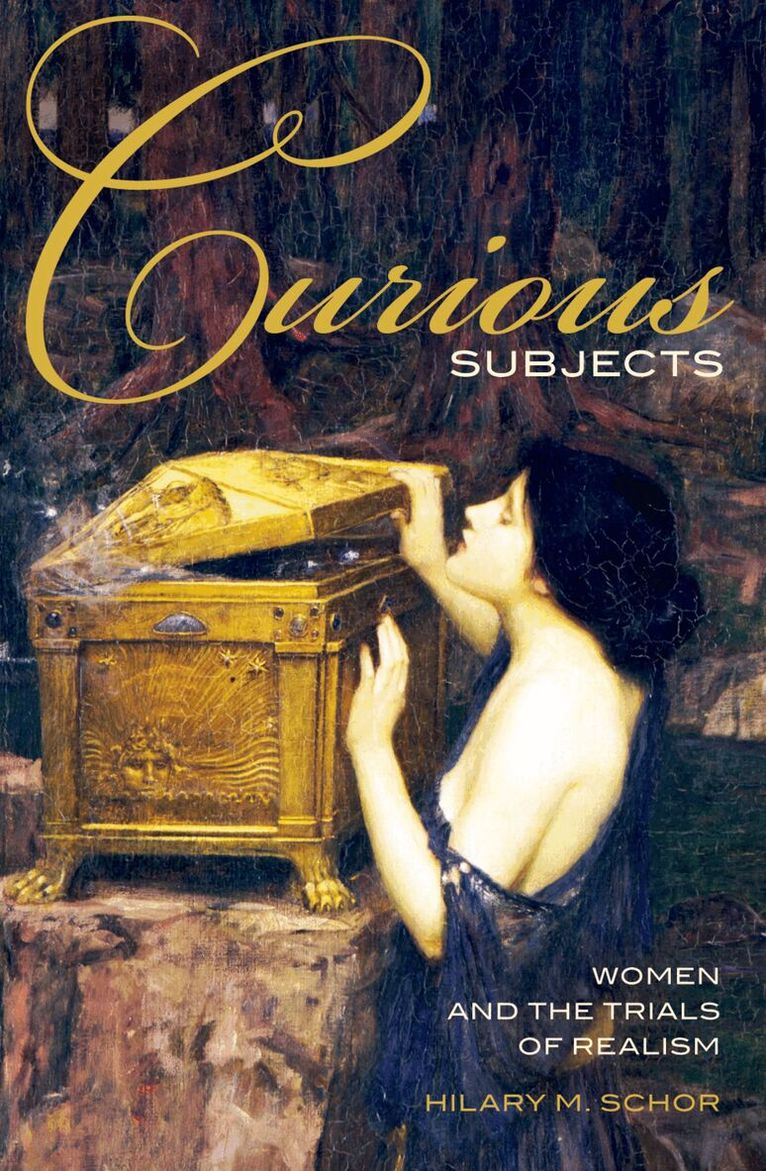
While nineteenth-century literary scholars have long been interested in women's agency in the context of their legal status as objects, Curious Subjects makes the striking and original argument that what we find at the intersection between women subjects (who choose and enter into contracts) and women objects (owned and defined by fathers, husbands, and the law) is curiosity. Women protagonists in the novel are always both curiosities: strange objects worthy of our interest and actors who are themselves actively curious--relentless askers of questions, even (and perhaps especially) when they are commanded to be content and passive. What kinds of curiosity are possible and desirable, and what different kinds of knowledge do they yield? What sort of subject asks questions, seeks, chooses? Can a curious woman turn her curiosity on herself? Curious Subjects takes seriously the persuasive force of the novel as a form that intervenes in our sense of what women want to know and how they can and should choose to act on that knowledge. And it shows an astonishingly wide and subtly various range of answers to these questions in the British novel, which far from simply punishing women for their curiosity, theorized it, shaped it, and reworked it to give us characters as different as Alice in Wonderland and Dorothea Brooke, Clarissa Harlowe and Louisa Gradgrind. Schor's study provides thought-provoking new readings of the most canonical novels of the nineteenth century--Hard Times, Bleak House, Vanity Fair, Daniel Deronda, among others--and pushes well beyond commonplace historicist accounts of British culture in the period as a monolithic ideological formation. It will interest scholars of law and literature, narratology, and feminist theory as well as literary history more generally.
1 299 kr
Skickas inom 5-8 vardagar
While nineteenth-century literary scholars have long been interested in women's agency in the context of their legal status as objects, Curious Subjects makes the striking and original argument that what we find at the intersection between women subjects (who choose and enter into contracts) and women objects (owned and defined by fathers, husbands, and the law) is curiosity. Women protagonists in the novel are always both curiosities: strange objects worthy of our interest and actors who are themselves actively curious-relentless askers of questions, even (and perhaps especially) when they are commanded to be content and passive. What kinds of curiosity are possible and desirable, and what different kinds of knowledge do they yield? What sort of subject asks questions, seeks, chooses? Can a curious woman turn her curiosity on herself? Curious Subjects takes seriously the persuasive force of the novel as a form that intervenes in our sense of what women want to know and how they can and should choose to act on that knowledge. And it shows an astonishingly wide and subtly various range of answers to these questions in the British novel, which far from simply punishing women for their curiosity, theorized it, shaped it, and reworked it to give us characters as different as Alice in Wonderland and Dorothea Brooke, Clarissa Harlowe and Louisa Gradgrind. Schor's study provides thought-provoking new readings of the most canonical novels of the nineteenth century-Hard Times, Bleak House, Vanity Fair, Daniel Deronda, among others-and pushes well beyond commonplace historicist accounts of British culture in the period as a monolithic ideological formation. It will interest scholars of law and literature, narratology, and feminist theory as well as literary history more generally.
Del 25 - Cambridge Studies in Nineteenth-Century Literature and Culture
Dickens and the Daughter of the House
Häftad, Engelska, 2007
644 kr
Skickas inom 7-10 vardagar
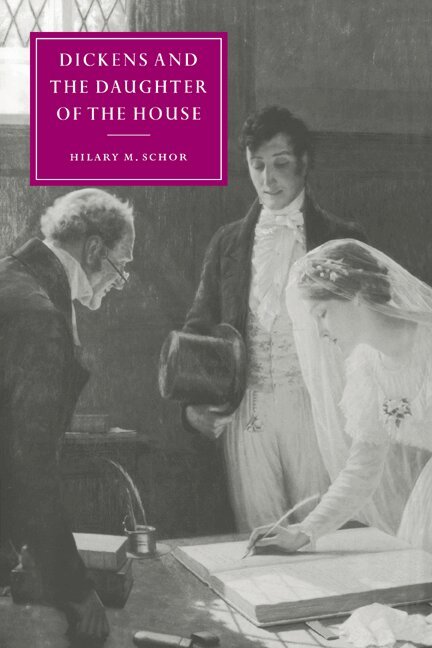
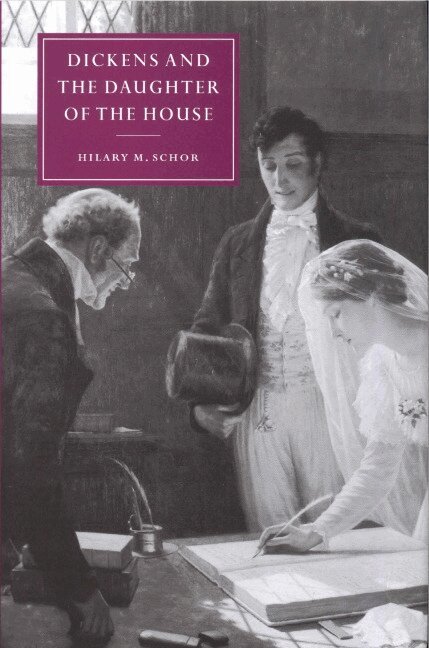
Feminist criticism has not been kind to Charles Dickens. The characters George Orwell referred to as 'legless angels' - Little Nell, Agnes Wickfield, Esther Summerson and others - have been conjured as evidence of Dickens' inability to create 'real' women. Critics wishing to rescue him have turned to the dark, angry women - Nancy, Lady Dedlock, Miss Wade - who disrupt the calm surface of some of Dickens' novels. In this book Hilary M. Schor argues that the role of the good daughter is interwoven with that of her angry double in Dickens' fiction, and is the centre of narrative authority in the Dickens' novel. As the good daughters must leave their father's house and enter the world of the marketplace, they transform and rewrite the stories they are empowered to tell. The daughter's uncertain legal status and her power of narrative gave Dickens a way of reading and writing his own culture differently.
Del 25 - Cambridge Studies in Nineteenth-Century Literature and Culture
Dickens and the Daughter of the House
Inbunden, Engelska, 2000
1 431 kr
Skickas inom 7-10 vardagar
Feminist criticism has not been kind to Charles Dickens. The characters George Orwell referred to as 'legless angels' - Little Nell, Agnes Wickfield, Esther Summerson and others - have been conjured as evidence of Dickens' inability to create 'real' women. Critics wishing to rescue him have turned to the dark, angry women - Nancy, Lady Dedlock, Miss Wade - who disrupt the calm surface of some of Dickens' novels. In this book Hilary M. Schor argues that the role of the good daughter is interwoven with that of her angry double in Dickens' fiction, and is the centre of narrative authority in the Dickens' novel. As the good daughters must leave their father's house and enter the world of the marketplace, they transform and rewrite the stories they are empowered to tell. The daughter's uncertain legal status and her power of narrative gave Dickens a way of reading and writing his own culture differently.