Hilary McD. Beckles - Böcker
Visar alla böcker från författaren Hilary McD. Beckles. Handla med fri frakt och snabb leverans.
10 produkter
10 produkter
242 kr
Skickas inom 7-10 vardagar
Written by two of the Caribbean's leading historians, Liberties Lost is an essential book for students engaged in following courses on the history of the Caribbean. It will also be of interest to general readers seeking information on the history of the region. Starting with indigenous societies, Liberties Lost covers Europe's Caribbean project, European settlement and rivalry, the Transatlantic trade in enslaved Africans; sugar and slavery; African culture and community life; revolt and resistance and, finally, Caribbean emancipation.
254 kr
Skickas inom 7-10 vardagar
Written by two of the Caribbean's leading historians, Freedoms Won is an essential book for students engaged in following courses on the history of the Caribbean. It will also be of interest to general readers seeking information on the history of the region. Starting with the aftermath of emancipation, Freedoms Won covers the African-Caribbean peasantry, Asian arrival in the Caribbean, social and political experiences of the working classes in the immediate post-slavery period, the Caribbean economy, US intervention and imperialst tendencies from the 18th century, the Labour Movement in the Caribbean in the 20th centurym the social life and culture of the Caribbean people, and social protest, decolonisation and nationhood.
420 kr
Skickas inom 7-10 vardagar
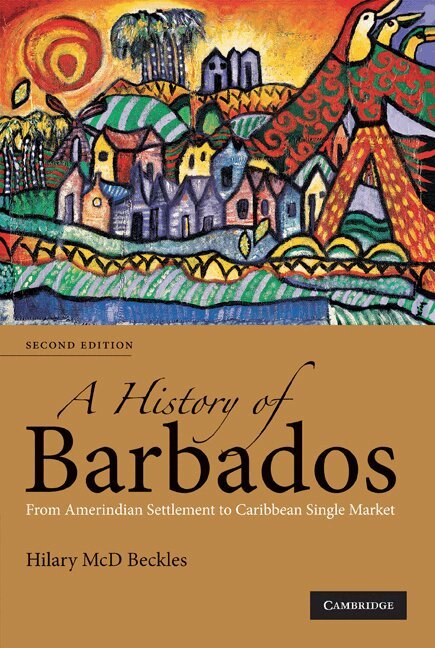
Highly acclaimed when it first appeared in 1990, this general history of Barbados traces the events and ideas that have shaped the collaborative experience of all the islands inhabitants. In this second edition, Hilary Beckles updates the text to reflect the considerable number of writings recently published on Barbados. He presents new insights and analyses key events in a lucid and provocative style which will appeal to all those who have an interest in the island's past and present. Using a vigorous approach, Hilary Beckles examines how the influences of the Amerindians, European colonisation, the sugar industry, the African slave trade, emancipation, the civil rights movement, independence in 1966 and nationalism have shaped contemporary Barbados.
278 kr
Skickas inom 10-15 vardagar
583 kr
Skickas inom 10-15 vardagar
In 1974 Lucille Mathurin Mair defended her dissertation, which has since become a classic work in Caribbean historiography and influenced generations of scholars. Through extensive archival work with estate records, legal records, family papers and private correspondence, she sought out the women of Jamaica's past during slavery, women of all classes, all colours, black, brown and white. The work stands as a convincing exposure of women as agents of history - a path-breaking achievement at a time when Caribbean historiography ignored women. From her meticulous research emerged a powerful statement that has shaped subsequent understandings of gendered and cultural relations in Jamaican society: the white woman consumed, the coloured woman served and the black woman laboured. Over three decades Mair's dissertation became the most sought after unpublished work among students and scholars of Caribbean history and culture. Now available as a published monograph, the work will be more widely available to a new generation of scholars concerned with Atlantic history, slavery, culture and gender.The editors have provided a useful and informative introduction and a bibliography, containing the original bibliography in the dissertation now supplemented by bibliographies detailing Mathurin Mair's subsequent publications, subsequent UWI theses on women or gender, and books, articles and papers on Caribbean gender issues since 1974. Co-published with the Centre for Gender and Development Studies, University of the West Indies, Jamaica.
357 kr
Skickas
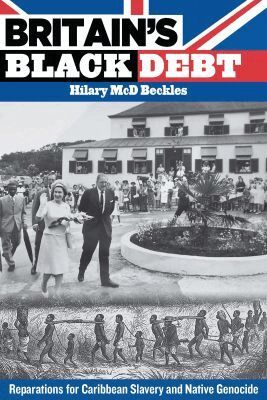
Since the mid-nineteenth-century abolition of slavery, the call for reparations for the crime of African enslavement and native genocide has been growing. In the Caribbean, grassroots and official voices now constitute a regional reparations movement. While it remains a fractured, contentious and divisive call, it generates considerable public interest, especially within sections of the community that are concerned with issues of social justice, equity, civil and human rights, education, and cultural identity. The reparations discourse has been shaped by the voices from these fields as they seek to build a future upon the settlement of historical crimes.This is the first scholarly work that looks comprehensively at the reparations discussion in the Caribbean. Written by a leading economic historian of the region, a seasoned activist in the wider movement for social justice and advocacy of historical truth, Britain’s Black Debt looks at the origins and development of reparations as a regional and international process. Weaving together detailed historical data on Caribbean slavery and the transatlantic slave trade with legal principles and the politics of postcolonialism, the author sets out a solid academic analysis of the evidence. He concludes that Britain has a case of reparations to answer which the Caribbean should litigate.The presentation of rich empirical historical data on Britain’s transatlantic slave economy and society supports the legal claim that chattel slavery as established by the British state and sustained by citizens and governments was understood then as a crime, but political and moral outrage were silenced by the argument that the enslavement of black people was in Britain’s national interest. International law provides that chattel slavery as practised by Britain was a crime against humanity. Slavery was invested in by the royal family, the government, the established church, most elite families, and large public institutions in the private and public sector. Citing the legal principles of unjust and criminal enrichment, the author presents a compelling argument for Britain’s payment of its black debt, a debt that it continues to deny in the face of overwhelming evidence to the contrary.Britain’s Black Debt brings together the evidence and arguments that the general public and expert policymakers have long called for. It is at once an exciting narration of Britain’s dominance of the slave markets that enriched the economy and a seminal conceptual journey into the hidden politics and public posturing of leaders on both sides of the Atlantic. No work of this kind has ever been attempted. No author has had the diversity of historical research skills, national and international political involvement, and personal engagement as an activist to present such a complex yet accessible work of scholarship for both activists and academics.
336 kr
Skickas inom 10-15 vardagar
Rihanna is arguably the most commercially successful Caribbean artist in history. She is Barbadian and has been unwavering in publicly articulating her national and regional belongings. Still, there have been varied responses to Rihanna’s ascendancy, both in the Barbadian public and Caribbean community at large – responses that reveal as much about our own national/regional anxieties as they do about the artist herself. The cutting edge, boundary-transgressing, cultural icon Rihanna is certainly subject to moralistic scrutiny from her global audiences as well; however, the essays in this collection purposely seek to de-centre the dominance of the Euro-American gaze, focusing instead on considerations of the Caribbean artist and her oeuvre from a Caribbean postcolonial corpus of academic inquiry. To this end, Rihanna: Barbados World Gurl in Global Popular Culture brings together U.S. and Caribbean based scholars to discuss issues of class, gender, sexuality, race, culture, and economy.Using the concept of diasporic citizenship as a central theoretical frame, this book intervenes in current questions of national and transnational circuits of exchange as they pertain to the commoditization and movement of culture, knowledge, values, and identity. The contributors- drawing from literature, history, musicology, sociology, cultural studies, feminist, gender, and queer studies, the creative/cultural industries and political science - approach the subjects of Rihanna, globalization, gender and sexuality, commerce, transnationalism, Caribbean regionalism, and Barbadian national identity and development, from different disciplinary and at times radically divergent perspectives. At the same time, the essays collectively work through the limitations, possibilities and promise of our best Caribbean imaginings.
How Britain Underdeveloped the Caribbean
A Reparation Response to Europe's Legacy of Plunder and Poverty
Häftad, Engelska, 2021
487 kr
Skickas inom 10-15 vardagar
“The modern Caribbeaneconomy was invented, structured and managed by European states for onepurpose: to achieve maximum wealth extraction to fuel and sustain theirnational financial, commercial and industrial transformation.” So begins How Britain Underdeveloped the Caribbean: AReparation Response to Europe’s Legacy of Plunder and Poverty as HilaryMcD. Beckles continues the groundbreaking work he began in Britain’s Black Debt: Reparations for Caribbean Slavery and NativeGenocide. We are now ina time of global reckoning for centuries of crimes against humanity perpetratedby European colonial powers as they built their empires with the wealthextracted from the territories they occupied and exploited with enslaved and,later, indentured labour. The systematic brutality of the transatlantic tradein enslaved Africans and the plantation economies did not disappear with theabolition of slavery. Rather, the means of exploitation were reconfigured toensure that wealth continued to flow to European states. Independencefrom colonial powers in the twentieth century did not mean real freedom for theCaribbean nations, left as they were without the resources for meaningfuldevelopment and in a state of persistent poverty. Beckles focuses his attentionon the British Empire and shows how successive governments have systematicallysuppressed economic development in their former colonies and have refused to acceptresponsibility for the debt and development support they owe the Caribbean.
574 kr
Skickas inom 5-8 vardagar
377 kr
Skickas inom 10-15 vardagar
The West Indies Cricket Team, formed in 1884, made its first overseas tour two years later to Canada and the United States. The tourists played thirteen matches during August and September; they won six, lost five and two were drawn. The first match was played against the Montreal Cricket Club, 16-17 August 1886. It ended in a draw after which the West Indians moved on to Ottawa, Toronto and Hamilton.They arrived in the United States to play several matches in Philadelphia where the cricket culture was well established. Local clubs proved too strong an opposition for the tourists. The press was encouraging but made it clear that the islanders were out of their depth. It was an important tour for the first West Indians cricketers. It was the first international step in an apprenticeship that lasted decades. The English decided, finally, to host the West Indians in 1900. This book speaks to the Canadian and American beginning of the West Indian cricket culture that was to emerge a century later as the most powerful performance force the game had ever seen.