Hillert Ibbeken – författare
Visar alla böcker från författaren Hillert Ibbeken. Handla med fri frakt och snabb leverans.
6 produkter
6 produkter
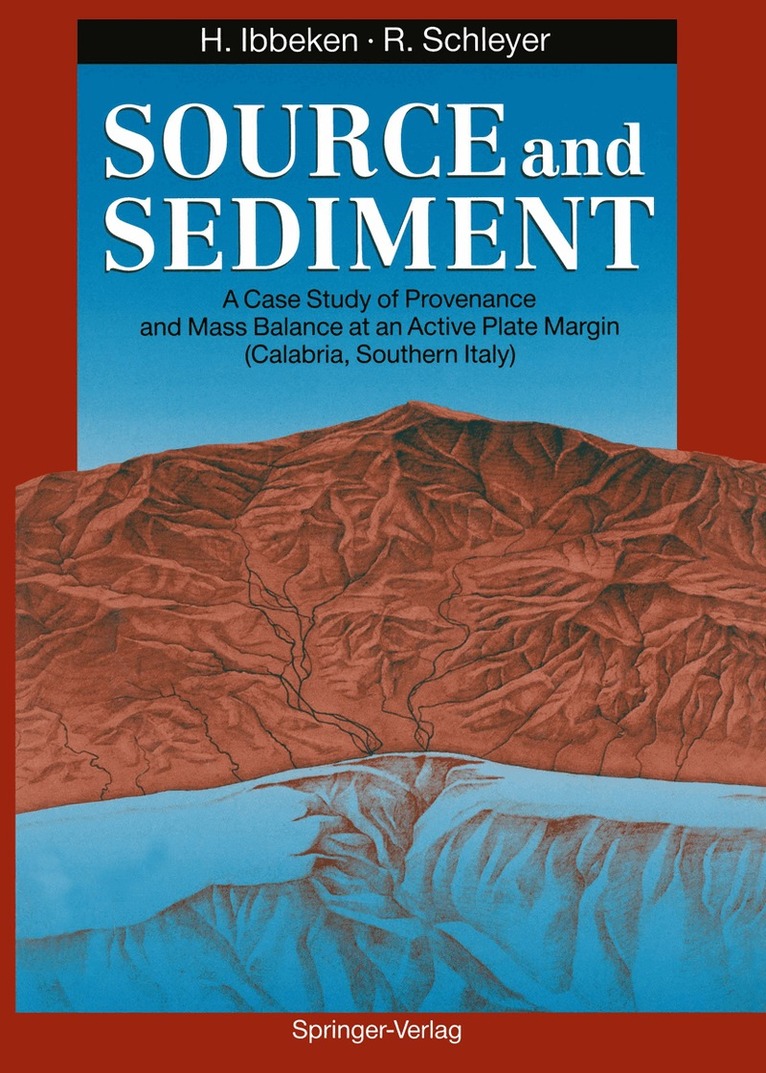
Source and Sediment
A Case Study of Provenance and Mass Balance at an Active Plate Margin (Calabria, Southern Italy)
Häftad, Engelska, 2011
1 062 kr
Skickas inom 10-15 vardagar
Deciphering provenance - this is the study of how far geology, geomorphology and climate of a source, a mountainous area, may be reconstructable from its erosional products released to the sea; from gravel and sand, from silt, sand, clay which recombine to form a new cycle of rocks. The purpose of this book is to give a quantitative picture of both source and sediment and the masses involved in the flux of material; based on a modern case study in Calabria, southern Italy, a mountain range which is part of an active plate margin. High erosion rates in the past (200mm/ka), and dramatic ones at present (1500mm/ka), make the area a powerful source of sediment comparable to orogenic conditions of the geological past. The book presents the first systematic, quantitative and data-bank supported study - here a larger source with small rivers and their sedimentary products - of the complex topic of provenance of terrigenous sediments and related mass balances at an active plate margin. It may serve as an orientation for corresponding research in other plate tectonic realms.
821 kr
Skickas inom 11-20 vardagar
This comprehensively illustrated book records and assembles material on over 150 buildings by Karl Schinkel, Germany's most important 19th century architect.
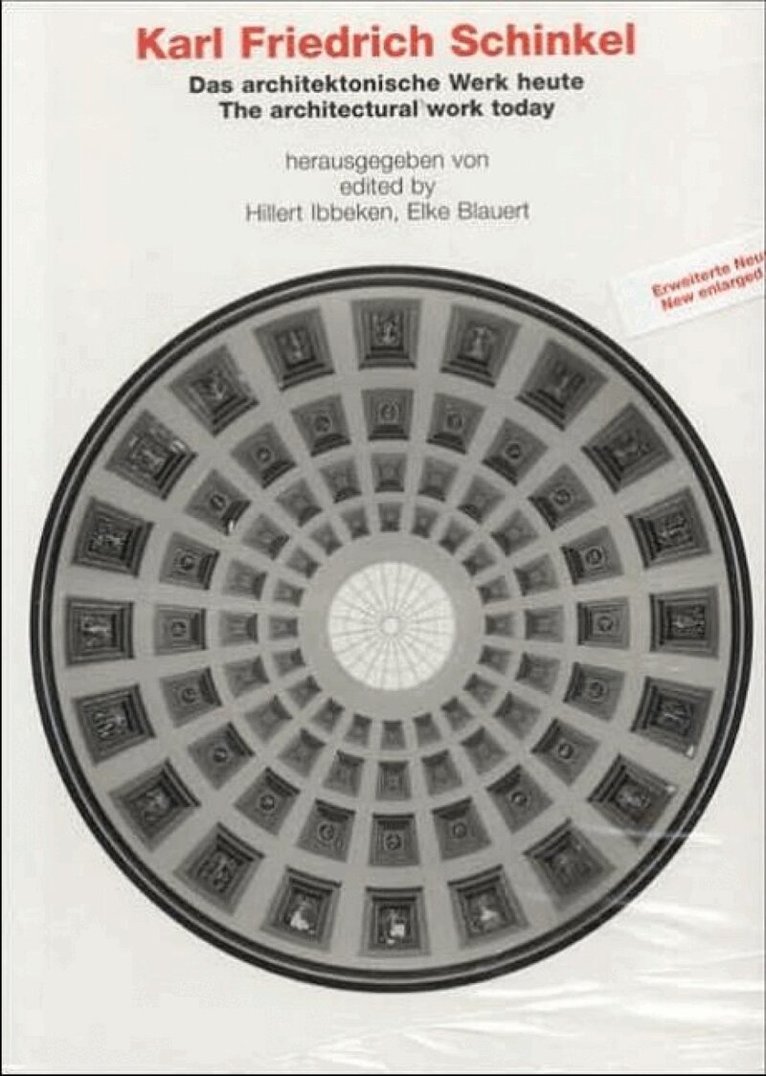
Karl Freidrich Schinkel
Das Architektonische Work Heute/The Architectural Work Today
Inbunden, Tyska, 2002
846 kr
Skickas inom 11-20 vardagar
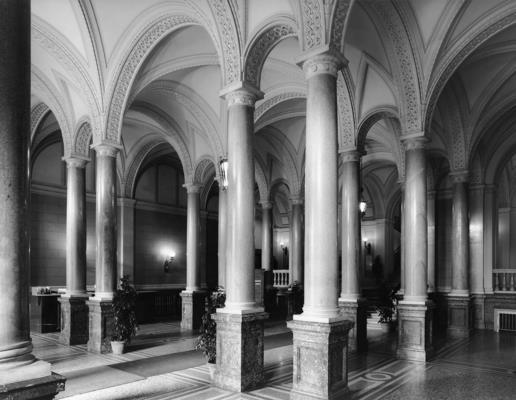
Text in German. There is a copious and wide-ranging body of literature on Karl Friedrich Schinkel, Germany's most important 19th-century architect. But there is not a single work that records and assembles material on buildings by Schinkel that are still standing today, one hundred and sixty years after his death, after two world wars and major political upheavals. This volume is intended to fill the gap by providing the fullest possible compilation. It is surprising how many buildings by Schinkel still exist. There are over 170 of them in 112 different places, 62 in Germany and 49 in Poland and Russia, with Berlin and Potsdam each counting as a single location. The picture is very varied as far as the individual buildings are concerned. The churches make up the greatest number: about 86 of them are still standing. Then come 34 museums, theatres, guardhouses, schools and similar buildings, 18 palaces, castles and manor houses, 12 memorials, 12 tombs, 6 interiors and 4 fonts. A glance at a map of the former state of Prussia shows clearly that the buildings are not distributed evenly. In the west, the Rhineland and Westphalia, there were and are relatively few buildings by Schinkel. There is a decided cluster, the first regional concentration, in the present Saxony-Anhalt, between Magdeburg and Weimar. Further to the east come major accumulations in Berlin and Potsdam, and then the Oderbruch in the east of Brandenburg as another cluster. There are also concentrations of buildings by Schinkel in the Posen area as well as in West and East Prussia. Pomerania and Silesia have far fewer. Heinz Schonemann provides an introductory essay about Schinkel in his day, Helmut Borsch-Supan has contributed accounts of the way in which Schinkel's legacy is being handled today. The catalogue texts are by Martina Abri, Elke Blauert, Eva Borsch-Supan, Bernd Evers, Hillert Ibbeken and Heinz Schonemann.
353 kr
Skickas inom 11-20 vardagar
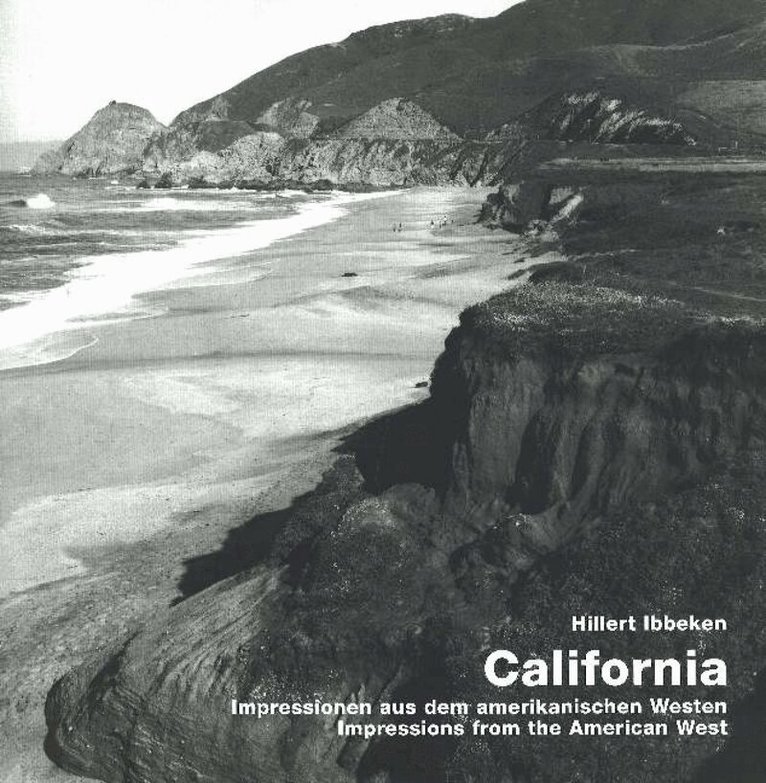
Text in English and German. Perhaps the fascination of American landscapes, particularly the deserts is their featurelessness. In Germany, Brandenburg for example, the much plainer landscape lives on in its history. This where the Great Elector won his victory and Napoleon lost a battle. Actual nature unaffected by human beings is hidden under the woodland and heath. The American desert landscape is dominated by grandiose nature with out human intervention. Here the history of the earth is to the fore exercising a particular fascination and anyone who reads it enjoys a double gift. The author travelled around the country photographing the mountains and valleys, the coastline and nature reserves. He also encountered people and writes about American friendliness.
575 kr
Skickas inom 11-20 vardagar
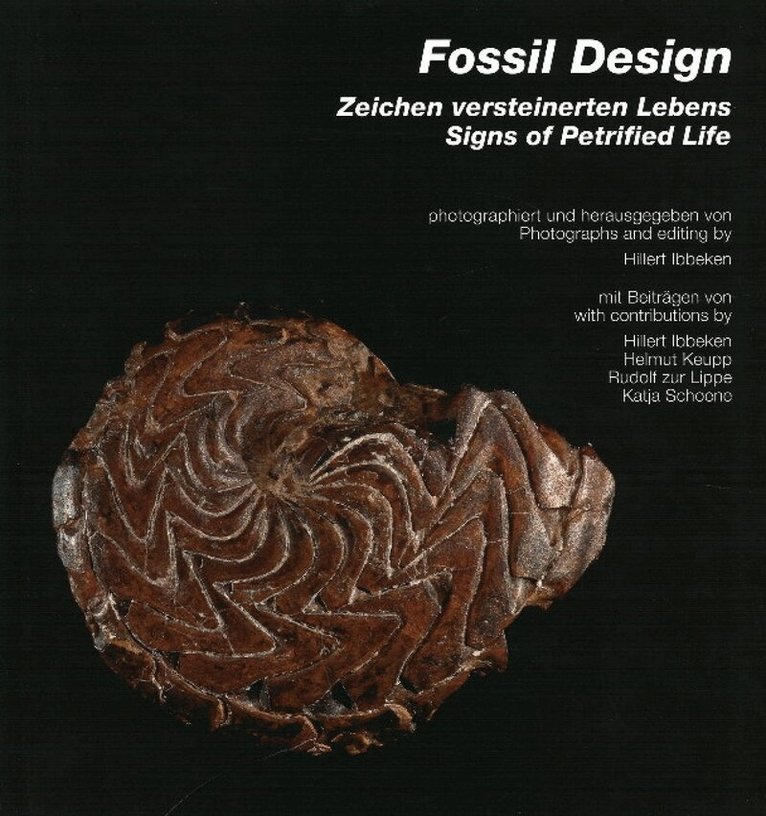
Text in German & English. Fossils are the petrified remains of former living organisms. Their systematics and their former living conditions are studied and described in palaeontology. In contrast to this, this book attempts to show the character of these life forms as signs and to pursue the question of whether fossils and representations of fossils can be considered "beautiful". For this reason, the pictures' sequence is not based on a palaeontological system of classification, but instead progresses from realistic representations of, for instance, a coral's body in its entirety through ever smaller sectors of the image and details divorced from context to almost abstract images. In an introductory text, Hillert Ibbeken explains the concept and the methodology of the work. The ambiguous expression "design" is used deliberately -- not in the sense of a purposive undertaking by a creating subject, but in the sense of nature making a mark, guided by mutation and selection. Katja Schoene writes about fossils' reception in the early modern age. The plants and animals enclosed in stone appeared too fantastical for anyone to consider them as anything other than "freaks of nature" (lusus naturae). Explanations of their origin were as multifarious as their different manifestations. "Rudolf zur Lippe deals with the forms of petrified life in relation to philosophical perspectives, pursuing the question of what "beauty" means and indicating, among other things, that the expression "beauty" cannot be unequivocally defined; that, for instance, different cultures may have entirely different ideals of beauty. The illustrated section is followed by a glossary by Helmut Keupp with a synopsis of life's development on Earth and a table of the Earth's history. Hillert Ibbeken was professor of geology at the Freie Universität Berlin. He has had a lifelong interest in photography.
144 kr
Skickas inom 11-20 vardagar
Text in English & German. The "other Italy", that is the rural Italy, far from the bustle of the cities. It is the Italy of the Apennines, its natural scenery, its remote villages, churches and religious communities, its farmers, charcoal burners, shepherds and fishermen -- even if these old professions are now dwindling away. The author has travelled hundreds of kilometres through this rural Italy on foot, and travelled thousands of kilometres through it by car. Although he was acting in a professional capacity as a geologist, his interests went beyond this wonderful country's geology to embrace everything it had to offer. In the year 1959, he embarked on ten years working in Liguria (north of Genoa) and twenty years in Calabria, on the toe of the Italian "boot", on the flank of the Aspromonte facing the Ionic Sea. Further visits to both areas up to the present day have contributed to his fifty-year relationship with Italy, and a body of Italian experiences which was simply begging to be set down with accompanying pictures. Eight stories tell of the land and the people, of the wild landscape of Calabria and its Mafia, of rural festivals, Christmas customs, Italian food, abandoned farms -- and of "Nonno", a grand-father. A wealth of photographs, mainly in colour, join with the stories in encouraging the reader to forsake bathing holidays and art tourism and take a trip to a near and yet distant land.