Hiroaki Richard Watanabe - Böcker
Visar alla böcker från författaren Hiroaki Richard Watanabe. Handla med fri frakt och snabb leverans.
4 produkter
4 produkter
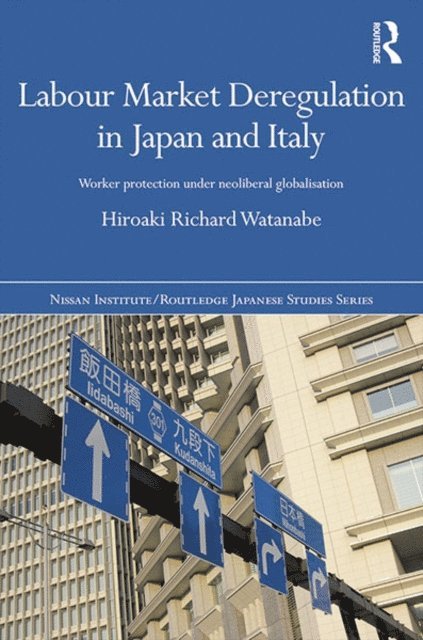
Labour Market Deregulation in Japan and Italy
Worker Protection under Neoliberal Globalisation
Inbunden, Engelska, 2014
2 317 kr
Skickas inom 10-15 vardagar
Japan and Italy encountered severe economic problems in the early 1990s, and the governments had to deal with those issues effectively under the increasing neoliberal pressures of globalisation. In this context, labour market deregulation was considered an effective tool to cope with those economic problems. However, the forms and degrees of labour market deregulation in the two countries were quite different. This book seeks to explain the differences in labour market deregulation policies between Japan and Italy, despite the fact that the two countries shared a number of similar political, social and labour market (if not cultural) characteristics. Uniquely, it takes a political, rather than economic or sociological perspective to provide a theoretical and empirical analysis of the processes of labour market deregulation in the two countries. The precarious working conditions of an increasing number of non-regular workers has become a prominent social issue in many industrialised countries including Japan and Italy, but the level of the protection for these workers depends on a country’s labour market policies, which are affected by the power resources of labour unions and labour policy-making structures. This book provides a useful perspective for understanding the root causes of this phenomenon, such as the diffusion of ‘neoliberal’ ideas aimed at promoting labour-market flexibility under globalisation, and demonstrates that there is still room for politics to decide the extent of deregulation and maintain worker protection from management offensives even in an era of globalisation.Labour Market Deregulation in Japan and Italy: Worker Protection under Neoliberal Globalisation will appeal to students and scholars of Japanese politics, Italian politics, political economy and comparative politics.
Labour Market Deregulation in Japan and Italy
Worker Protection under Neoliberal Globalisation
Häftad, Engelska, 2017
749 kr
Skickas inom 10-15 vardagar
Japan and Italy encountered severe economic problems in the early 1990s, and the governments had to deal with those issues effectively under the increasing neoliberal pressures of globalisation. In this context, labour market deregulation was considered an effective tool to cope with those economic problems. However, the forms and degrees of labour market deregulation in the two countries were quite different. This book seeks to explain the differences in labour market deregulation policies between Japan and Italy, despite the fact that the two countries shared a number of similar political, social and labour market (if not cultural) characteristics. Uniquely, it takes a political, rather than economic or sociological perspective to provide a theoretical and empirical analysis of the processes of labour market deregulation in the two countries. The precarious working conditions of an increasing number of non-regular workers has become a prominent social issue in many industrialised countries including Japan and Italy, but the level of the protection for these workers depends on a country’s labour market policies, which are affected by the power resources of labour unions and labour policy-making structures. This book provides a useful perspective for understanding the root causes of this phenomenon, such as the diffusion of ‘neoliberal’ ideas aimed at promoting labour-market flexibility under globalisation, and demonstrates that there is still room for politics to decide the extent of deregulation and maintain worker protection from management offensives even in an era of globalisation.Labour Market Deregulation in Japan and Italy: Worker Protection under Neoliberal Globalisation will appeal to students and scholars of Japanese politics, Italian politics, political economy and comparative politics.
1 524 kr
Skickas inom 5-8 vardagar
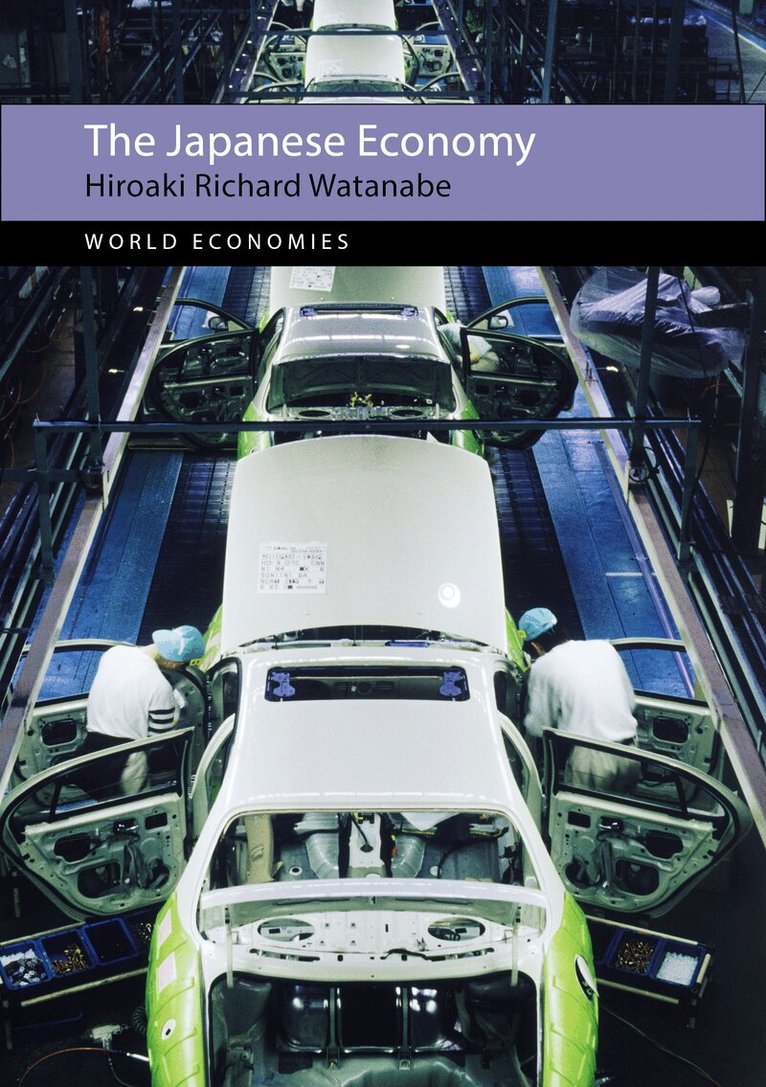
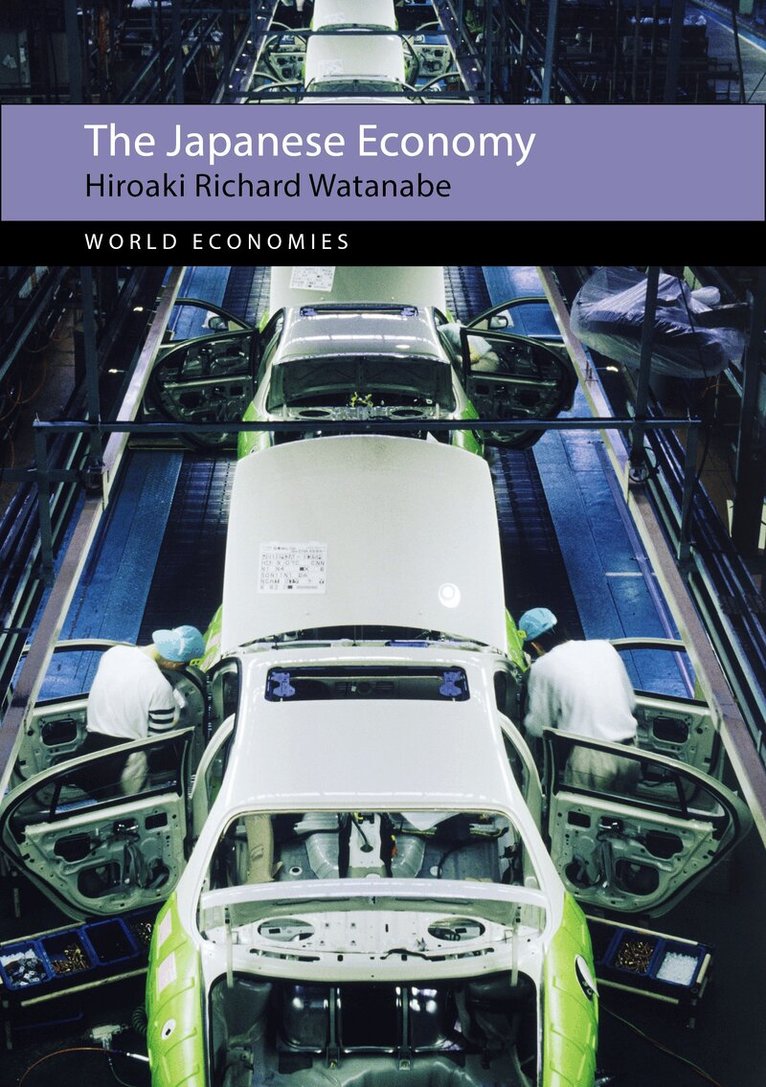
Although still the world’s third largest economy, Japan continues to feel the effects of the collapse of a massive asset price bubble in the early 1990s. In recent years further setbacks, including both the Asian and global financial crises, and the 2011 Fukushima earthquake, have only added to the economy’s difficulties and made its prospects under Abenomics at best mixed.Hiroaki Richard Watanabe examines the ups and downs of Japan’s postwar economic history to offer an up-to-date and authoritative guide to the workings of Japan’s economy. The book highlights the country’s distinct business networks and its unique state–market relationship. It explores the characteristic institutional complementarity that exists among different sectors and business practices and gives particular attention to human factors, such as labour market dualism, gender discrimination and migration. Although often associated in western minds with futuristic automated efficiency, Japan’s economy, Watanabe shows, retains many inefficient and peculiar business practices that do not comply with global standards.The book provides readers with a concise survey of Japan’s recent economic history, the economy’s characteristic features and the challenges it faces.
368 kr
Skickas
Although still the world’s third largest economy, Japan continues to feel the effects of the collapse of a massive asset price bubble in the early 1990s. In recent years further setbacks, including both the Asian and global financial crises, and the 2011 Fukushima earthquake, have only added to the economy’s difficulties and made its prospects under Abenomics at best mixed.Hiroaki Richard Watanabe examines the ups and downs of Japan’s postwar economic history to offer an up-to-date and authoritative guide to the workings of Japan’s economy. The book highlights the country’s distinct business networks and its unique state–market relationship. It explores the characteristic institutional complementarity that exists among different sectors and business practices and gives particular attention to human factors, such as labour market dualism, gender discrimination and migration. Although often associated in western minds with futuristic automated efficiency, Japan’s economy, Watanabe shows, retains many inefficient and peculiar business practices that do not comply with global standards.The book provides readers with a concise survey of Japan’s recent economic history, the economy’s characteristic features and the challenges it faces.