Hiroshi Ishida – författare
Visar alla böcker från författaren Hiroshi Ishida. Handla med fri frakt och snabb leverans.
6 produkter
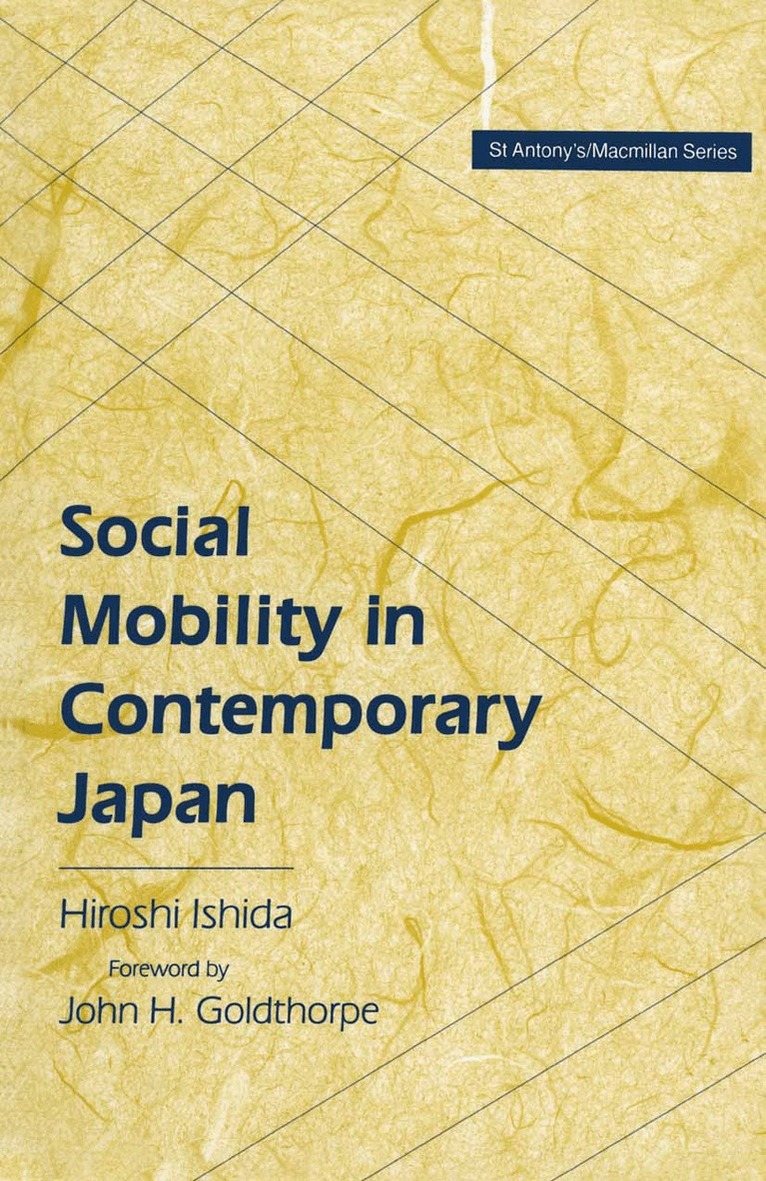
Social Mobility in Contemporary Japan
Educational Credentials, Class and the Labour Market in a Cross-National Perspective
Häftad, 1995
334 kr
Lägg i varukorg
The book is a study of intergenerational class mobility and the process of socioeconomic status attainment in contemporary Japan. The idea of 'Japan as an educational credential society' has been debated for a long time in Japan. The book empirically evaluates this idea within the framework of a …
Social Class in Contemporary Japan
Structures, Sorting and Strategies
Av Hiroshi Ishida, David H. Slater
Inbunden, 2009
2512 kr
Lägg i varukorg
Post-war Japan was often held up as the model example of the first mature industrial societies outside the Western economy, and the first examples of "middle-mass" society. Today, and since the bursting of the economic bubble in the 1990’s, the promises of Japan, Inc., seem far away. Social Class …
Social Class in Contemporary Japan
Structures, Sorting and Strategies
Av Hiroshi Ishida, David H. Slater
Häftad, 2011
750 kr
Lägg i varukorg
Post-war Japan was often held up as the model example of the first mature industrial societies outside the Western economy, and the first examples of "middle-mass" society. Today, and since the bursting of the economic bubble in the 1990’s, the promises of Japan, Inc., seem far away. Social Class …
Social Class in Contemporary Japan
Structures, Sorting and Strategies
Av David H. Slater, Hiroshi Ishida
E-bok, 2009
883 kr
Lägg i varukorg
Post-war Japan was often held up as the model example of the first mature industrial societies outside the Western economy, and the first examples of "middle-mass" society. Today, and since the bursting of the economic bubble in the 1990’s, the promises of Japan, Inc., seem far away. Social Class …
Social Class in Contemporary Japan
Structures, Sorting and Strategies
Av David H. Slater, Hiroshi Ishida
E-bok, 2009
883 kr
Lägg i varukorg
Post-war Japan was often held up as the model example of the first mature industrial societies outside the Western economy, and the first examples of "middle-mass" society. Today, and since the bursting of the economic bubble in the 1990’s, the promises of Japan, Inc., seem far away. Social Class …
Social Mobility in Contemporary Japan
Educational Credentials, Class and the Labour Market in a Cross-National Perspective
E-bok, 1995
364 kr
Lägg i varukorg
The book is a study of intergenerational class mobility and the process of socioeconomic status attainment in contemporary Japan. The idea of ''Japan as an educational credential society'' has been debated for a long time in Japan. The book empirically evaluates this idea within the framework of a …