Hiroyuki Odagiri - Böcker
Visar alla böcker från författaren Hiroyuki Odagiri. Handla med fri frakt och snabb leverans.
7 produkter
7 produkter
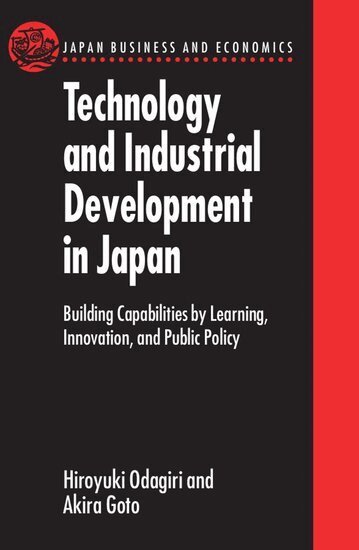
Technology and Industrial Development in Japan
Building Capabilities by Learning, Innovation and Public Policy
Inbunden, Engelska, 1996
2 797 kr
Skickas inom 5-8 vardagar
Japan was the first major non-western nation to take on board the Western technological and organizational advances of the century after the fist industrial revolution. It subsequently proved fully able to exploit and contribute to the broad, sustained technological advances that began in the twentieth century, as science became harnessed to technology. Japan's economic development remains a model for many technologically less advanced countries which have not yet mastered modern technology to organizational forms; and a knowledge of Japanese technological and economic history can contribute importantly to our understanding of economic growth in the modern era.This book studies the industrial development of Japan since the mid-nineteenth century, with particular emphasis on how the various industries built technological capabilities. The Japanese were extraordinarily creative in seraching out and learning to use modern technologies, and the authors investigate the emergence of entrepreneurs who began new and risky businesses, how the business organizations evolved to cope with changing technological conditions, and how the managers, engineers and workers acquired organizational and technological skills through technology importation, learning-by-doing, and their own R&D activities.The book investigates the interaction between private entrepreneural activities and public policy, through a general examination of economic and industrial development, a study of the evolution of management systems, and six industrial case studies: textiles, iron and steel, electrical and communications equipment, automobiles, shipbuilding and aircraft, and pharmaceuticals. the authors show how the Japanese government has played an important supportive role in the continuing innovation, without being a substitute for aggressive business enterprise constantly venturing into unfamiliar terrains.
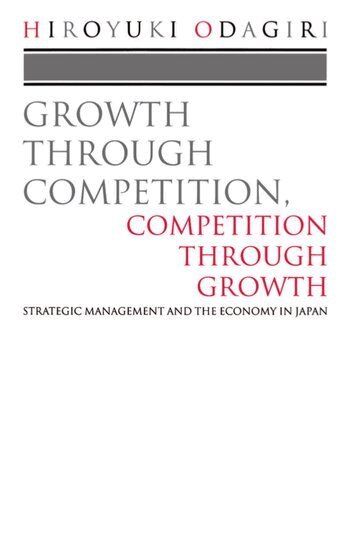
Growth through Competition, Competition through Growth
Strategic Management and the Economy in Japan
Häftad, Engelska, 1994
641 kr
Skickas inom 3-6 vardagar
This book examines two central aspects of Japanese management - growth pursuit by internal investment (as opposed to acquisition), and intensive competition within and between Japanese firms. It also looks at how Japanese firms maintain efficiency and flexibility under the apparently rigid system of 'lifetime' employment.The author begins by enquiring in to the financial and human aspects of the firm with a particular emphasis placed on the human side. T he motivation, behaviour, and organization of Japanese management are discussed and the consequences of Japan's management system on its industrial organization and macroeconomy are examined. Throughout the book, it is emphasized that competition is at the heart of the Japanese economy and management to the same, if not to a greater degreee than in the West. This competition is enhanced by the growth preference of Japanese management, and competition in turn makes growth feasible.
1 485 kr
Skickas inom 3-6 vardagar
In this age of high technology, Japan's success in continuous improvement and innovation in key industries, ranging from steel and automobiles to electronics, has been spectacular, and the unique institutional arrangements that have supported this success have attracted wide attention. Yet, with only a few exceptions, the discussion of Japan's innovation system has tended to be anecdotal. It is the consequent need for a more solid analysis based on fact that this book fills.The chapters in this book investigate Japan's current innovation system through empirical, mostly quantitative, research. These chapters cover a wide range of subjects, including technology importation, industrial standards, product development, R&D personnel management, overseas R&D, and higher education. In addition, detailed industry studies cover the automobile, electrical machinery, semiconductor, and steel sectors. The authors, the leading Japanese scholars on these subjects, reveal the rich and complex nature of the Japanese innovation system, and describe in detail its strengths and weaknesses.
Technology and Industrial Development in Japan
Building Capabilities by Learning, Innovation and Public Policy
Häftad, Engelska, 2019
747 kr
Skickas inom 3-6 vardagar
Japan was the first major non-western nation to take on board the Western technological and organizational advances of the century after the fist industrial revolution. It subsequently proved fully able to exploit and contribute to the broad, sustained technological advances that began in the twentieth century, as science became harnessed to technology. Japan's economic development remains a model for many technologically less advanced countries which have not yet mastered modern technology to organizational forms; and a knowledge of Japanese technological and economic history can contribute importantly to our understanding of economic growth in the modern era.This book studies the industrial development of Japan since the mid-nineteenth century, with particular emphasis on how the various industries built technological capabilities. The Japanese were extraordinarily creative in searching out and learning to use modern technologies, and the authors investigate the emergence of entrepreneurs who began new and risky businesses, how the business organizations evolved to cope with changing technological conditions, and how the managers, engineers and workers acquired organizational and technological skills through technology importation, learning-by-doing, and their own R&D activities.The book investigates the interaction between private entrepreneural activities and public policy, through a general examination of economic and industrial development, a study of the evolution of management systems, and six industrial case studies: textiles, iron and steel, electrical and communications equipment, automobiles, shipbuilding and aircraft, and pharmaceuticals. The authors show how the Japanese government has played an important supportive role in the continuing innovation, without being a substitute for aggressive business enterprise constantly venturing into unfamiliar terrains.
Intellectual Property Rights, Development, and Catch Up
An International Comparative Study
Inbunden, Engelska, 2010
1 109 kr
Skickas inom 3-6 vardagar
For most countries, economic development involves a process of 'catching up' with leading countries at the time. This is never achieved solely by physical assets and labour alone: also needed are the accumulation of technological capabilities, educational attainment, entrepreneurship, and the development of the necessary institutional infrastructure. One element of this infrastructure is the regime of intellectual property rights (IPR), particularly patents. Patents may promote innovation and catch up, and they may foster formal technology transfer. Yet they may also prove to be barriers for developing countries that intend to acquire technologies through imitation and reverse engineering. The current move to harmonize the IPR system internationally, such as the TRIPS agreement, may thus have unexpected consequences for developing countries.This book explores these issues through an in depth study of eleven countries ranging from early developers (the USA, Nordic Countries and Japan), and Post World War 2 countries (Korea, Taiwan, Israel) to more recent emerging economies (Argentina, Brazil, China, India and Thailand).With contributions from international experts on innovation systems, this book will be an invaluable resource for academics and policymakers in the fields of economic development, innovation studies and intellectual property laws.
Intellectual Property Rights, Development, and Catch Up
An International Comparative Study
Häftad, Engelska, 2012
711 kr
Skickas inom 5-8 vardagar
For most countries, economic development involves a process of 'catching up' with leading countries at the time. This is never achieved solely by physical assets and labour alone: also needed are the accumulation of technological capabilities, educational attainment, entrepreneurship, and the development of the necessary institutional infrastructure. One element of this infrastructure is the regime of intellectual property rights (IPR), particularly patents. Patents may promote innovation and catch up, and they may foster formal technology transfer. Yet they may also prove to be barriers for developing countries that intend to acquire technologies through imitation and reverse engineering. The current move to harmonize the IPR system internationally, such as the TRIPS agreement, may thus have unexpected consequences for developing countries. This book explores these issues through an in depth study of eleven countries ranging from early developers (the USA, the Nordic Countries, and Japan), and Post-World War II countries (Korea, Taiwan, Israel) to more recent emerging economies (Argentina, Brazil, China, India, and Thailand). With contributions from international experts on innovation systems, this book will be an invaluable resource for academics and policymakers in the fields of economic development, innovation studies and intellectual property laws.
The Theory of Growth in a Corporate Economy
Management, Preference, Research and Development, and Economic Growth
Häftad, Engelska, 2008
495 kr
Skickas inom 7-10 vardagar
This book investigates the growth of an economy with management-controlled corporations. It begins by studying the behaviour of a corporation whose management maximizes the rate of growth constrained by the threat of takeover, and in which research and development efforts are made to raise labour productivity. The growth of an economy consisting of a limited number of such corporations is then analysed. In this economy the stocks of corporations are the sole means of wealth-holding available to households. This theory is compared with other well-established growth theories, and some extensions of the basic theory, including policy implications, are also presented. The book contains many important innovative features: the combination of micro- and macro-economic analyses, the consideration of research and development activity, and the role of corporate stocks in economic growth. These features contribute to the major conclusion that the behaviour of management - a product of its preferences and of its environment - is an important factor in economic growth. Applying this conclusion to compare corporate growth in Japan and the United States, the author finds that the Japanese business environment makes management pursue corporate growth more vigourously than in the United States.