Hitoo Nishino – författare
Visar alla böcker från författaren Hitoo Nishino. Handla med fri frakt och snabb leverans.
3 produkter
3 produkter
Inbunden, Engelska, 1999
1 669 kr
Skickas inom 10-15 vardagar
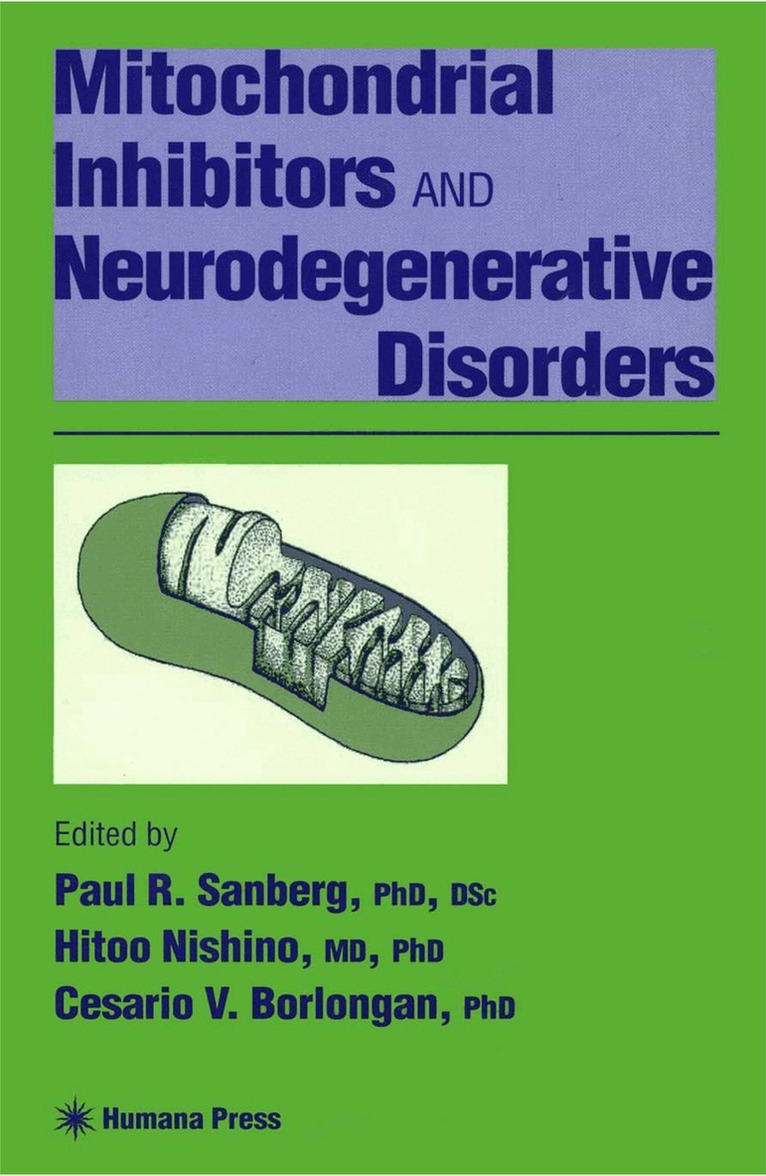
Respected investigators from around the world critically review what is known about the role of mitochondrial inhibitors in cell death and the onset of neurodegeneration. These distinguished researchers - many pioneers in the field - detail the symptomology, origin, and chemistry of mitochondrial toxins, and discuss animal models of human diseases related to abnormal mitochondrial function. The emphasis on 3-NP and its ability to replicate the cellular, anatomical, and behavioral alterations seen in Huntington's disease demonstrate that mitochondrial inhibitors play an important role in the etiology of central nervous system disorders. The book also discusses recent therapeutic modalities aimed at rescuing the central nervous system from abnormal mitochodrial functioning. With its timely, in-depth review, Mitochondrial Inhibitors and Neurodegenerative Disorders offers today's advanced investigators powerful insights into how mitochondrial toxins precipitate and exacerbate neurodegenerative disorders, and details important new treatment strategies that can halt or reverse disease progression.
Häftad, Engelska, 2012
1 630 kr
Skickas inom 10-15 vardagar
Believed to be the remnants of bacterial infection of eukaryotic cells eons ago, the mitochondrion evolved a symbiotic relationship in which it dutifully served as the efficient source of A TP for cell function.
E-bok
PDF, Engelska, 19991 977 kr
Läs direkt efter köp
Mitochondria have long been the Rodney Dangerfield of cellular organelles. Believed to be the remnants of bacterial infection of eukaryotic cells eons ago, the mitochondrion evolved a symbiotic relationship in which it dutifully served as the efficient source of A TP for cell function. The extraordinary dependence of cells on the energy provided by mito chondrial oxidative metabolism of glucose, especially through critical organs such as the heart and brain, is underlined by the fatal consequences of toxins that interfere with the mitochondrial electron transport system. Consistent with their ancestry, the mitochondria have their own DNA that encodes many but not all of their proteins. The mitochon dria and their genes come from the mother via the ovum since sperm do not possess mitochondria. This extranuclear form of inheritance derived exclusively from the female side has proven to be a powerful tool for tracing the evolution by the number of base substitutions in mtDNA. That mitochondrial gene mutations might be a source of human dis ease became evident a decade ago with the characterization of a group of multisystem disorders, typically involving the nervous system, which are transmitted from mother to child. Specific point mutations in mtDNA have been associated with the different syndromes.