Paul R. Sanberg – författare
Visar alla böcker från författaren Paul R. Sanberg. Handla med fri frakt och snabb leverans.
13 produkter
13 produkter
Inbunden, Engelska, 1999
2 223 kr
Skickas inom 10-15 vardagar
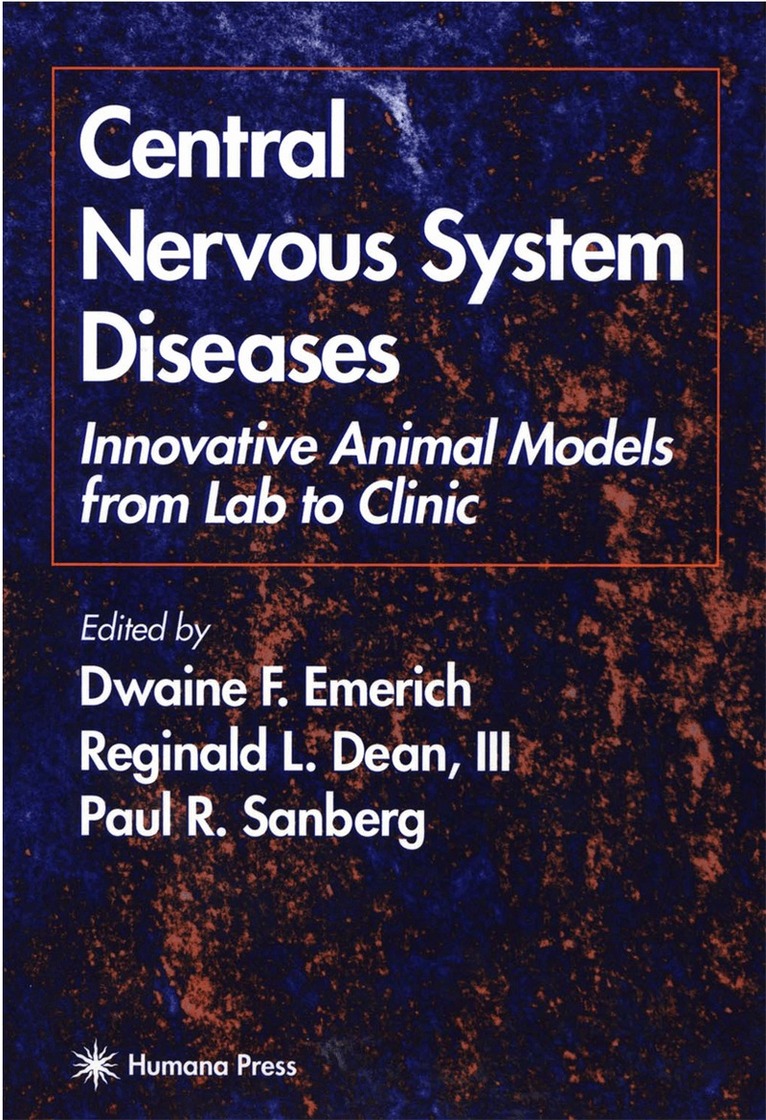
Prominent experimentalists critically review the animal models widely used in developing powerful new therapies for central nervous system diseases. Coverage includes novel uses of animal models of Alzheimer's, Parkinson's, and Huntington's diseases, and studies of aging. Techniques that rely heavily on behavioral analyses, as well as models developed from infusions of neurotoxins and from advances in molecular biology, are thoroughly explicated, as are models developed for more acute neurological conditions, including traumatic brain injury and stroke. Comprehensive and authoritative, Central Nervous System Diseases: Innovative Animal Models from Lab to Clinic offers neuroscientists, pharmacologists, and interested clinicians a unique survey of the most productive animal models of the leading neurological diseases currently employed to develop today's innovative drug therapies.
Inbunden, Engelska, 1999
1 669 kr
Skickas inom 10-15 vardagar
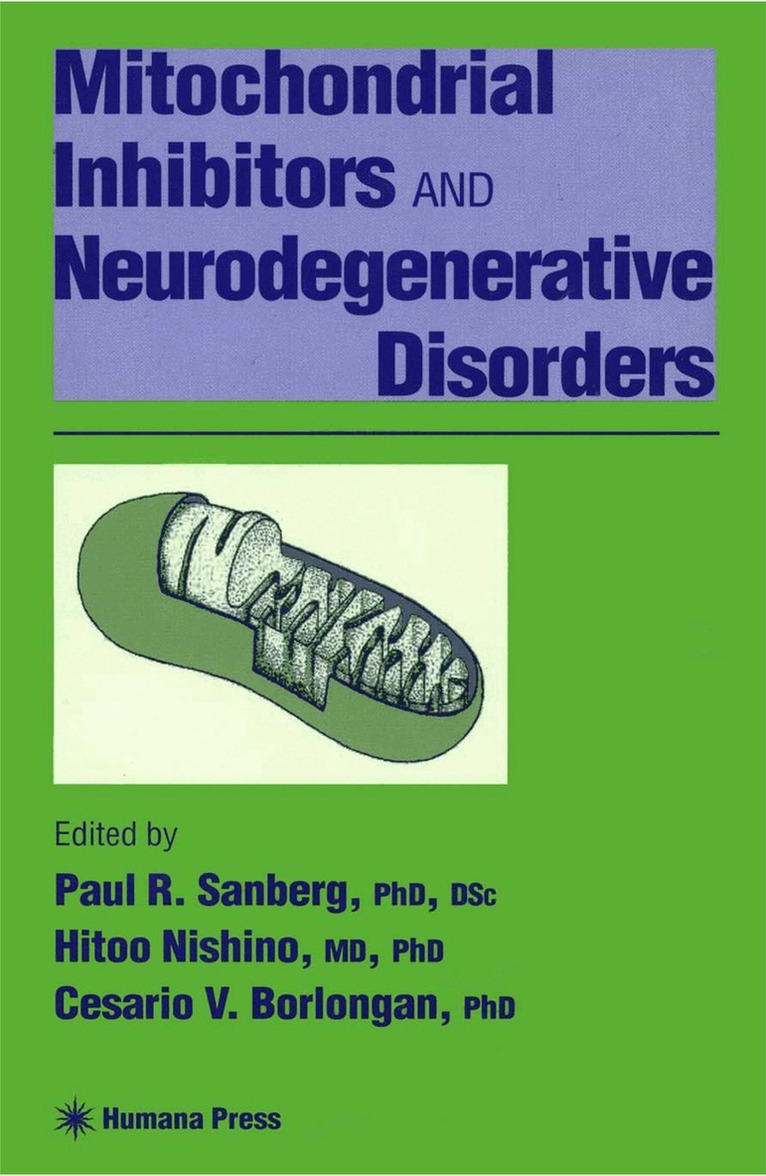
Respected investigators from around the world critically review what is known about the role of mitochondrial inhibitors in cell death and the onset of neurodegeneration. These distinguished researchers - many pioneers in the field - detail the symptomology, origin, and chemistry of mitochondrial toxins, and discuss animal models of human diseases related to abnormal mitochondrial function. The emphasis on 3-NP and its ability to replicate the cellular, anatomical, and behavioral alterations seen in Huntington's disease demonstrate that mitochondrial inhibitors play an important role in the etiology of central nervous system disorders. The book also discusses recent therapeutic modalities aimed at rescuing the central nervous system from abnormal mitochodrial functioning. With its timely, in-depth review, Mitochondrial Inhibitors and Neurodegenerative Disorders offers today's advanced investigators powerful insights into how mitochondrial toxins precipitate and exacerbate neurodegenerative disorders, and details important new treatment strategies that can halt or reverse disease progression.
Inbunden, Engelska, 2002
1 669 kr
Skickas inom 10-15 vardagar
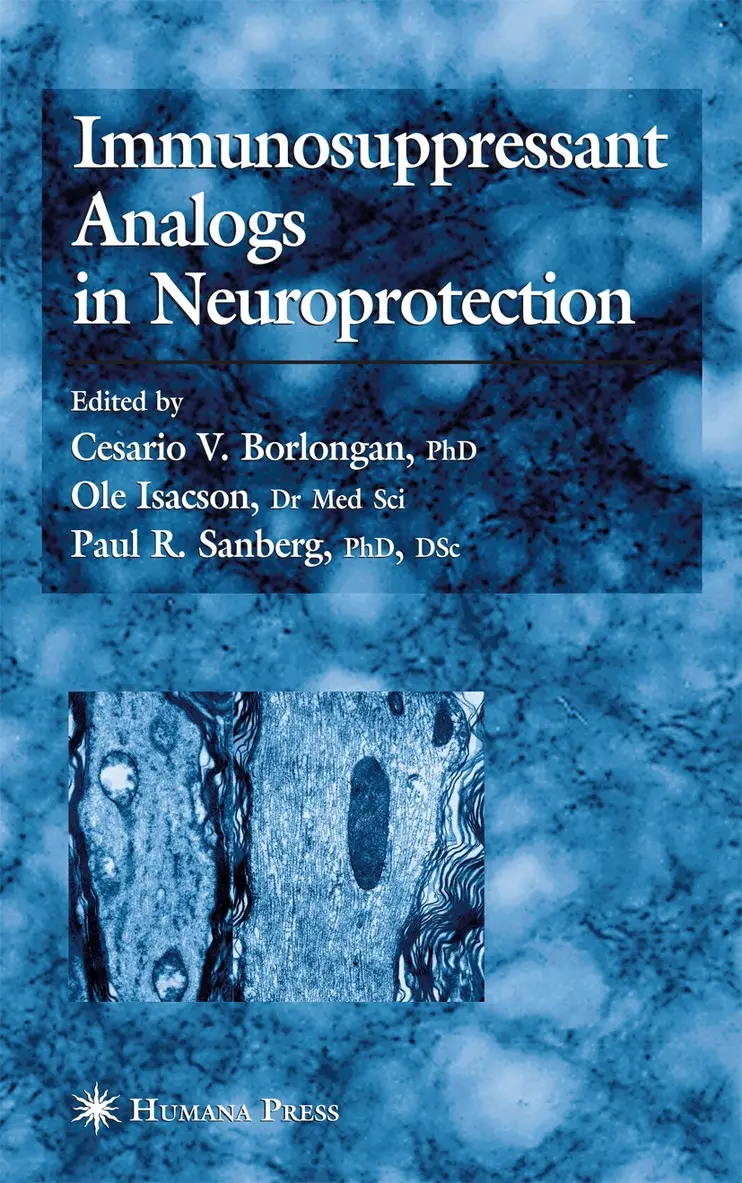
An authoritative survey of the most recent scientific evidence showing how cyclosporin, FK-506, and their analogs-the neuroimmunophilins-evolved from being purely immunosuppressant "drugs" to neuroprotective "agents". The book focuses on recent preclinical evidence that demonstrates the neurotrophic/neuroprotective effects of immunosuppressants when administered alone or when combined with neural transplantation therapy in animal models of neurological disorders. It also discusses their efficacy and mechanisms of action in vitro and in vivo models of CNS disease, and provides laboratory studies with compelling clinical indications for Alzheimer's disease, Huntington's disease, stroke, traumatic brain injury, spinal cord injury, ALS, sciatic nerve injury, and drug addiction.
Häftad, Engelska, 2012
1 233 kr
Skickas inom 10-15 vardagar
An authoritative survey of the most recent scientific evidence showing how cyclosporin, FK-506, and their analogs-the neuroimmunophilins-evolved from being purely immunosuppressant "drugs" to neuroprotective "agents". The book focuses on recent preclinical evidence that demonstrates the neurotrophic/neuroprotective effects of immunosuppressants when administered alone or when combined with neural transplantation therapy in animal models of neurological disorders. It also discusses their efficacy and mechanisms of action in vitro and in vivo models of CNS disease, and provides laboratory studies with compelling clinical indications for Alzheimer's disease, Huntington's disease, stroke, traumatic brain injury, spinal cord injury, ALS, sciatic nerve injury, and drug addiction.
Häftad, Engelska, 2012
1 630 kr
Skickas inom 10-15 vardagar
Believed to be the remnants of bacterial infection of eukaryotic cells eons ago, the mitochondrion evolved a symbiotic relationship in which it dutifully served as the efficient source of A TP for cell function.
Inbunden, Engelska, 2006
2 171 kr
Skickas inom 10-15 vardagar
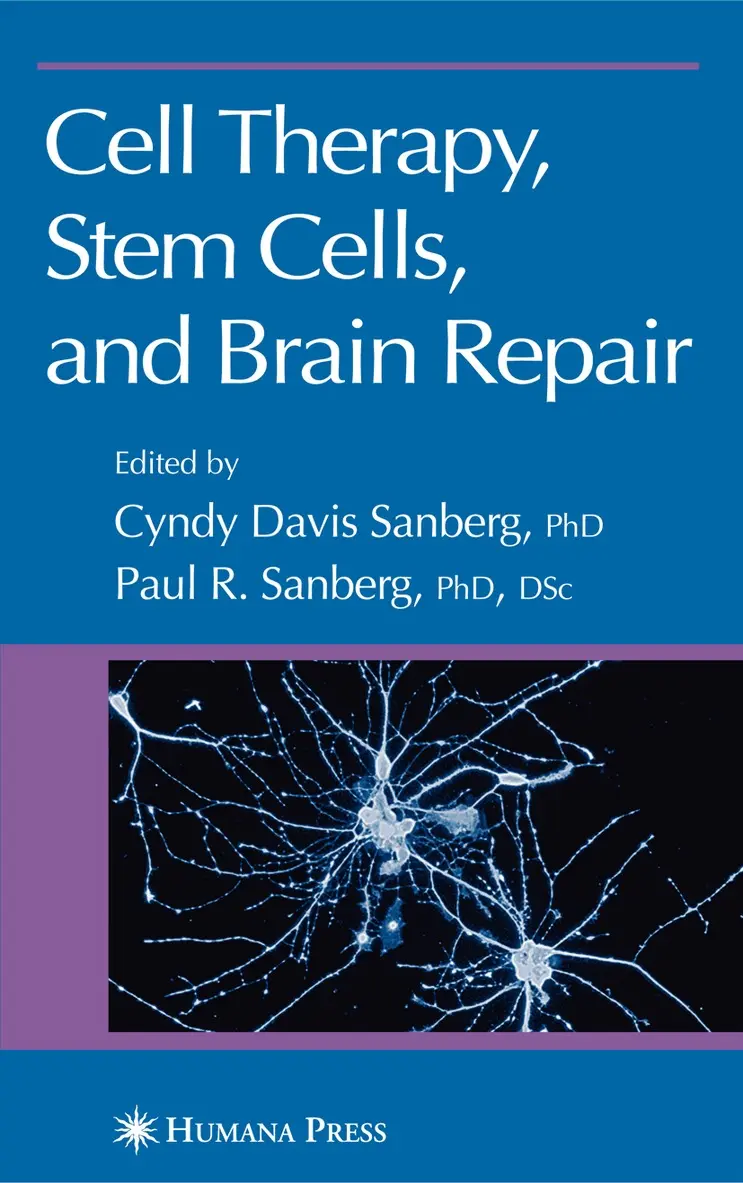
As our world continues to evolve, the field of regenerative medicine f- lows suit. Although many modern day therapies focus on synthetic and na- ral medicinal treatments for brain repair, many of these treatments and prescriptions lack adequate results or only have the ability to slow the p- gression of neurological disease or injury. Cell therapy, however, remains the most compelling treatment for neurodegenerative diseases, disorders, and injuries, including Parkinson’s disease, Huntington’s disease, traumatic brain injury, and stroke, which is expanded upon in more detail in Chapter 1 by Snyder and colleagues. Cell therapy is also unique in that it is the only therapeutic strategy that strives to replace lost, damaged, or dysfunctional cells with healthy ones. This repair and replacement may be due to an administration of exogenous cells itself or the activation of the body’s own endogenous reparative cells by a trophic, immune, or inflammatory response to cell transplantation. However, the precise mechanism of how cell therapy works remains elusive and is c- tinuing to be investigated in terms of molecular and cellular responses, in particular. Moreover, Chapter 11 by Emerich and associates, discusses some of the possibilities of cell immunoisolation and the potential for treating central nervous system diseases.
E-bok
Engelska, 20081 206 kr
Läs direkt efter köp
Over the last decade, neural stem cell research has provided penetrating insights into the plasticity and regenerative potential of the brain. Stem cells have been isolated from embryonic as well as adult central nervous system (CNS). Many non-CNS mammalian tissues also contain stem cells with a more limited repertoire: the replacement of tissue-specific cells throughout the li- time of the organism. Progress has been made in understanding fundamental stem cell properties that depend on the interplay of extrinsic signaling factors with intrinsic genetic programs within critical time frames. With this growing knowledge, scientists have been able to change a neural stem cell’s fate. - der certain conditions, neural stem cells have been induced to differentiate into cells outside the expected neural lineage and conversely, stem cells from nonneural tissue have been shown to transdifferentiate into cells with distinct neural phenotypes. At the moment, there is an accelerated effort to identify a readily ava- able, socially acceptable stem cell that can be induced to proliferate in an und- ferentiated state and that can be manipulated at will to generate diverse cells types. We are on the threshold of a great new therapeutic era of cellular therapy that has as great, if not greater, potential as the current pharmacologic era, g- rified by antibiotics, anesthetics, pain killers, immunosuppressants, and psyc- tropics.
E-bok
PDF, Engelska, 20021 565 kr
Läs direkt efter köp
E-bok
PDF, Engelska, 19992 741 kr
Läs direkt efter köp
Prominent experimentalists critically review the animal models widely used in developing powerful new therapies for central nervous system diseases. Coverage includes novel uses of animal models of Alzheimer''s, Parkinson''s, and Huntington''s diseases, and studies of aging. Techniques that rely heavily on behavioral analyses, as well as models developed from infusions of neurotoxins and from advances in molecular biology, are thoroughly explicated, as are models developed for more acute neurological conditions, including traumatic brain injury and stroke. Comprehensive and authoritative, Central Nervous System Diseases: Innovative Animal Models from Lab to Clinic offers neuroscientists, pharmacologists, and interested clinicians a unique survey of the most productive animal models of the leading neurological diseases currently employed to develop today''s innovative drug therapies.
E-bok
PDF, Engelska, 19991 977 kr
Läs direkt efter köp
Mitochondria have long been the Rodney Dangerfield of cellular organelles. Believed to be the remnants of bacterial infection of eukaryotic cells eons ago, the mitochondrion evolved a symbiotic relationship in which it dutifully served as the efficient source of A TP for cell function. The extraordinary dependence of cells on the energy provided by mito chondrial oxidative metabolism of glucose, especially through critical organs such as the heart and brain, is underlined by the fatal consequences of toxins that interfere with the mitochondrial electron transport system. Consistent with their ancestry, the mitochondria have their own DNA that encodes many but not all of their proteins. The mitochon dria and their genes come from the mother via the ovum since sperm do not possess mitochondria. This extranuclear form of inheritance derived exclusively from the female side has proven to be a powerful tool for tracing the evolution by the number of base substitutions in mtDNA. That mitochondrial gene mutations might be a source of human dis ease became evident a decade ago with the characterization of a group of multisystem disorders, typically involving the nervous system, which are transmitted from mother to child. Specific point mutations in mtDNA have been associated with the different syndromes.
E-bok
PDF, Engelska, 20072 741 kr
Läs direkt efter köp
As our world continues to evolve, the field of regenerative medicine f- lows suit. Although many modern day therapies focus on synthetic and na- ral medicinal treatments for brain repair, many of these treatments and prescriptions lack adequate results or only have the ability to slow the p- gression of neurological disease or injury. Cell therapy, however, remains the most compelling treatment for neurodegenerative diseases, disorders, and injuries, including Parkinson’s disease, Huntington’s disease, traumatic brain injury, and stroke, which is expanded upon in more detail in Chapter 1 by Snyder and colleagues. Cell therapy is also unique in that it is the only therapeutic strategy that strives to replace lost, damaged, or dysfunctional cells with healthy ones. This repair and replacement may be due to an administration of exogenous cells itself or the activation of the body’s own endogenous reparative cells by a trophic, immune, or inflammatory response to cell transplantation. However, the precise mechanism of how cell therapy works remains elusive and is c- tinuing to be investigated in terms of molecular and cellular responses, in particular. Moreover, Chapter 11 by Emerich and associates, discusses some of the possibilities of cell immunoisolation and the potential for treating central nervous system diseases.
Häftad, Engelska, 2010
2 171 kr
Skickas inom 10-15 vardagar
Prominent experimentalists critically review the animal models widely used in developing powerful new therapies for central nervous system diseases. Coverage includes novel uses of animal models of Alzheimer's, Parkinson's, and Huntington's diseases, and studies of aging. Techniques that rely heavily on behavioral analyses, as well as models developed from infusions of neurotoxins and from advances in molecular biology, are thoroughly explicated, as are models developed for more acute neurological conditions, including traumatic brain injury and stroke. Comprehensive and authoritative, Central Nervous System Diseases: Innovative Animal Models from Lab to Clinic offers neuroscientists, pharmacologists, and interested clinicians a unique survey of the most productive animal models of the leading neurological diseases currently employed to develop today's innovative drug therapies.
Häftad, Engelska, 2010
2 171 kr
Skickas inom 10-15 vardagar
Cell Therapy, Stem Cells, and Brain Repair reviews the most compelling treatments for neurodegenerative diseases, disorders, and injuries, including Parkinson's disease, Huntington's disease, traumatic brain injury, and stroke. Covering the history of cell therapy and neural transplantation, it also focuses on stem cells, including embryonic, bone marrow, and umbilical cord blood, as well as other investigative sources. This compilation explicates previous cornerstones and milestones of neurological cellular therapy, which have provided a foundation for modern stem cell research. In Cell Therapy, Stem Cells, and Brain Repair, the challenges and current direction of cellular research are described in great detail. Modern techniques involving certain subsets of cell populations are also explained. In addition, the ongoing discovery of stem cell sources for cell therapy is discussed, while expounding upon clinical applications for cellular therapeutic brain repair as certain cells become increasingly promising.Explaining the field of cell therapy from a scientific, clinical, and ethical perspective, Cell Therapy, Stem Cell, and Brain Repair is essential reading for neurologists, scientists, and clinicians looking to stay on the cutting-edge of regenerative medicine.