Hongshan Li - Böcker
Visar alla böcker från författaren Hongshan Li. Handla med fri frakt och snabb leverans.
3 produkter
3 produkter
1 310 kr
Skickas inom 7-10 vardagar
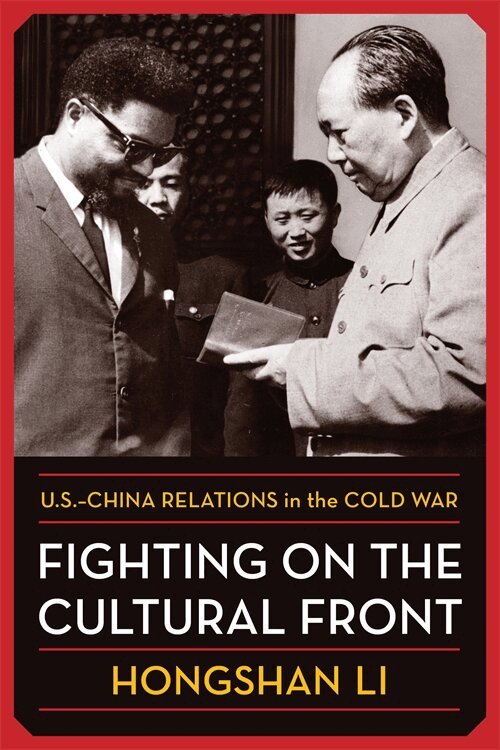
The Cold War conflict between the United States and the People’s Republic of China did not only encompass political, military, diplomatic, and economic clashes. The two powers also confronted each other on the cultural front. Despite a long history of extensive and mostly constructive cultural interactions, the two nations cut off existing ties in the late 1940s and early 1950s, and established new relationships aimed at attacking and isolating each other. Even after Beijing and Washington permitted cultural exchange as part of their effort to normalize diplomatic relations in the 1970s, the weaponization of cultural interactions continued.Hongshan Li provides a groundbreaking account of the confrontation between the United States and the People’s Republic of China on the Cold War’s cultural front. He investigates the origins, evolution, and significance of the role of cultural interactions in the shifting relations between the United States and the PRC from the late 1940s through the late 1970s. Li demonstrates that the drastic transformation of U.S.-China cultural interactions not only altered the course of Sino-American cultural relations but also shaped the Cold War experience of the two peoples. Fighting on the Cultural Front examines topics such as competition and conflicts over Chinese students and scholars stranded in the United States, maneuvers on the authorization of journalistic exchanges, the establishment of Taiwan as a cultural bastion, and Beijing’s promotion of its revolutionary ideology through individual U.S. citizens, particularly African Americans. This important book offers a new lens on the history of U.S.-China relations and the cultural side of the global Cold War.
333 kr
Skickas inom 7-10 vardagar
The Cold War conflict between the United States and the People’s Republic of China did not only encompass political, military, diplomatic, and economic clashes. The two powers also confronted each other on the cultural front. Despite a long history of extensive and mostly constructive cultural interactions, the two nations cut off existing ties in the late 1940s and early 1950s, and established new relationships aimed at attacking and isolating each other. Even after Beijing and Washington permitted cultural exchange as part of their effort to normalize diplomatic relations in the 1970s, the weaponization of cultural interactions continued.Hongshan Li provides a groundbreaking account of the confrontation between the United States and the People’s Republic of China on the Cold War’s cultural front. He investigates the origins, evolution, and significance of the role of cultural interactions in the shifting relations between the United States and the PRC from the late 1940s through the late 1970s. Li demonstrates that the drastic transformation of U.S.-China cultural interactions not only altered the course of Sino-American cultural relations but also shaped the Cold War experience of the two peoples. Fighting on the Cultural Front examines topics such as competition and conflicts over Chinese students and scholars stranded in the United States, maneuvers on the authorization of journalistic exchanges, the establishment of Taiwan as a cultural bastion, and Beijing’s promotion of its revolutionary ideology through individual U.S. citizens, particularly African Americans. This important book offers a new lens on the history of U.S.-China relations and the cultural side of the global Cold War.
U.S.- China Educational Exchange
State, Society, and Intercultural Relations, 1905-1950
Inbunden, Engelska, 2007
679 kr
Skickas inom 11-20 vardagar
U.S.-China relations became increasingly important and complex in the twentieth century. While economic, political, and military interactions all grew over time, the most dramatic expansion took place in educational exchange, turning it into the strongest tie between the two nations. By the end of the 1940s, tens of thousands of Chinese and American students and scholars had crisscrossed the Pacific, leaving indelible marks on both societies. Although all exchange programs were terminated during the cold war, the two nations reemerged as top partners within a decade after the reestablishment of diplomatic relations.Approaching U.S.-China relations from a unique and usually overlooked perspective, Hongshan Li reveals that both the drastic expansion and complete termination of educational ties between the two nations in the first half of the twentieth century were largely the results of direct and deep intervention from the American and Chinese governments. Benefiting from government support and collaboration, educational exchange succeeded in diffusing knowledge and improving mutual understanding between the two peoples across the divide of civilizations. However, the visible hand of government also proved to be most destructive to the development of healthy intercultural relations when educational interactions were treated merely as an instrument for crisis management.