Horacio Ortiz – författare
Visar alla böcker från författaren Horacio Ortiz. Handla med fri frakt och snabb leverans.
3 produkter
3 produkter
Inbunden, Engelska, 2021
1 175 kr
Skickas inom 5-8 vardagar
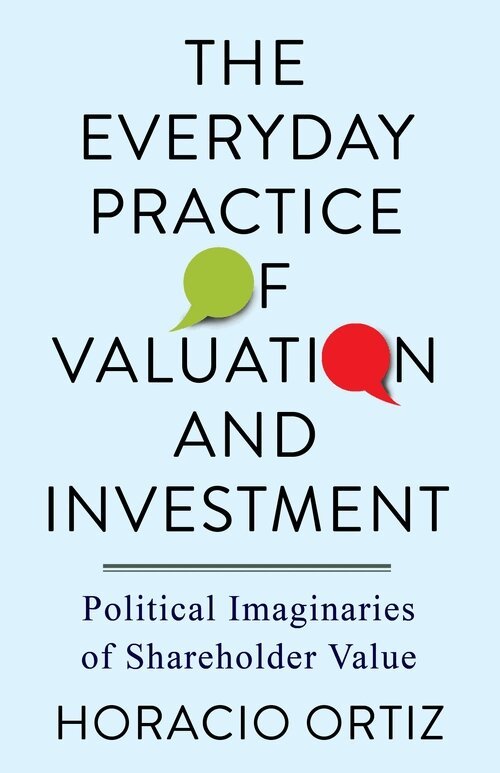
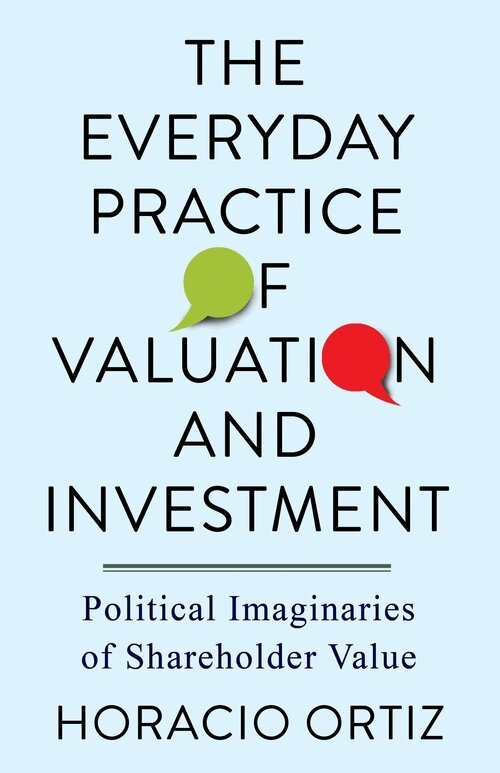
The financial industry derives its legitimacy through the claim that it acts in the interest of shareholders. A vast international network of funds, banks, insurance companies, brokerages, rating agencies, and regulatory agencies defends its status by asserting that market mechanisms determine a company’s true value and therefore enriching shareholders contributes to the socially optimal allocation of capital. Is this how stock prices are determined in practice? What does stock valuation reveal about the supposed efficiency of markets and what it means to act on behalf of shareholders?Horacio Ortiz provides a critical analysis of the social institutions and practices that produce and regulate stock pricing and valuation. He examines how financial professionals evaluate and invest in listed companies, unraveling the contradictory definitions of financial value that shape their behavior. Ortiz demonstrates how ideologically laden notions of investing skill and efficient markets are central to the everyday practices of financial valuation, as well as how they function to justify the broader system. He scrutinizes the technical aspects of valuation and investment, their place in social relations within and among companies, and their relation to state regulation in order to demystify how the financial industry presents prices as truths that the rest of society must accept.Drawing on ethnographic fieldwork conducted among stock brokers and investment management companies in New York and Paris, this book shows how the political imaginaries that underpin financial markets are central to producing, sustaining, and legitimizing global inequalities.
Häftad, Engelska, 2021
299 kr
Skickas inom 5-8 vardagar
The financial industry derives its legitimacy through the claim that it acts in the interest of shareholders. A vast international network of funds, banks, insurance companies, brokerages, rating agencies, and regulatory agencies defends its status by asserting that market mechanisms determine a company’s true value and therefore enriching shareholders contributes to the socially optimal allocation of capital. Is this how stock prices are determined in practice? What does stock valuation reveal about the supposed efficiency of markets and what it means to act on behalf of shareholders?Horacio Ortiz provides a critical analysis of the social institutions and practices that produce and regulate stock pricing and valuation. He examines how financial professionals evaluate and invest in listed companies, unraveling the contradictory definitions of financial value that shape their behavior. Ortiz demonstrates how ideologically laden notions of investing skill and efficient markets are central to the everyday practices of financial valuation, as well as how they function to justify the broader system. He scrutinizes the technical aspects of valuation and investment, their place in social relations within and among companies, and their relation to state regulation in order to demystify how the financial industry presents prices as truths that the rest of society must accept.Drawing on ethnographic fieldwork conducted among stock brokers and investment management companies in New York and Paris, this book shows how the political imaginaries that underpin financial markets are central to producing, sustaining, and legitimizing global inequalities.
Inbunden, Engelska, 2026
4 100 kr
Kommande
This handbook brings together scholarship from different disciplines, institutions and locations to contribute critically to how the social sciences think about – with, against, beyond – debt. By bringing together the best specialists in the field, this handbook both captures and feeds the theoretical and political debates on a subject of burning relevance. Across the diversity of theoretical and methodological approaches, a common thread to the contributions is a concern with power relations and inequalities. Who owes what to whom? To what extent is debt both shaped by and constitutive of social and power relations while crystallizing or giving rise to individual and collective aspirations, resistances and struggles? How is debt structured by long historical trajectories and broad trends that operate at a global level, while at the same time intertwining with institutions, organizations and interpersonal relations specific to singular contexts and periods of history? The handbook features a combination of theoretical and empirical chapters, but overall their purpose is to make an analytical contribution to some of the most relevant public issues of our time. The volume gives empirical examples from a wide variety of geographical locations, moving away from a narrow Euro-American-centric vision. It also explores the case of countries whose banking and debt systems are relatively unknown. The handbook is an invaluable resource for readers who—besides debt itself--are interested in money, banking, economy, social obligation, poverty, and inequality.