• Fri frakt över 249 kr
  • •
  • Snabba leveranser
  • •
  • Billiga böcker
Kundservice

Du är på sajten för privatpersoner.

Företag, bibliotek eller offentlig verksamhet?

Du handlar på classic.bokus.com, där alla dina funktioner finns intakta.
Till classic.bokus.com
Bokus logotyp. Gå till startsidan.
  • Erbjudanden
  • Nyheter
  • Student
  • Topplistor
  • Barn & ungdom
  • Bokus Play
  • E-böcker
  • Pocketböcker
  • Spel & pussel

10% rabatt på allt med kod NYSTART10 →

Sidfot

Mina sidor

    Hjälp

    • Kundservice
    • Vanliga frågor och svar
    • Frakt och leverans
    • Retur vid ångerrätt
    • Reklamera vara
    • Betalning
    • Köpvillkor
    • Allmänna villkor
    • Information om webbplatsens tillgänglighet

    Om Bokus

    • Om oss
    • Pressrum
    • För studenter
    • För företag
    • För bibliotek och offentlig verksamhet
    • För leverantörer
    • Hållbarhet

    Populärt

    • Aktuella erbjudanden
    • Presentkort
    • Studentlitteratur
    • Nya böcker
    • Topplistor
    • Signerade böcker
    • Engelska böcker

    Inspiration

    • Boktips
    • BookTok
    • Populära bokserier
    • Barnbokskaraktärer
    • Populära författare
    Logotyp för Bokus
    Följ oss på Facebook (extern länk)Följ oss på Instagram (extern länk)Följ oss på YouTube (extern länk)Följ oss på TikTok (extern länk)
    bokus @ CookiesAnpassa cookiesIntegritetspolicyKöpvillkor
    Till Citymail hemsida (extern länk)Till Budbee hemsida (extern länk)Till Postnord hemsida (extern länk)Till Schenker hemsida (extern länk)Till Early Bird hemsida (extern länk)Till Walleys hemsida (extern länk)
    1. Samhälle och politik
    2. Samhälle och kultur
    3. Kultur och medier
    4. Referensverk och tvärvetenskap

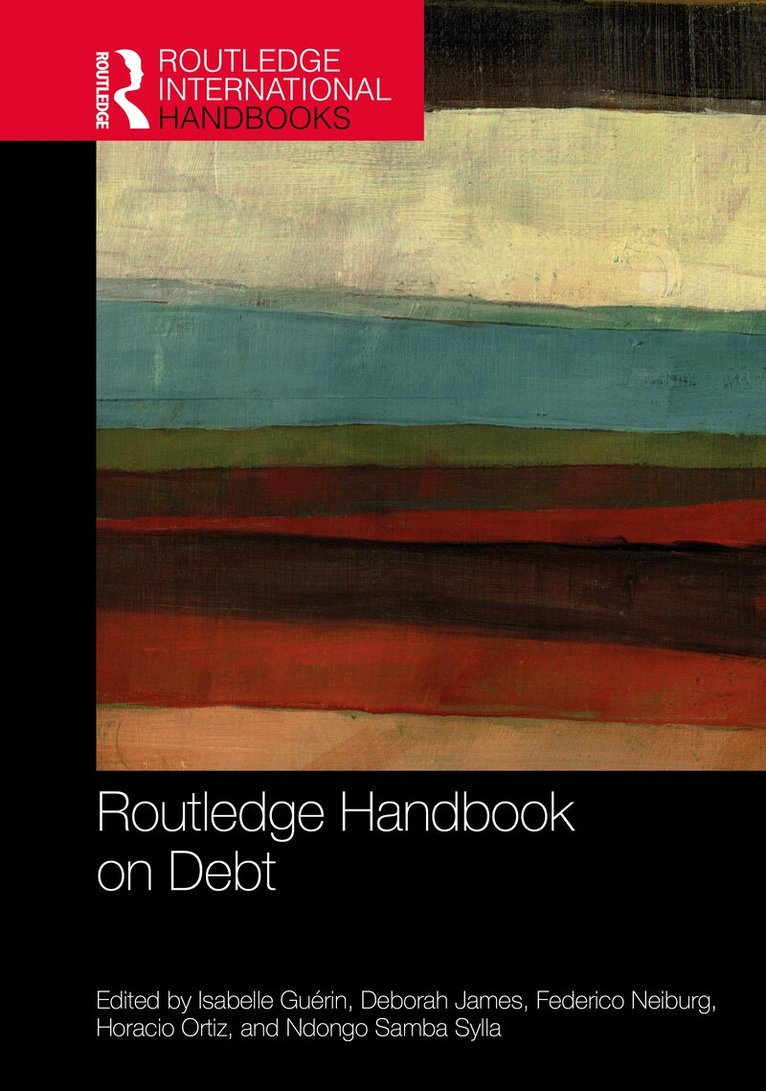
    Routledge Handbook on Debt

    AvIsabelle Guérin,Deborah James

    Inbunden, Engelska, 2026

    Del i serien Routledge International Handbooks

    3 769 kr

    Slutsåld

    Beskrivning

    This handbook brings together scholarship from different disciplines, institutions and locations to contribute critically to how the social sciences think about – with, against, beyond – debt. By bringing together the best specialists in the field, this handbook both captures and feeds the theoretical and political debates on a subject of burning relevance. Across the diversity of theoretical and methodological approaches, a common thread to the contributions is a concern with power relations and inequalities. Who owes what to whom? To what extent is debt both shaped by and constitutive of social and power relations while crystallizing or giving rise to individual and collective aspirations, resistances and struggles? How is debt structured by long historical trajectories and broad trends that operate at a global level, while at the same time intertwining with institutions, organizations and interpersonal relations specific to singular contexts and periods of history? The handbook features a combination of theoretical and empirical chapters, but overall their purpose is to make an analytical contribution to some of the most relevant public issues of our time. The volume gives empirical examples from a wide variety of geographical locations, moving away from a narrow Euro-American-centric vision. It also explores the case of countries whose banking and debt systems are relatively unknown. The handbook is an invaluable resource for readers who—besides debt itself--are interested in money, banking, economy, social obligation, poverty, and inequality.

    Produktinformation

    • Utgivningsdatum:2026-11-23
    • Mått:174 x 246 x undefined mm
    • Format:Inbunden
    • Språk:Engelska
    • Serie:Routledge International Handbooks
    • Antal sidor:512
    • Förlag:Taylor & Francis Ltd
    • ISBN:9781032798592

    Utforska kategorier

    • Referensverk och tvärvetenskap inom Samhälle och politik
    • Internationell ekonomi inom Ekonomi och Ledarskap
    • Ekonomisk politik inom Ekonomi och Ledarskap

    Mer om författaren

    Isabelle Guérin is Senior Research Fellow at IRD (French National Research Institute on Sustainable Development), affiliated at Cessma (Social Science Center Studies in African, American and Asian Worlds, Université Paris CIté/IRD/Inalco).Deborah James is a professor at LSE (London School of Economics). She is an anthropologist of economy, exploring indebtedness and advice in particular, and her research is focused on South Africa and, more recently, the UK.Federico Neiburg is professor of anthropology at the National Museum, Federal University of Rio de Janeiro, where he is also the founder of the Research Group on Culture and Economy (NuCEC).Horacio Ortiz is associate professor at the School of Social Development and Public Policy, Fudan University, China and senior researcher at Université Paris Dauphine – PSL, IRISSO, UMR 7170, Centre National de la Recherche Scientifique, FranceNdongo Samba Sylla (PhD) is a Senegalese Development Economist. He is currently the Dakar-based Research and Policy Director for Africa of the International Development Economics Associates (IDEAs), an organization that brings together economists from the Global South.

    Innehållsförteckning

    • Introduction. 1 Perspectives: 1.1 Debt and Patriarchy; 1.2 Debt and Race; 1.3 Debt and Class; 1.4 Debt in Critical Accounting; 1.5 Debt in Sociology; 1.6 Debt in Anthropology; 1.7 Debt in Economics. 2 Interpersonal Relations: 2.1 Debt and Violence; 2.2 Trade, Family and Debt; 2.3 Debt, Migration, and Hope; 2.4 Debts, Gifts and the Opacities of Everyday Life; 2.5 Household, Future-making and Debt; 2.6 Rotating Credit Associations and Debt. 3 Banking: 3.1 Making the Mortgagor Nation; 3.2 Debt and the (im)Morality of Financialization; 3.3 Dual Credit Systems and Financial Inequality; 3.4 Compressing Development and Extending the Banks; 3.5 The Credit Nexus; 3.6 Small Creditors, Large Debtors. 4 Organisations and Institutions: 4.1 The New Politics of Middle-class Indebtedness; 4.2 Debt Management and Social Policy in the Age of Financialization; 4.3 Digital Lending; 4.4 Sovereign and Social Debts; 4.5 Economic Reparation Through the Lens of Debt; 4.6 How Debts Shape Democratic Experience; 4.7 The Long History of Debt Imprisonment. 5 Global Relations: 5.1 Slavery, Racial Capitalism, and Reparations; 5.2 Subprime Empire and the Histories of in-Between Finance; 5.3 Weaponizing Debt; 5.4 Debt and Rural Agrarian Economies; 5.5 Bonded Sovereignties. 6 Politicizing Debt: 6.1 A Feminist Reading of Debt; 6.2 Fighting Illegitimate Debts; 6.3 The Ecological Debt; 6.4 Decommodification of Debt. Index.