Howard Campbell - Böcker
Visar alla böcker från författaren Howard Campbell. Handla med fri frakt och snabb leverans.
6 produkter
6 produkter
257 kr
Skickas inom 7-10 vardagar
Winner, Southwest Book Award, Border Regional Library Association, 2011Thousands of people die in drug-related violence every year in Mexico. Ciudad JuÁrez, Chihuahua, adjacent to El Paso, Texas, has become the most violent city in the Mexican drug war. Much of the cocaine, marijuana, and methamphetamine consumed in the United States is imported across the Mexican border, making El Paso/JuÁrez one of the major drug-trafficking venues in the world.In this anthropological study of drug trafficking and anti-drug law enforcement efforts on the U.S.-Mexico border, Howard Campbell uses an ethnographic perspective to chronicle the recent Mexican drug war, focusing especially on people and events in the El Paso/JuÁrez area. It is the first social science study of the violent drug war that is tearing Mexico apart.Based on deep access to the drug-smuggling world, this study presents the drug war through the eyes and lives of direct participants. Half of the book consists of oral histories from drug traffickers, and the other half from law enforcement officials. There is much journalistic coverage of the drug war, but very seldom are the lived experiences of traffickers and "narcs" presented in such vivid detail. In addition to providing an up-close, personal view of the drug-trafficking world, Campbell explains and analyzes the functioning of drug cartels, the corruption that facilitates drug trafficking, the strategies of smugglers and anti-narcotics officials, and the perilous culture of drug trafficking that Campbell refers to as the "Drug War Zone."
341 kr
Skickas inom 10-15 vardagar
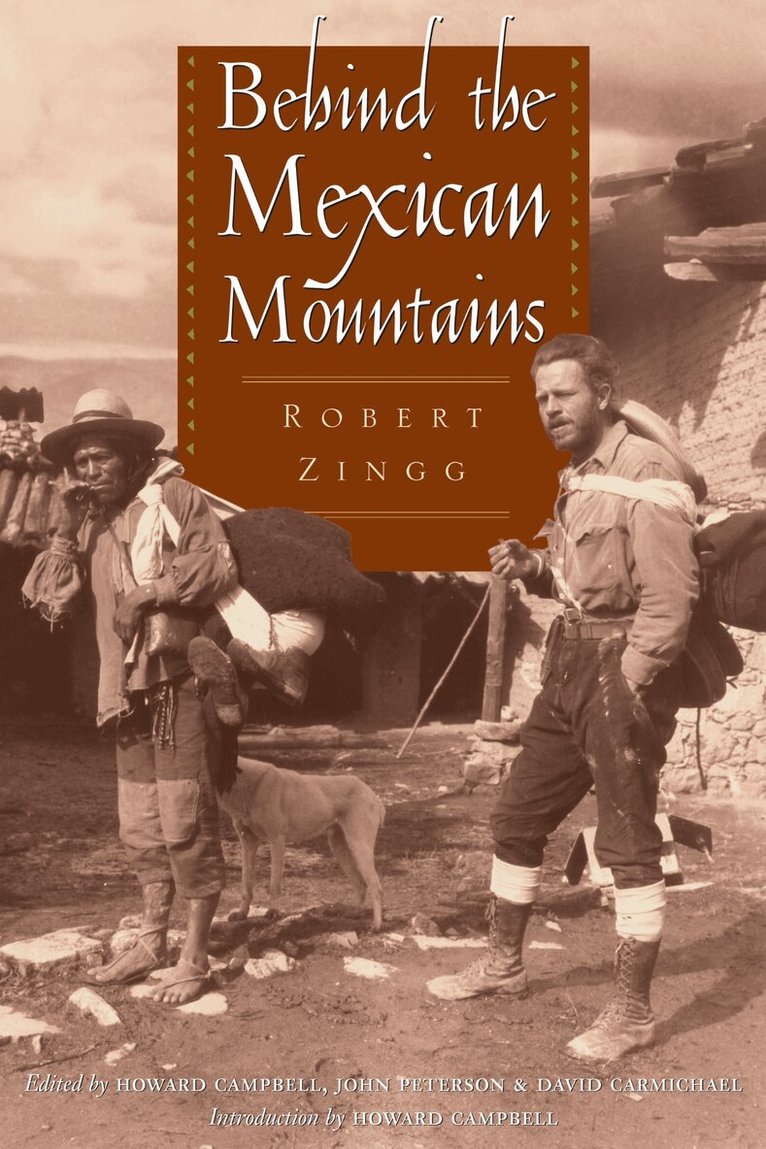
In 1930, anthropologists Robert Zingg and Wendell Bennett spent nine months among the Tarahumara of Chihuahua, Mexico, one of the least acculturated indigenous societies in North America. Their fieldwork resulted in The Tarahumara: An Indian Tribe of Northern Mexico (1935), a classic ethnography still familiar to anthropologists. In addition to this formal work, Zingg also penned a personal, unvarnished travelogue of his sojourn among the Tarahumara. Unpublished in his lifetime, Behind the Mexican Mountains is now available in print for the first time.This colorful account provides a compelling description of the landscape, people, traditions, language, and archaeology of the Tarahumara region. Abandoning the scientific detachment of the observer, Zingg frankly records his reactions to the people and their customs as he vividly evokes the daily experience of doing fieldwork. In the introduction, Howard Campbell examines Zingg's writing in light of current critiques of anthropology as literature. He makes a strong case that although earlier anthropological writing reveals unacceptable cultural biases, it also demonstrates the ongoing importance and vitality of field research.
Mexican Memoir
A Personal Account of Anthropology and Radical Politics in Oaxaca
Inbunden, Engelska, 2001
1 009 kr
Skickas inom 10-15 vardagar
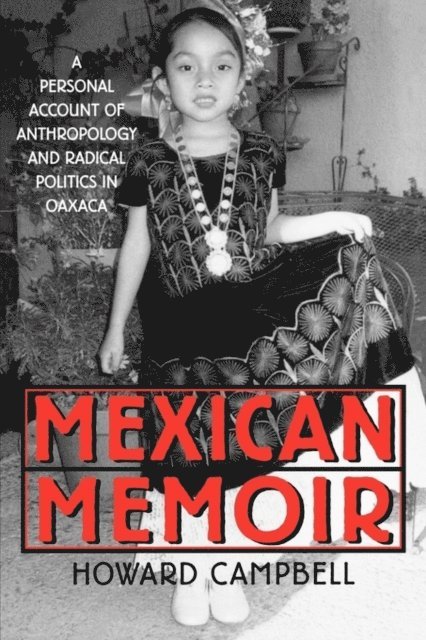
Ensconced in the tight kinship network of a local household in Oaxaca, Mexico, the author embarked on a challenging study of a radical ethnic political movement, COCEI. An anthropologist who married a Zapotec Women, the author chronicles his fieldwork in this memoir. His research is interwoven with his personal experiences, addressing the political and ethical dilemmas of contemporary ethnography. Campbell's informants are internationally known politicians, poets, and painters who live in Juchitán, a large city controlled by indigenous activists.While adopting aspects of the postmodern critique of ethnography, the author proposes and illustrates a collaborative form of research based on partisan political commitment. Through a candid and intimate account, he portrays his informants and research site, and his direct involvement in Zapotec society. The book is both a highly readable ethnography of Southern Mexico and a contribution to debates about current anthropology.
Mexican Memoir
A Personal Account of Anthropology and Radical Politics in Oaxaca
Häftad, Engelska, 2001
354 kr
Skickas inom 10-15 vardagar
Ensconced in the tight kinship network of a local household in Oaxaca, Mexico, the author embarked on a challenging study of a radical ethnic political movement, COCEI. An anthropologist who married a Zapotec Women, the author chronicles his fieldwork in this memoir. His research is interwoven with his personal experiences, addressing the political and ethical dilemmas of contemporary ethnography. Campbell's informants are internationally known politicians, poets, and painters who live in Juchitán, a large city controlled by indigenous activists.While adopting aspects of the postmodern critique of ethnography, the author proposes and illustrates a collaborative form of research based on partisan political commitment. Through a candid and intimate account, he portrays his informants and research site, and his direct involvement in Zapotec society. The book is both a highly readable ethnography of Southern Mexico and a contribution to debates about current anthropology.
1 083 kr
Skickas inom 7-10 vardagar
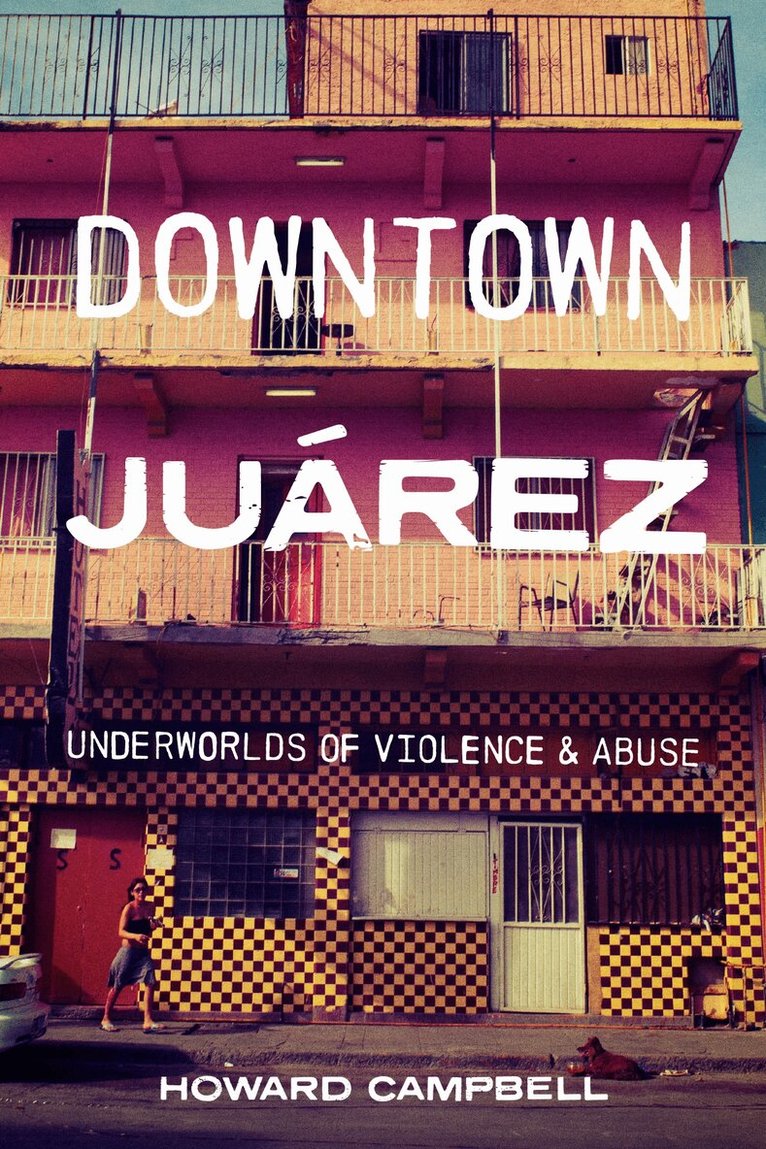
At least 200,000 people have died in Mexico's so-called drug war, and the worst suffering has been in Ciudad Juárez, across the border from El Paso, Texas. How did it get so bad? After three decades studying that question, Howard Campbell doesn't believe there is any one answer. Misguided policies, corruption, criminality, and the borderland economy are all factors. But none of these reasons explain how violence in downtown Juárez has become heartbreakingly "normal."A rigorous yet moving account, Downtown Juárez is informed by the sex workers, addicts, hustlers, bar owners, human smugglers, migrants, and down-and-out workers struggling to survive in an underworld where horrifying abuses have come to seem like the natural way of things. Even as Juárez's elite northeast section thrives on the profits of multinational corporations, and law-abiding citizens across the city mobilize against crime and official malfeasance, downtown's cantinas, barrios, and brothels are tyrannized by misery.Campbell's is a chilling perspective, suggesting that, over time, violent acts feed off each other, losing their connection to any specific cause. Downtown Juárez documents this banality of evil—and confronts it—with the stories of those most affected.
327 kr
Skickas inom 7-10 vardagar
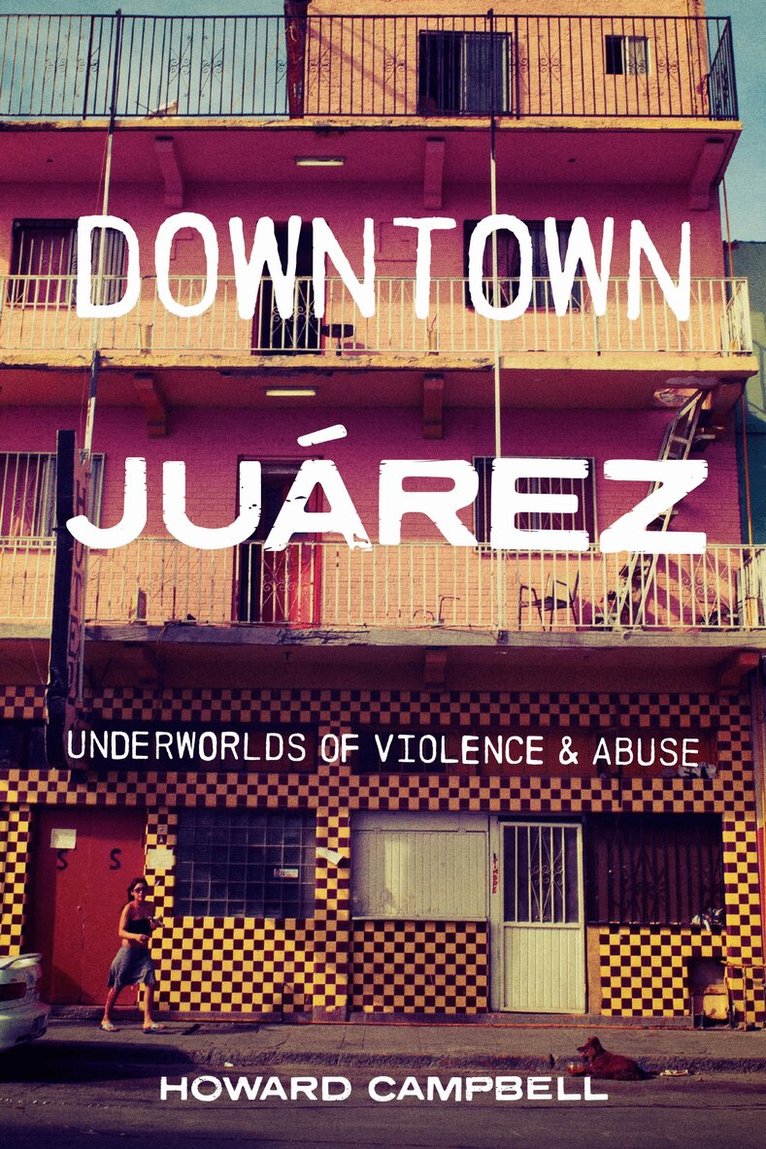
At least 200,000 people have died in Mexico's so-called drug war, and the worst suffering has been in Ciudad Juárez, across the border from El Paso, Texas. How did it get so bad? After three decades studying that question, Howard Campbell doesn't believe there is any one answer. Misguided policies, corruption, criminality, and the borderland economy are all factors. But none of these reasons explain how violence in downtown Juárez has become heartbreakingly "normal."A rigorous yet moving account, Downtown Juárez is informed by the sex workers, addicts, hustlers, bar owners, human smugglers, migrants, and down-and-out workers struggling to survive in an underworld where horrifying abuses have come to seem like the natural way of things. Even as Juárez's elite northeast section thrives on the profits of multinational corporations, and law-abiding citizens across the city mobilize against crime and official malfeasance, downtown's cantinas, barrios, and brothels are tyrannized by misery.Campbell's is a chilling perspective, suggesting that, over time, violent acts feed off each other, losing their connection to any specific cause. Downtown Juárez documents this banality of evil—and confronts it—with the stories of those most affected.