Howard Cox - Böcker
Visar alla böcker från författaren Howard Cox. Handla med fri frakt och snabb leverans.
6 produkter
6 produkter
The Global Cigarette
Origins and Evolution of British American Tobacco, 1880-1945
Inbunden, Engelska, 2000
2 171 kr
Skickas inom 7-10 vardagar
During the 1880s, the tobacco manufacturing industries of Britain and America were revolutionized by the introduction of mechanized cigarette production. The development of this novel, image-laden product constituted a triumph for the methods of mass production and mass distribution in this most traditional of consumer goods industries. The Global Cigarette charts the way in which these innovations in manufacturing and marketing methods led to the formation in 1902 of the British American Tobacco Co. as an Anglo-American multinational joint venture designed to promote cigarettes in international markets. Based on archive materials from a wide variety of sources, including the company's own internal records, this book provides the first authoritative account of BAT's evolution and growth up until the Second World War. In particular, The Global Cigarette shows the way in which the company developed a vast array of international operating subsidiaries, explores how it managed these enterprises in different political and cultural contexts–notably in China and India–and analyses the way in which the company, as a mature multinational enterprise, coped with the severe international economic dislocations of the 1930s. In the era of globalization, this account of the operational and organizational arrangements of a prefigurative 'global' company will shed light on current debates on alliances, joint ventures, and international business.
451 kr
Skickas inom 7-10 vardagar
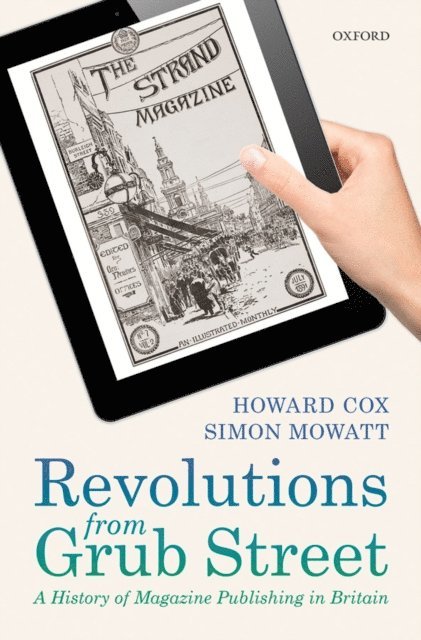
Revolutions from Grub Street charts the evolution of Britain's popular magazine industry from its seventeenth century origins through to the modern digital age. Following the reforms engendered by the Glorious Revolution of 1688 the Grub Street area of London, which later transmuted into the cluster of venerable publishing houses centred on Fleet Street, spawned a vibrant culture of commercial writers and small-scale printing houses. Exploiting the commercial potential offered by improvements to the system of letterpress printing, and allied to a growing demand for popular forms of reading matter, during the course of the eighteenth century one of Britain's pioneering cultural industries began to take meaningful shape. Publishers of penny weeklies and sixpenny monthlies sought to capitalise on the opportunities that magazines, combining lively text with appealing illustrations, offered for the turning of a profit. The technological revolutions of the nineteenth century facilitated the emergence of a host of small and medium-sized printer-publishers whose magazine titles found a willing and growing audience ranging from Britain's semi-literate working classes through to its fashion-conscious ladies. In 1881, the launch of George Newnes' highly innovative Tit-Bits magazine created a publishing sensation, ushering in the era of the modern, million-selling popular weekly. Newnes and his early collaborators Arthur Pearson and Alfred Harmsworth, went on to create a group of competing business enterprises that, during the twentieth century, emerged as colossal publishing houses employing thousands of mainly trade union-regulated workers. In the early 1960s these firms, together with Odhams Press, merged to create the basis of the modern magazine giant IPC. Practically a monopoly producer until the 1980s, IPC was convulsed thereafter by the dual revolutions of globalization and digitization, finding its magazines under commercial attack from all directions. Challenged first by EMAP, Natmags, and Condé Nast, by the 1990s IPC faced competition both from expanding European rivals, such as H. Bauer, and a variety of newly-formed agile domestic competitors who were able to successfully exploit the opportunities presented by desktop publishing and the world wide web. In a narrative spanning over 300 years, Revolutions from Grub Street draws together a wide range of new and existing sources to provide the first comprehensive business history of magazine-making in Britain.
909 kr
Skickas inom 7-10 vardagar
Revolutions from Grub Street charts the evolution of Britain's popular magazine industry from its seventeenth century origins through to the modern digital age. Following the reforms engendered by the Glorious Revolution of 1688 the Grub Street area of London, which later transmuted into the cluster of venerable publishing houses centred on Fleet Street, spawned a vibrant culture of commercial writers and small-scale printing houses. Exploiting the commercial potential offered by improvements to the system of letterpress printing, and allied to a growing demand for popular forms of reading matter, during the course of the eighteenth century one of Britain's pioneering cultural industries began to take meaningful shape. Publishers of penny weeklies and sixpenny monthlies sought to capitalise on the opportunities that magazines, combining lively text with appealing illustrations, offered for the turning of a profit. The technological revolutions of the nineteenth century facilitated the emergence of a host of small and medium-sized printer-publishers whose magazine titles found a willing and growing audience ranging from Britain's semi-literate working classes through to its fashion-conscious ladies.In 1881, the launch of George Newnes' highly innovative Tit-Bits magazine created a publishing sensation, ushering in the era of the modern, million-selling popular weekly. Newnes and his early collaborators Arthur Pearson and Alfred Harmsworth, went on to create a group of competing business enterprises that, during the twentieth century, emerged as colossal publishing houses employing thousands of mainly trade union-regulated workers. In the early 1960s these firms, together with Odhams Press, merged to create the basis of the modern magazine giant IPC. Practically a monopoly producer until the 1980s, IPC was convulsed thereafter by the dual revolutions of globalization and digitization, finding its magazines under commercial attack from all directions. Challenged first by EMAP, Natmags, and Condé Nast, by the 1990s IPC faced competition both from expanding European rivals, such as H. Bauer, and a variety of newly-formed agile domestic competitors who were able to successfully exploit the opportunities presented by desktop publishing and the world wide web. In a narrative spanning over 300 years, Revolutions from Grub Street draws together a wide range of new and existing sources to provide the first comprehensive business history of magazine-making in Britain.
2 160 kr
Skickas inom 10-15 vardagar
In this book leading contributors look at the development of the evolutionary approach to international business, the internationalization of service industries and the implications of the changing face of Europe for international business in the 1990s. Providing an excellent blend of theory, analysis and case-study material, this volume is a vital resource for students of international business and related fields.
694 kr
Skickas inom 10-15 vardagar
In this book leading contributors look at the development of the evolutionary approach to international business, the internationalization of service industries and the implications of the changing face of Europe for international business in the 1990s. Providing an excellent blend of theory, analysis and case-study material, this volume is a vital resource for students of international business and related fields.
1 546 kr
Skickas inom 5-8 vardagar
This major new text looks at the key elements in the operation and strategic development of international firms. Offering a comprehensive theoretical approach, together with wide-ranging cases to illustrate central issues, this text takes a multidisciplinary approach to show how international firms operate in the changing global environment, and how they make decisions for successful growth. It is designed for students undertaking courses in international business, economics and management at final year undergraduate, postgraduate and MBA level.