Hsing-Jien Kung - Böcker
Visar alla böcker från författaren Hsing-Jien Kung. Handla med fri frakt och snabb leverans.
2 produkter
2 produkter
Del 171 - Current Topics in Microbiology and Immunology
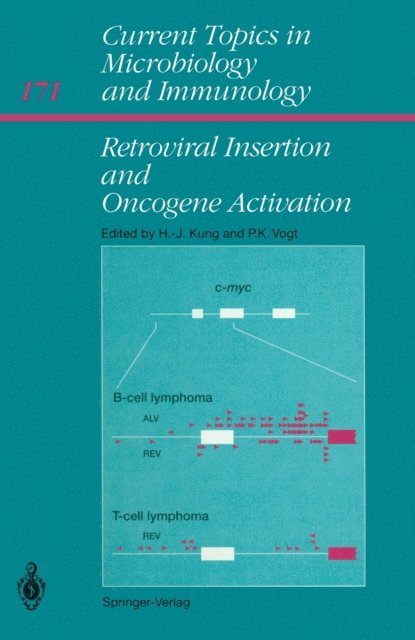
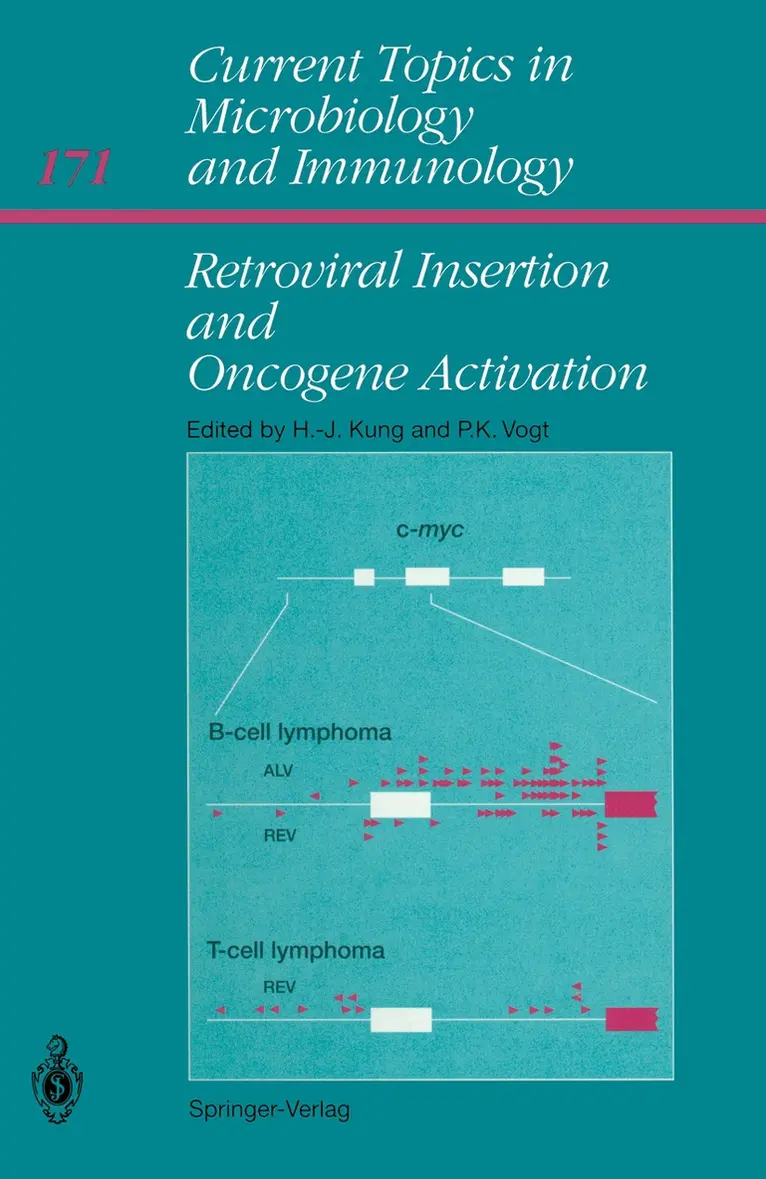
Retroviral Insertion and Oncogene Activation
Häftad, Engelska, 2011
552 kr
Skickas inom 10-15 vardagar
An integrated retrovirus effectively becomes part of the cellular genome, but with the difference that the virus to a large extent retains control over its own expression through nontranslated sequences in the long terminal repeat (L TR). Some retroviruses also code for nonstructural proteins that further regulate proviral expression. Integration changes the cell genome; it adds viral genes, and in the case of transducing retroviruses also adds cell-derived oncogenes that have been incorporated into the viral genome. Integration can also have consequences for cellular genes. The transcriptional signals in a provirus can activate expression of neighboring cellular genes; the integration even can disrupt and thus inactivate cellular genes. These effects of retroviral genomes take place in cis; they are referred to as insertional mutagenesis and are the subject of this volume. Almost 10 years have passed since W. Hayward, S. Astrin, and their colleagues found that in B cell lymphomas of chickens, induced by avian leukosis virus, transcription of the cellular proto-oncogene myc was upregulated through the integration of a complete or partial provirus in its vicinity. This landmark discovery suggested a mechanism by which retro viruses that do not carry cellular oncogenes in their genome ("nonacute retroviruses") can cause cancer. It contributed the first evidence for the carcinogen potential of oncogenes that are not part of a viral genome.
1 275 kr
Tillfälligt slut
Retroviruses and herpesviruses are two important human pathogens. Together, they occupy one of the most important places in modern Medical Virology. Coinfections of these two viruses in the same individuals are frequently observed, especially in patients afflicted with AIDS. Potential consequences of such interactions include the exacerbation of the disease, changing of the disease courses and the release of new viruses, etc. An understanding of the underlying mechanism is important, but, thus far, few insights have been gained. The present monograph, arranged in eight chapters, is intended to provide an updated and concise review of recent works regarding the molecular and cellular mechanisms of such interactions. The topics covered range from transcriptional regulation, receptor modulation, genetic recombination, to AIDS and oncogenesis. Human immunodeficiency virus, avian leukosis virus, reticuloendotheliosis virus, herpes simplex virus, cytomegalovirus, herpesvirus-6 and Marek's disease virus are among the viruses discussed. The contributing authors are among the leaders in this field and are responsible for many of the original discoveries presented. This should serve as a valuable research and teaching reference for both beginning and advanced researchers in virology and oncology.