H.S.M. Coxeter – författare
Visar alla böcker från författaren H.S.M. Coxeter. Handla med fri frakt och snabb leverans.
12 produkter
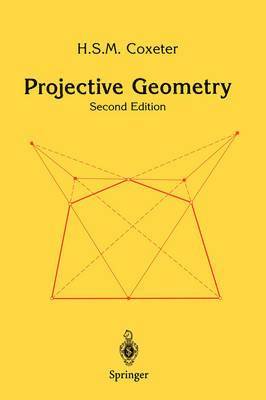
Projective Geometry
Häftad, 2003
552 kr
Lägg i varukorg
In Euclidean geometry, constructions are made with ruler and compass. Projective geometry is simpler: its constructions require only a ruler. In projective geometry one never measures anything, instead, one relates one set of points to another by a projectivity. The first two chapters of this book …
Real Projective Plane
1992
869 kr
Lägg i varukorg
Along with many small improvements, this revised edition contains van Yzeren's new proof of Pascal's theorem (§1.7) and, in Chapter 2, an improved treatment of order and sense. The Sylvester-Gallai theorem, instead of being introduced as a curiosity, is now used as an essential step in the theory …
The Mathematical Recreations of Lewis Carroll
Pillow Problems and a Tangled Tale
Av H.S.M. Coxeter, Lewis Carroll
Häftad, 2003
4,0 utav 5 stjärnor. Totalt antal röster: (1)
256 kr
Lägg i varukorg
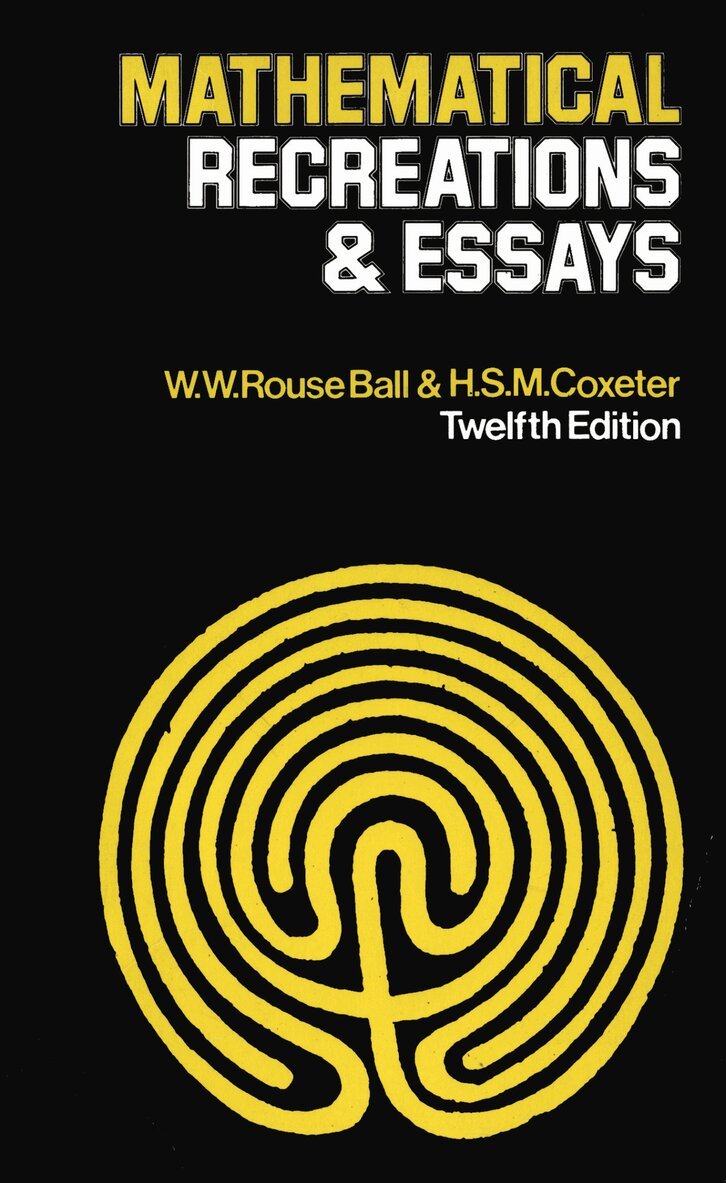
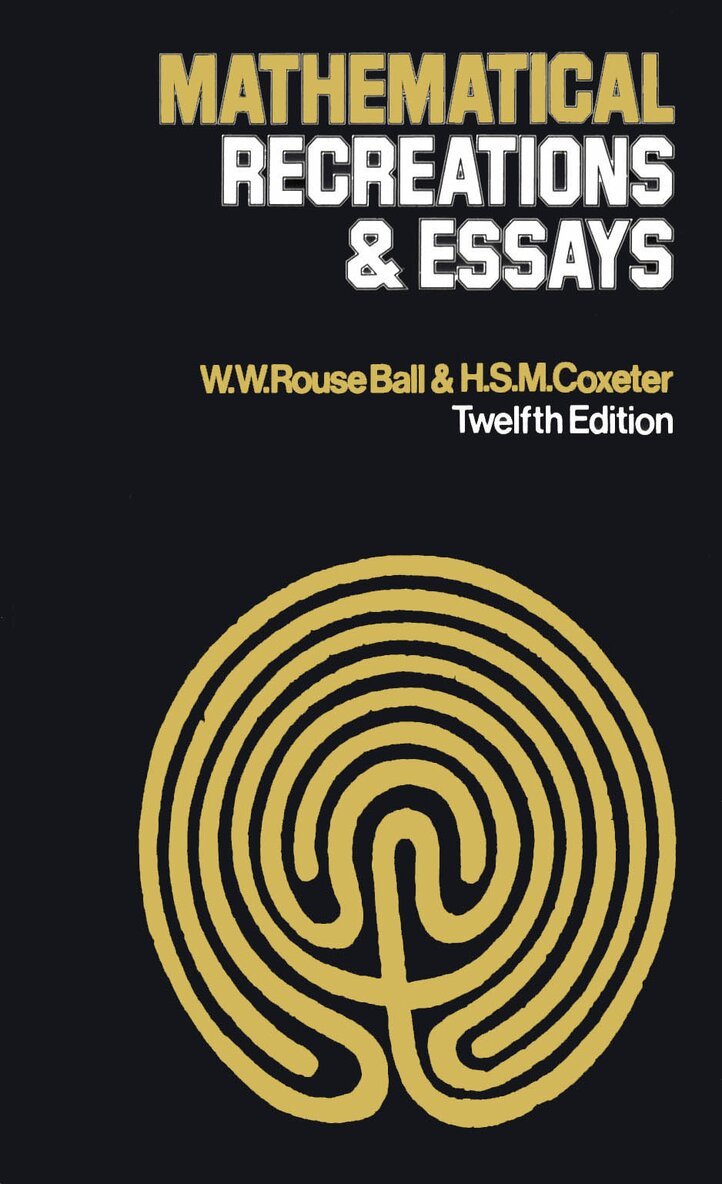
Mathematical Recreations & Essays
Twelfth Edition
Av W. W. Rouse Ball, H.S.M. Coxeter
E-bok, 1974
587 kr
Lägg i varukorg
For over eighty years this delightful classic has provided entertainment through mathematical problems commonly known as recreations. Although they often involve fundamental mathematical methods and notions, their chief appeal is as games or puzzles rather than the usefulness of their …
Non-Euclidean Geometry
Fifth Edition
E-bok, 1965
603 kr
Lägg i varukorg
The name non-Euclidean was used by Gauss to describe a system of geometry which differs from Euclid's in its properties of parallelism. Such a system was developed independently by Bolyai in Hungary and Lobatschewsky in Russia, about 120 years ago. Another system, differing more radically from …
Non-Euclidean Geometry
Fifth Edition
Häftad, 1965
457 kr
Lägg i varukorg
The name non-Euclidean was used by Gauss to describe a system of geometry which differs from Euclid's in its properties of parallelism. Such a system was developed independently by Bolyai in Hungary and Lobatschewsky in Russia, about 120 years ago. Another system, differing more radically from …
Non-Euclidean Geometry
Fifth Edition
E-bok, 1965
590 kr
Lägg i varukorg
The name non-Euclidean was used by Gauss to describe a system of geometry which differs from Euclid's in its properties of parallelism. Such a system was developed independently by Bolyai in Hungary and Lobatschewsky in Russia, about 120 years ago. Another system, differing more radically from …
Mathematical Recreations & Essays
Twelfth Edition
Av W. W. Rouse Ball, H.S.M. Coxeter
E-bok, 1974
522 kr
Lägg i varukorg
For over eighty years this delightful classic has provided entertainment through mathematical problems commonly known as recreations. Although they often involve fundamental mathematical methods and notions, their chief appeal is as games or puzzles rather than the usefulness of their …
Real Projective Plane
E-bok, 2012
950 kr
Lägg i varukorg
Along with many small improvements, this revised edition contains van Yzeren''s new proof of Pascal''s theorem (§1.7) and, in Chapter 2, an improved treatment of order and sense. The Sylvester-Gallai theorem, instead of being introduced as a curiosity, is now used as an essential step in the theory …
Real Projective Plane
Häftad, 2011
770 kr
Lägg i varukorg
Along with many small improvements, this revised edition contains van Yzeren's new proof of Pascal's theorem (§1.7) and, in Chapter 2, an improved treatment of order and sense. The Sylvester-Gallai theorem, instead of being introduced as a curiosity, is now used as an essential step in the theory …
Real Projective Plane
Häftad, 2013
607 kr
Lägg i varukorg
Along with many small improvements, this revised edition contains van Yzeren's new proof of Pascal's theorem (§1.7) and, in Chapter 2, an improved treatment of order and sense. The Sylvester-Gallai theorem, instead of being introduced as a curiosity, is now used as an essential step in the theory …