Huba Bartos – författare
Visar alla böcker från författaren Huba Bartos. Handla med fri frakt och snabb leverans.
4 produkter
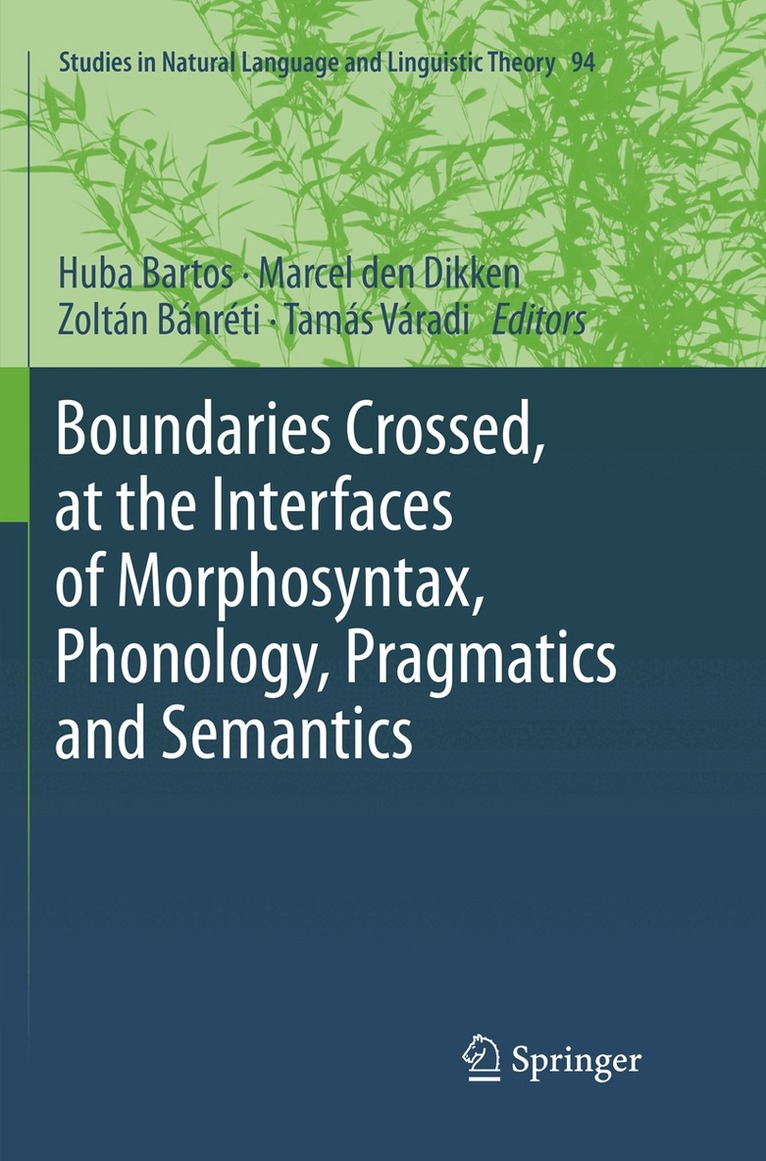
Boundaries Crossed, at the Interfaces of Morphosyntax, Phonology, Pragmatics and Semantics
Av Huba Bartos, Marcel den Dikken m. fl.
Häftad, 2018
1800 kr
Lägg i varukorg
This volume offers a selection of interface studies in generative linguistics, a valuable “one-stop shopping” opportunity for readers interested in the ways in which the various modules of linguistic analysis intersect and interact. The boundaries between the lexicon and morphophonology, between …
Boundaries Crossed, at the Interfaces of Morphosyntax, Phonology, Pragmatics and Semantics
Av Huba Bartos, Marcel den Dikken m. fl.
Inbunden, 2018
1800 kr
Lägg i varukorg
This volume offers a selection of interface studies in generative linguistics, a valuable “one-stop shopping” opportunity for readers interested in the ways in which the various modules of linguistic analysis intersect and interact. The boundaries between the lexicon and morphophonology, between …
Boundaries Crossed, at the Interfaces of Morphosyntax, Phonology, Pragmatics and Semantics
Av Tamas Varadi, Zoltan Banreti m. fl.
E-bok, 2018
2341 kr
Lägg i varukorg
This volume offers a selection of interface studies in generative linguistics, a valuable “one-stop shopping” opportunity for readers interested in the ways in which the various modules of linguistic analysis intersect and interact. The boundaries between the lexicon and morphophonology, between …
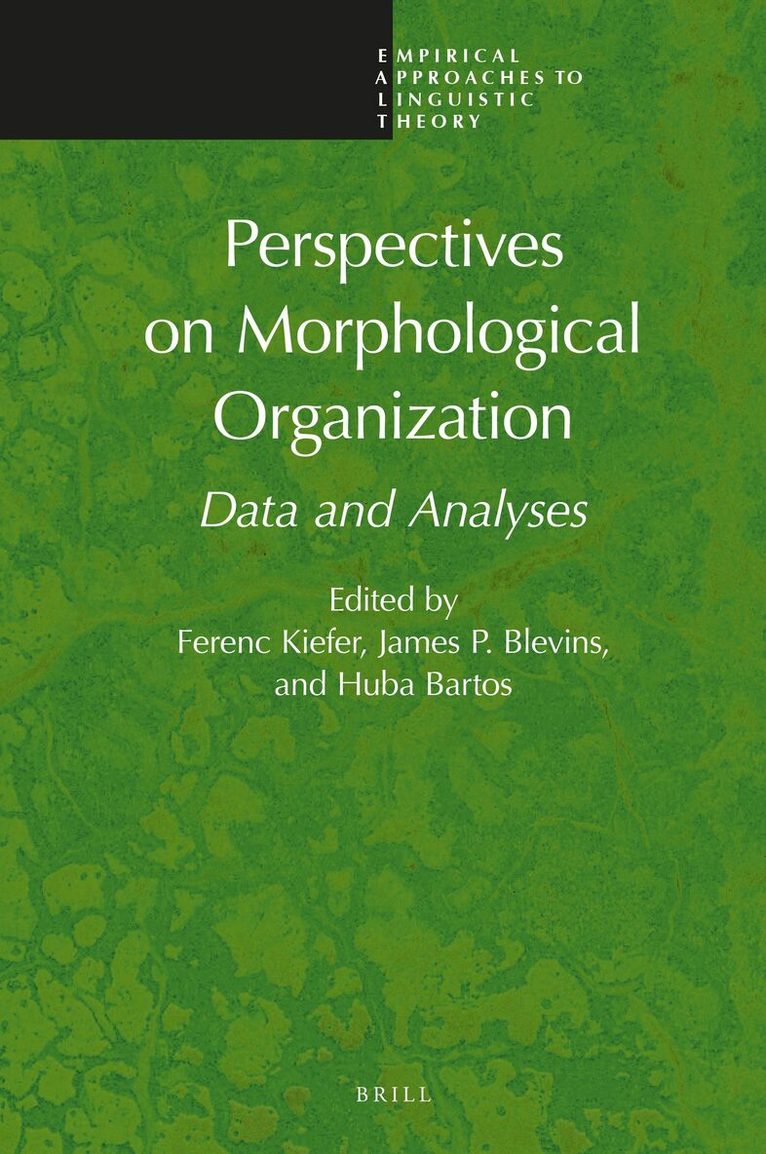
Perspectives on Morphological Organization
Data and Analyses
Av Ferenc Kiefer, James Blevins m. fl.
Inbunden, 2017
1972 kr
Lägg i varukorg
This volume contains a selection of recent theoretical studies, deriving from presentations at the 16th International Morphology Meeting (Budapest, 2014), on the organization of morphological paradigms, paradigm complexity, and the inflectional marking of morphosyntactic relations, as well as on …