Hunter Bivens - Böcker
Visar alla böcker från författaren Hunter Bivens. Handla med fri frakt och snabb leverans.
2 produkter
2 produkter
515 kr
Skickas inom 11-20 vardagar
The antifascist exile beginning in 1933 led to a cooling among the émigrés of the artistic and literary modernist experiments of the Weimar Republic and to a return to realism and the traditional novel form. Epic and Exile examines the Popular Front– oriented cultural initiatives of the 1930s less in terms of their political strategy than in their function as a cultural and literary program for the exiles, implying a specific relationship to questions of artistic form, historical conceptions, and indeed the political as such. A popular front aesthetics is, Bivens argues, realist and modernist at once, and, in its focus on the opacities and contradictions of everyday life as a historical formation, it is particularly concerned with problems of the epic form.
Del 3 - Culture and Power in German-Speaking Europe, 1918-1989
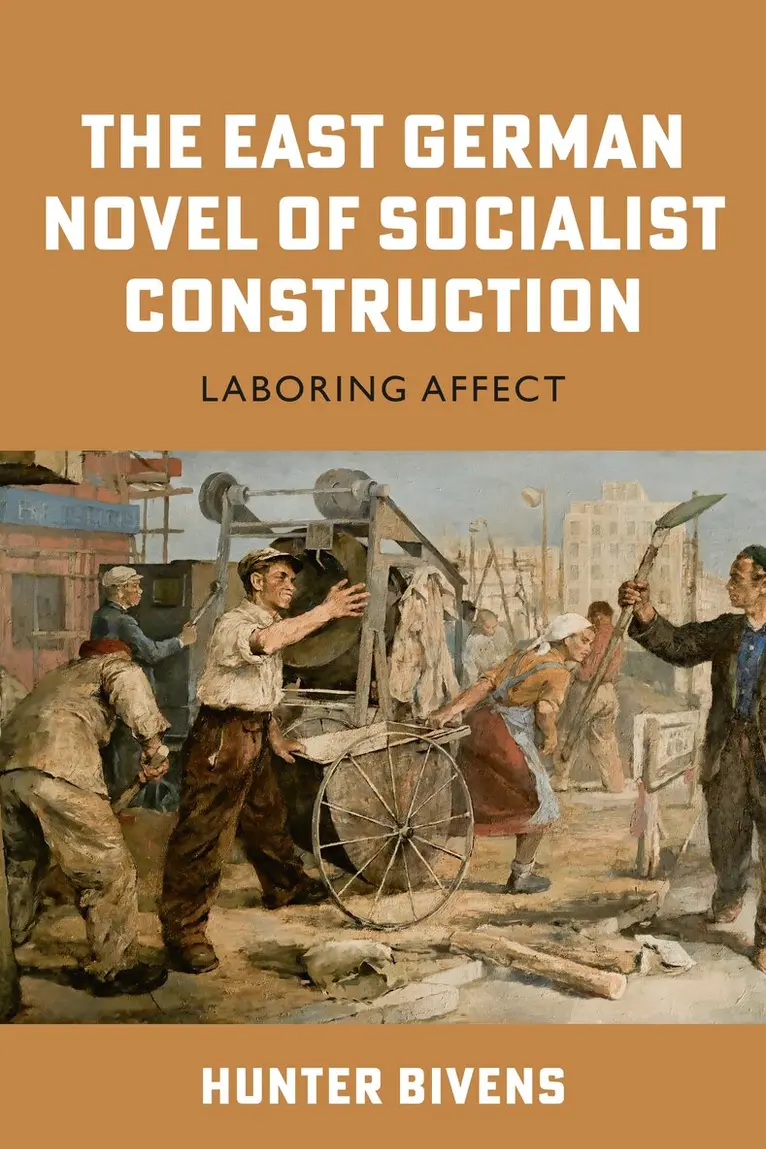
East German Novel of Socialist Construction
Laboring Affect
Inbunden, Engelska, 2026
1 200 kr
Skickas inom 7-10 vardagar
Examines an important novelistic genre of the early German Democratic Republic for what it tells us about the country's aspirations to remake labor affectively and thus to build a socialist society.In a series of socialist realist novels written in the early 1950s, East German authors sought to capture "the new feeling of work" under socialism, to portray the collective enthusiasm of building a new world out of the ruins of fascism and war. In the GDR, this construction literature received an ambiguous reception even at the time; in the West it was dismissed as propaganda; and it is now largely forgotten. Why revisit it now? Drawing on the theorization of living labor elaborated in Oskar Negt and Alexander Kluge's work, particularly their monumental treatise History and Obstinacy, and on contemporary Marxist feminist accounts of social reproduction theory, this book argues that East German construction literature provides us with a set of case studies in the social reorganization of work and the emotions and infrastructures that attend to it, even as these novels attempt to contain these transformations through socialist realist aesthetic strategies. The much-bemoaned awkwardness of these novels, then, is perhaps not only to be found in their didacticism but in the limits of that didacticism, where they seek both to portray and to disavow the transformation of work and the working class in the GDR. This book confronts the question: what was socialist affective labor and what could it have been?