Huri Islamoglu - Böcker
Visar alla böcker från författaren Huri Islamoglu. Handla med fri frakt och snabb leverans.
3 produkter
3 produkter
635 kr
Skickas inom 10-15 vardagar
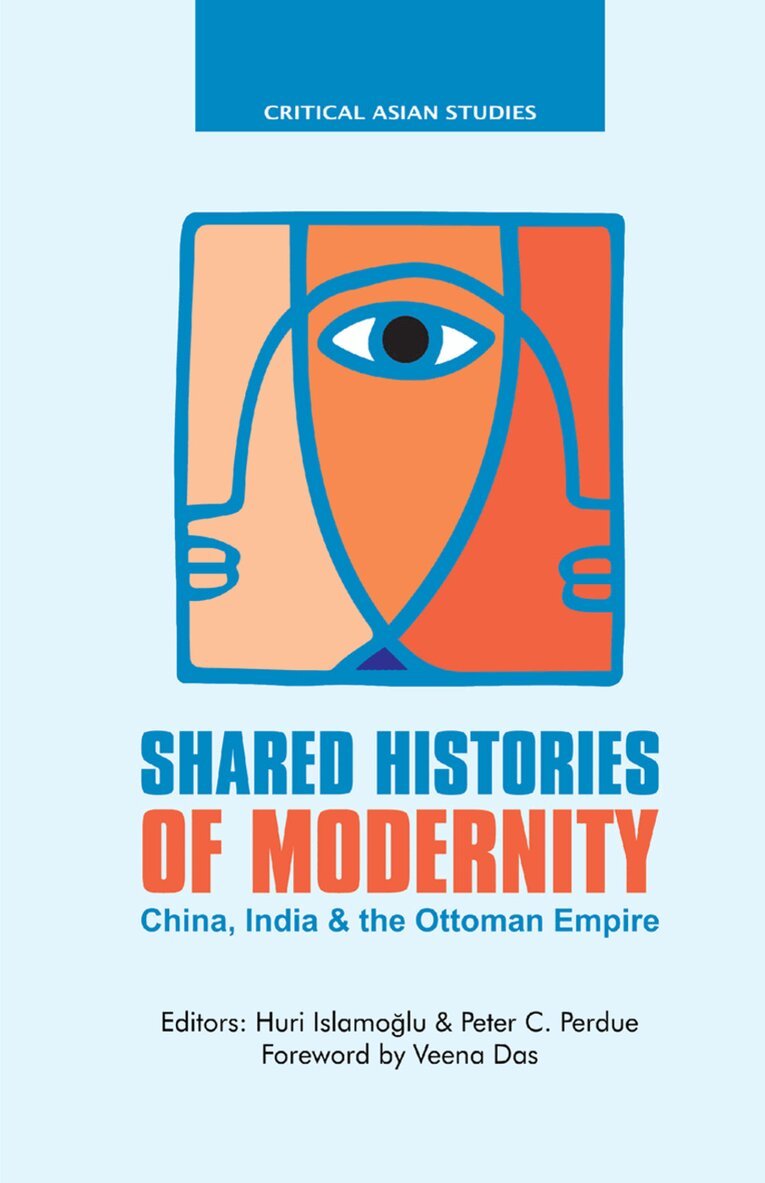
While pre-modernity is often considered to be the 'time' of non-European regions and modernity is seen as belonging to the West, this book seeks to transcend the temporal bifurcation of that world history into 'pre-modern' and 'modern', as well as question its geographical split into two irreconcilable trajectories: the European and the non-Europea
2 160 kr
Skickas inom 10-15 vardagar
While pre-modernity is often considered to be the 'time' of non-European regions and modernity is seen as belonging to the West, this book seeks to transcend the temporal bifurcation of that world history into 'pre-modern' and 'modern', as well as question its geographical split into two irreconcilable trajectories: the European and the non-European. The book examines shared experiences of modern transformation or modernity in three regions -- China, India and the Ottoman Empire -- which conventional historiography identifies as non-European, and therefore, by implication, outside of modernity or only tangentially linked to it as its victim. In other words, this work looks at modernity without reference to any 'idealised' criteria of what qualifies as 'modern' or not, studying the negotiation and legacies of the early modern period for the modern nation state. It focuses on the experience of modernity of non-European regions for they play a crucial role in the new phase of transformational patterns may have deeper roots than are generally assumed.Rejecting European characterisations of 'eastern' states as Oriental despotisms, the volume conceives of the early modern state as a negotiated enterprise, one that questions the assumption that state centralisation must be a key metric of success in modernisation. Among other topics, the book highlights: state formations in the three empires; legislation pertaining to taxation, property, police reform, the autonomy of legal sphere, the interaction of different types of law, law's role in governance, administrative practice, negotiated settlements and courts as sites of negotiation, the blurred boundaries between formal law and informal mediation; the ability of 18th century Qing and Ottoman imperial governments to accommodate diverse local particularities within an overreaching structure; and the pattern of regional development pointing to the accommodative institutional capacity of the Mughal empire.Tracing the complex histories of state or imperial formations through legal, administrative, and economic developments, the book argues that modernity as such no longer stands for experience of 'alienation' from specific historical trajectories, a characterisation which often haunted the 'modern' histories of the British empire in India, Ottoman reform state or the Communist Chinese state. Bringing together historians of the Qing, the Mughal and the Ottoman empires, this volume, principally, explores categories of historical explanation that span the European and non-European, pre-modern and modern experiences.
1 687 kr
Skickas inom 10-15 vardagar
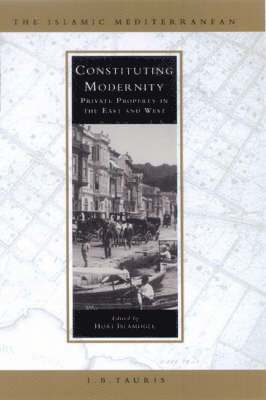
This text originated from a critique of a liberal understanding of property relation as one between a person and a "thing". States are perceived to be fundamental obstacles on the way to an individual's appropriation of the "thing". State intervention is often considered to be a reason for a presumed absence of private property in non-European contexts. The research presented here contests these assumptions from different perspectives, both in a European and non-European context. As multidisciplinary as it is wide-ranging, the work ranges from practices of the 19th-century Otoman administrative government in the constitution of private property rights to the practice of cadastral mapping in British India. These essays, prepared in collaboration as part of a unified research programme, cover Ottoman and British land laws, property rights in the British colonies, and the notion of property as a contested domain and a site of power relations in 19th-century China.