Iain Crow - Böcker
385 kr
Skickas inom 3-6 vardagar
"This book provides an essential tool for undergraduate students embarking upon their own research projects in Criminology. It provides clear and informative guidance on a range of research methods and designs to assist students in their own criminological endeavours."Jacki Tapley, University of Portsmouth
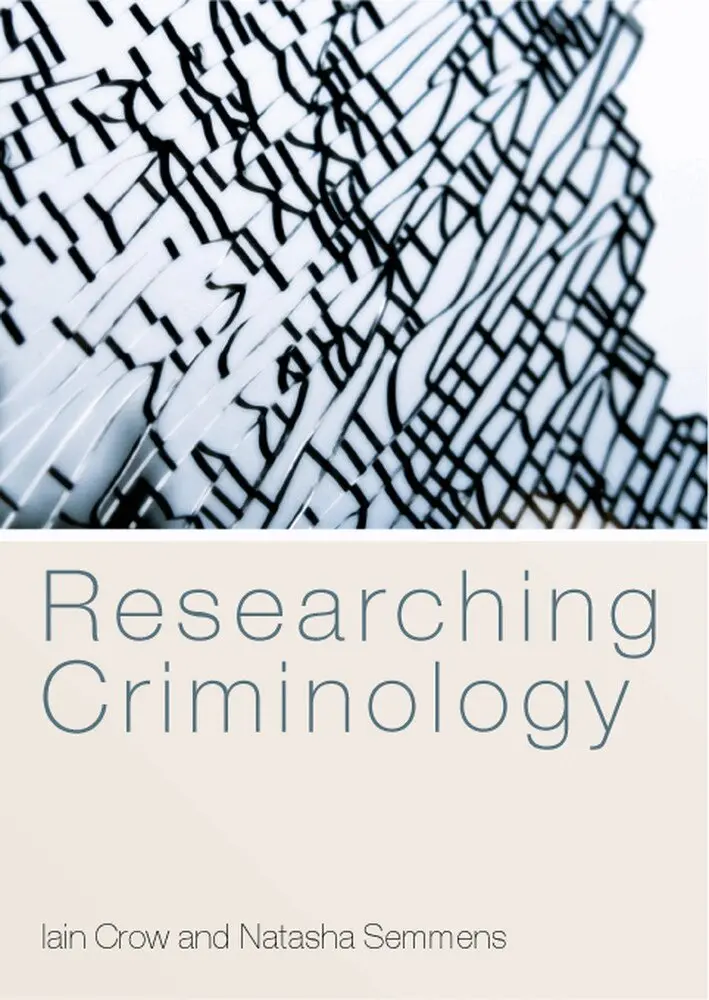
How do criminologists go about studying crime and its consequences? How are programmes for offenders and communities evaluated? How can you collect and analyse criminological material? Research on crime and criminality is often referred to by the media, policy makers and practitioners, but where does this research come from and how reliable is it?Designed especially for students on criminology and criminal justice courses, and professionals working in the field, Researching Criminology emphasises the importance of research as an integrated process. It looks at the ways in which a mixture of investigative methods can be used to analyze a criminological question.
Written by two experienced researchers and lecturers Researching Criminology is a comprehensive introduction to the aims, principles and methods of doing criminological research. The book covers all the key topics that you will encounter when researching crime. Individual chapters include material on:
The research process Principles of researching criminology How to design criminological research Evaluation research Researching ethically A glossary of essential key concepts Structured in three parts, addressing the principles of criminological research, how to collect and analyse material and providing detailed examples of real world research, Researching Criminology will be of benefit to all students of criminology and criminal justice, for practitioners interested in criminological research, and for those undertaking criminological research for the first time.2 673 kr
Skickas inom 3-6 vardagar
`The three chapters on treatment in practice are all excellent; the treatment of sex offenders, mentally disordered offenders and the treatment of drug misuse are all described within the social context of public concern... Ian gives a good overview of the sex offenders' treatment program as operated in prisons and Finkelhors model which is typically used by probation in working with offenders' - Simon Bass, Caring Magazine
Treatment and rehabilitation have been central to the development of criminal justice policy, and have played an important role in the development of criminology. In recent years punishment and retribution have attracted more attention than rehabilitation, but there has been a resurgence of interest in treatment and rehabilitation, with indications that some things do 'work', and an emphasis on 'evidence-based' policy making. It is also the belief of many that a penal policy without an adequate treatment strategy is unjust and a denial of human rights.
In this book Iain Crow provides an accessible overview of the concepts of treatment and rehabilitation, adopting a deliberately broad definition, and considers the historical basis of treatment, and its place within the penal system and British criminology. The collapse of the 'rehabilitative ideal' is examined, along with what followed it and the development of the more recent 'what works' movement. The basis for evaluating 'what works' is also subjected to critical examination. In the second part, the book looks at the part that particular agencies such as the Probation Service, prison and non-statutory organisations have played in the treatment of offenders. In Part Three, the issues raised by treatment and rehabilitation are illustrated with reference to three groups of offenders: sexual offenders, drug misusers and mentally disordered offenders.
The Treatment and Rehabilitation of Offenders will be essential reading for students of criminology and criminal justice at both undergraduate and post-graduate levels.
1 067 kr
Skickas inom 3-6 vardagar
`The three chapters on treatment in practice are all excellent; the treatment of sex offenders, mentally disordered offenders and the treatment of drug misuse are all described within the social context of public concern... Ian gives a good overview of the sex offenders' treatment program as operated in prisons and Finkelhors model which is typically used by probation in working with offenders' - Simon Bass, Caring Magazine
Treatment and rehabilitation have been central to the development of criminal justice policy, and have played an important role in the development of criminology. In recent years punishment and retribution have attracted more attention than rehabilitation, but there has been a resurgence of interest in treatment and rehabilitation, with indications that some things do 'work', and an emphasis on 'evidence-based' policy making. It is also the belief of many that a penal policy without an adequate treatment strategy is unjust and a denial of human rights.
In this book Iain Crow provides an accessible overview of the concepts of treatment and rehabilitation, adopting a deliberately broad definition, and considers the historical basis of treatment, and its place within the penal system and British criminology. The collapse of the 'rehabilitative ideal' is examined, along with what followed it and the development of the more recent 'what works' movement. The basis for evaluating 'what works' is also subjected to critical examination. In the second part, the book looks at the part that particular agencies such as the Probation Service, prison and non-statutory organisations have played in the treatment of offenders. In Part Three, the issues raised by treatment and rehabilitation are illustrated with reference to three groups of offenders: sexual offenders, drug misusers and mentally disordered offenders.
The Treatment and Rehabilitation of Offenders will be essential reading for students of criminology and criminal justice at both undergraduate and post-graduate levels.
1 180 kr
Skickas inom 10-15 vardagar
454 kr
Skickas inom 10-15 vardagar
2 156 kr
Tillfälligt slut
'In an age where there is much public and political confusion about many criminal justice matters, this book brings considerable clarity to the idea of rehabilitation, its theoretical and historical roots, and contemporary practical application. This is an accessible, lively, and critical account of a concept which is central to the shape of the criminal justice system in pursuance of something that will "work" to reduce reoffending. "Rehabilitation" seems to go in and out of fashion depending on the politics of the day, but the careful and thorough examination of the different contexts in which it operates and competing perspectives on its potential offered here highlights its enduring qualities. This is a fascinating and engaging book by two established and "real world" scholars which will serve students and policy makers alike in the fields of criminal justice and social policy' - Loraine Gelsthorpe, Reader in Criminology and Criminal Justice, Institute of Criminology, University of Cambridge
This comprehensive text explains all the key themes in the development and practice of offender rehabilitation. It explores how the issue fits within its wider social and political contexts, giving an insight into its current and future relevance to criminal justice.
The book covers the full range of rehabilitative approaches, exploring how criminal justice responses have been influenced by trends such as the treatment model, 'What Works?', desistance, risk and public protection, and changes in social policy. It offers the following essential features:
" theoretical grounding - providing students with all the essential background they need in order to fully understand the subject
" historical context - enabling the reader to see how ideas, policies and practices have developed over time
" research focus - introducing the reader to questions about how rehabilitative approaches have been evaluated and debates about 'what works' for particular groups of offenders, such as sexual offenders and drug misusers
" study questions and further reading - giving students the tools both to revise and to expand their knowledge
Offender Rehabilitation both advances thinking about the notion of rehabilitation, and ensures that students of crime and justice can keep abreast of the most recent developments in this area.
735 kr
Skickas
'In an age where there is much public and political confusion about many criminal justice matters, this book brings considerable clarity to the idea of rehabilitation, its theoretical and historical roots, and contemporary practical application. This is an accessible, lively, and critical account of a concept which is central to the shape of the criminal justice system in pursuance of something that will "work" to reduce reoffending. "Rehabilitation" seems to go in and out of fashion depending on the politics of the day, but the careful and thorough examination of the different contexts in which it operates and competing perspectives on its potential offered here highlights its enduring qualities. This is a fascinating and engaging book by two established and "real world" scholars which will serve students and policy makers alike in the fields of criminal justice and social policy' - Loraine Gelsthorpe, Reader in Criminology and Criminal Justice, Institute of Criminology, University of Cambridge
This comprehensive text explains all the key themes in the development and practice of offender rehabilitation. It explores how the issue fits within its wider social and political contexts, giving an insight into its current and future relevance to criminal justice.
The book covers the full range of rehabilitative approaches, exploring how criminal justice responses have been influenced by trends such as the treatment model, 'What Works?', desistance, risk and public protection, and changes in social policy. It offers the following essential features:
" theoretical grounding - providing students with all the essential background they need in order to fully understand the subject
" historical context - enabling the reader to see how ideas, policies and practices have developed over time
" research focus - introducing the reader to questions about how rehabilitative approaches have been evaluated and debates about 'what works' for particular groups of offenders, such as sexual offenders and drug misusers
" study questions and further reading - giving students the tools both to revise and to expand their knowledge
Offender Rehabilitation both advances thinking about the notion of rehabilitation, and ensures that students of crime and justice can keep abreast of the most recent developments in this area.