
Iain Ellis – författare
Visar alla böcker från författaren Iain Ellis. Handla med fri frakt och snabb leverans.
7 produkter
7 produkter

Häftad, Engelska, 2019
315 kr
Skickas inom 5-8 vardagar

Inbunden, Engelska, 2019
691 kr
Skickas inom 5-8 vardagar
Häftad, Engelska, 2015
362 kr
Skickas inom 5-8 vardagar
Häftad, Engelska, 2018
457 kr
Skickas inom 5-8 vardagar
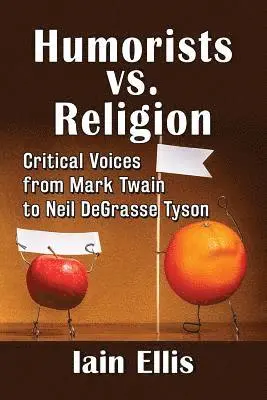
Critical humorists and religion are steeped in a long-standing cultural antagonism. This book recounts the dramatic skirmishes between religion--its dogma and edicts, political manifestations, and the nature of faith--and the satire, parody, jokes and hyperbole of popular wits. The writings of Twain, Vonnegut, Mencken and Hitchens are included, along with the films of Monty Python, the cartoons of Charlie Hebdo, the animated television series The Simpsons and South Park, the comedy of George Carlin and Bill Maher, the music of Randy Newman and Pussy Riot, the performance monologue of Julia Sweeney and the magic of Penn Jillette.
Häftad, Engelska, 2008
181 kr
Skickas inom 5-8 vardagar
Inbunden, Engelska, 2024
1 273 kr
Skickas inom 10-15 vardagar
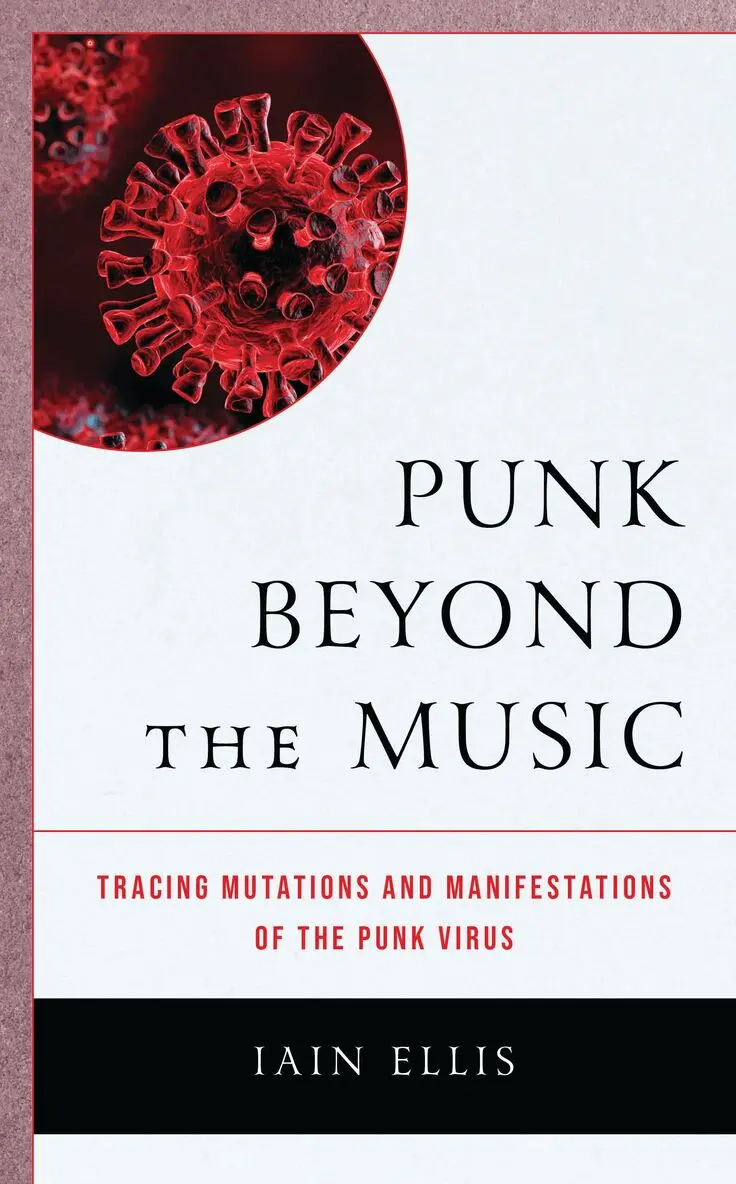
Punk Beyond the Music: Tracing Mutations and Manifestations of the Punk Virus expands the conversation about punk from a focus on the musical genre to its surrounding cultural manifestations. Focusing on some of the most recurring practices and characteristics of punk culture —DIY, attitude, outsider identities, symbols, and politics—Iain Ellis engages many illustrative examples to investigate punk beyond the music without losing sight of its significance. Early chapters look at arts that have always existed within the punk subculture (writings, visual arts, films, and humor); subsequent sections examine areas rarely recognized as exhibiting punk characteristics (such as education, sports, crafts, and comics). Taken together, the chapters invite readers on an extensive and unpredictable journey through the evolution of punk’s developments and adaptations.
Häftad, Engelska, 2012
313 kr
Skickas inom 5-8 vardagar
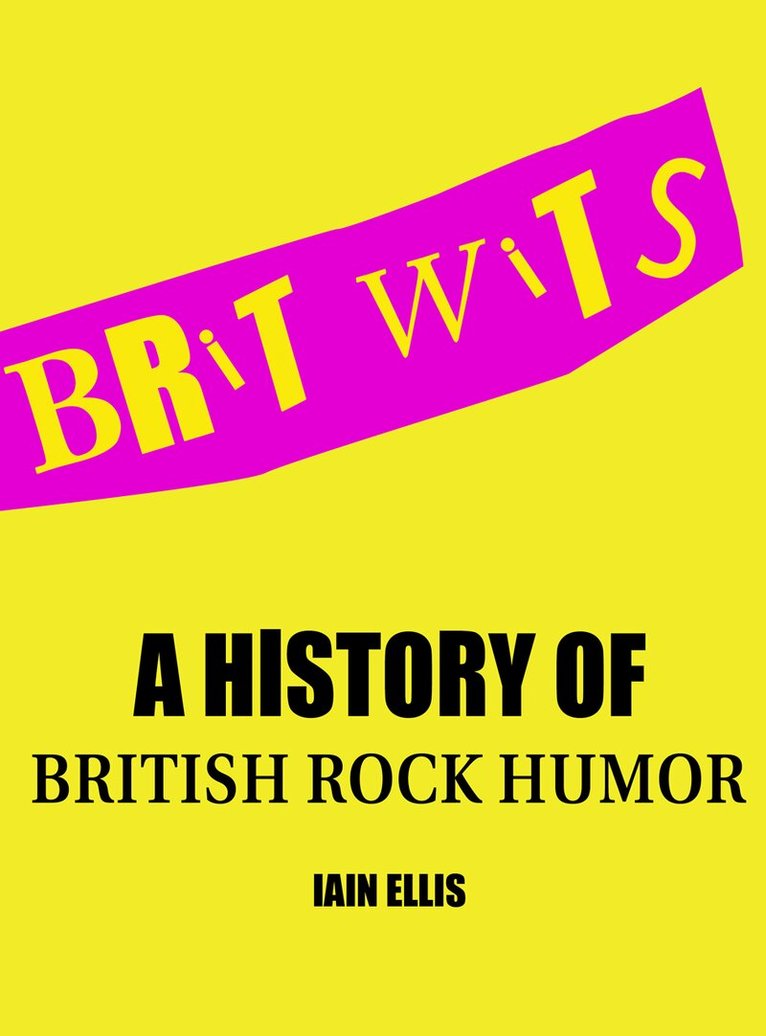
Humour, as much as any other trait, defines British cultural identity. It is 'crucial in the English sense of nation,' argues humour scholar Andy Medhurst; 'To be properly English you must have a sense of humour,' opines historian Antony Easthope. Author Zadie Smith perceives British humour as a national coping mechanism, stating, 'You don’t have to be funny to live here, but it helps.' Sex Pistols frontman Johnny Rotten concurs, commenting, 'There’s a sense of comedy in the English that even in your grimmest moments you laugh.' Although humour invariably functions as a relief valve for the British, it is also often deployed for the purposes of combat. From the court jesters of old to the rock wits of today, British humorists – across the arts – have been the pioneers of rebellion, chastising society’s hypocrites, exploiters and phonies, while simultaneously slighting the very institutions that maintain them.The best of the British wits are (to steal a coinage from The Clash) 'bullshit detectors' with subversion on their minds and the jugulars of their enemies in their sights. Such subversive humour is held dear in British hearts and minds, and it runs deep in their history. Historian Chris Rojek explains how the kind of foul-mouthed, abusive language typical of British (punk) humour has its antecedents in prior idioms like the billingsgate oath: 'Humour, often of an extraordinary coruscating and vehement type, has been a characteristic of the British since at least feudal times, when the ironic oaths against the monarchy and the sulfurous ‘Billingsgate’ uttered against the Church and anyone in power were widespread features of popular culture. Rojek proceeds to fast forward to 1977, citing the Sex Pistols’ 'Sod the Jubilee' campaign as a contemporary update of the Billingsgate oath. For Rojek, the omnipresence of British caustic humour accounts for why the nation has historically been more inclined toward expressions of subversive rebellion than to violent revolution. 'Protest has been conducted not with guns and grenades, but with biting comedy and graffiti,' he observes.As an outlet for venting and as an alternative means of protest, Brit wit, not surprisingly, has developed distinctive communicative patterns, with linguistic flair and creative flourishes starring as its key features. Far more than American humour, for example, British humour revels in colourful language, in lyrical invective, in surrogate mock warfare. One witnesses such humour daily in the Houses of Parliament, where well-crafted barbs are traded across the aisle, the thinly veiled insults cushioned by the creativity of the inherent humour. Such wit is equally evident throughout the history of British rock, where rebellion has defined the rock impulse and comedic dissent has been a seemingly instinctual activity.