Iakovos Vasiliou - Böcker
Visar alla böcker från författaren Iakovos Vasiliou. Handla med fri frakt och snabb leverans.
5 produkter
5 produkter
875 kr
Skickas inom 5-8 vardagar
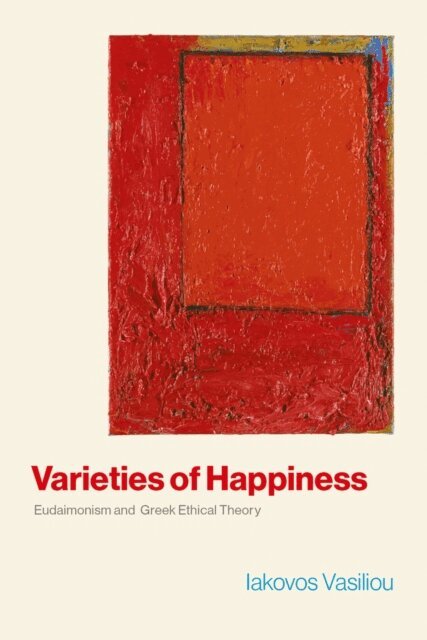
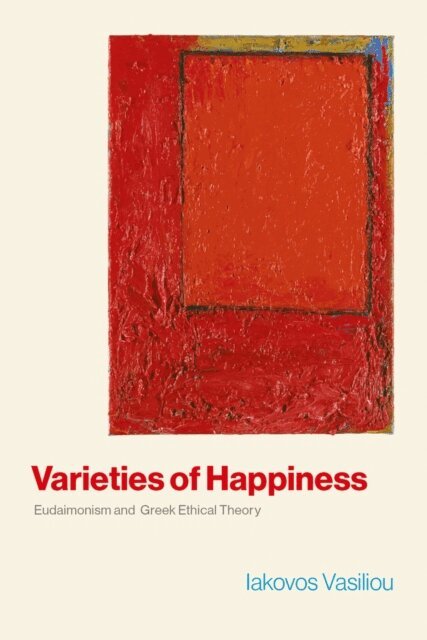
Varieties of Happiness critically examines the widespread belief that Greek ethics is a distinctive type of ethical theory labeled "eudaimonist." Plainly, if a theory is eudaimonist, then the notion of eudaimonia must play a crucial role. Iakovos Vasiliou argues, however, that although it is true that ancient philosophers discuss eudaimonia frequently, it is far less clear that it plays a role in their ethical theories such that it makes for a distinctive kind of theory. Merely discussing what makes a human life a happy one is insufficient for a theory to be eudaimonist. Any philosopher might have views about what a happy life is, without that making their mode of ethical reasoning and deliberation distinctly eudaimonist.Vasiliou identifies and critically analyzes three roles eudaimonia may play, which, individually or jointly, have been thought sufficient to make a theory eudaimonist: (1) as a comprehensive practical principle; (2) as a concept that can provide the content for virtuous action; and (3) as a motivation to pursue virtue. Through detailed interpretations of texts on happiness and virtue from Plato's Socratic dialogues, The Republic and Symposium, Aristotle's Nicomachean Ethics, Epicurus, and the early Stoics, this book invites us to revise our understanding of ancient ethics.
1 932 kr
Skickas inom 5-8 vardagar
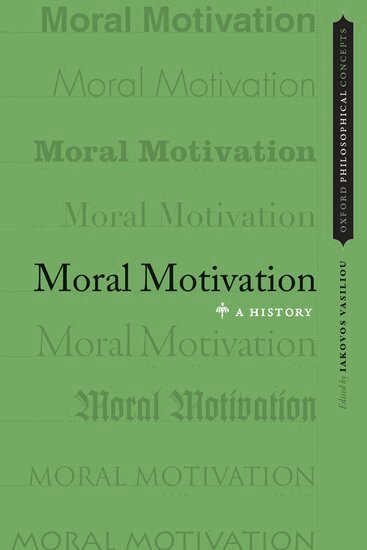
Moral Motivation presents a history of the concept of moral motivation. The book consists of ten chapters by eminent scholars in the history of philosophy, covering Plato, Aristotle, later Peripatetic philosophy, medieval philosophy, Spinoza, Locke, Hume, Kant, Fichte and Hegel, and the consequentialist tradition. In addition, four interdisciplinary "Reflections" discuss how the topic of moral motivation arises in epic poetry, Cicero, early opera, and Theodore Dreiser. Most contemporary philosophical discussions of moral motivation focus on whether and how moral beliefs by themselves motivate an agent (at least to some degree) to act. In much of the history of the concept, especially before Hume, the focus is rather on how to motivate people to act morally as well as on what sort of motivation a person must act from (or what end an agents acts for) in order to be a genuinely ethical person or even to have done a genuinely ethical action. The book shows the complexity of the historical treatment of moral motivation and, moreover, how intertwined moral motivation is with central aspects of ethical theory.
589 kr
Skickas inom 5-8 vardagar
Moral Motivation presents a history of the concept of moral motivation. The book consists of ten chapters by eminent scholars in the history of philosophy, covering Plato, Aristotle, later Peripatetic philosophy, medieval philosophy, Spinoza, Locke, Hume, Kant, Fichte and Hegel, and the consequentialist tradition. In addition, four interdisciplinary "Reflections" discuss how the topic of moral motivation arises in epic poetry, Cicero, early opera, and Theodore Dreiser. Most contemporary philosophical discussions of moral motivation focus on whether and how moral beliefs by themselves motivate an agent (at least to some degree) to act. In much of the history of the concept, especially before Hume, the focus is rather on how to motivate people to act morally as well as on what sort of motivation a person must act from (or what end an agents acts for) in order to be a genuinely ethical person or even to have done a genuinely ethical action. The book shows the complexity of the historical treatment of moral motivation and, moreover, how intertwined moral motivation is with central aspects of ethical theory.
547 kr
Skickas inom 7-10 vardagar
This study of Plato's ethics focuses on the concept of virtue. Based on detailed readings of the most prominent Platonic dialogues on virtue, it argues that there is a central yet previously unnoticed conceptual distinction in Plato between the idea of virtue as the supreme aim of one's actions and the determination of which action-tokens or -types are virtuous. Appreciating the 'aiming/determining distinction' provides detailed and mutually consistent readings of the most well-known Platonic dialogues on virtue as well as original interpretations of central Platonic questions. Unlike most examinations of Plato's ethics, this study does not take as its centrepiece the 'eudaimonist framework', which focuses on the relationship between virtue and happiness. Instead, it argues that the dialogues themselves begin with the idea of the supremacy of virtue, examine how that claim can be defended, and address how to determine what constitutes the virtuous action.
784 kr
Skickas inom 7-10 vardagar
This study of Plato's ethics focuses on the concept of virtue. Based on detailed readings of the most prominent Platonic dialogues on virtue, it argues that there is a central yet previously unnoticed conceptual distinction in Plato between the idea of virtue as the supreme aim of one's actions and the determination of which action-tokens or -types are virtuous. Appreciating the 'aiming/determining distinction' provides detailed and mutually consistent readings of the most well-known Platonic dialogues on virtue as well as original interpretations of central Platonic questions. Unlike most examinations of Plato's ethics, this study does not take as its centrepiece the 'eudaimonist framework', which focuses on the relationship between virtue and happiness. Instead, it argues that the dialogues themselves begin with the idea of the supremacy of virtue, examine how that claim can be defended, and address how to determine what constitutes the virtuous action.