Ian Dowbiggin - Böcker
Visar alla böcker från författaren Ian Dowbiggin. Handla med fri frakt och snabb leverans.
5 produkter
5 produkter
534 kr
Skickas inom 5-8 vardagar
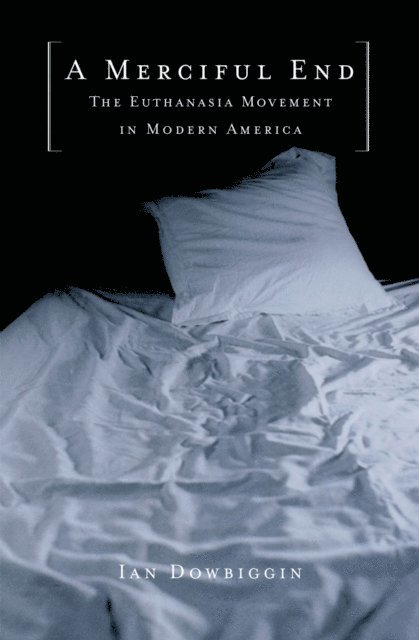
How did today's debate over euthanasia (taken from the Greek word for 'good death') become so divisive in American society? In A Merciful End Ian Dowbiggin tells, for the first time, the dramatic story of those reformers who struggled throughout the twentieth century to change the nation's attitudes towards mercy killing and assisted suicide.Having had access to confidential records in the United States, England and Canada, and having interviewed leading figures in the American euthanasia movement, he reveals that euthanasia has been a contentious issue in America for over a century, long before Jack Kevorkian began helping patients to die. Over the course of the twentieth century, a group of public-spirited men and women tried to break down ancient Judeo-Christian prohibitions against mercy killing, overturn state laws criminalizing assisted suicide, and convince the US Supreme Court that there is a right to die in the Constitution. In their eagerness to succeed, these euthanasia advocates have often sanctioned public policies that blur the fine line between choice and duty, freedom and coercion, the rights of the individual and the needs of society. By the dawn of the twenty-first century, they had won some small victories, and the debate over whose lives were worth living still raged, but Dowbiggin argues that more and more Americans seemed to prefer better end-of-life care to sweeping changes in laws about euthanasia. America's euthanasia movement entered the twenty-first century ready and willing to fight new wars but facing an uphill battle against sentiments such as these.Original, wide-ranging in scope, but sensitive to the personal dimensions of euthanasia, A Merciful End is an illuminating and cautionary account of the tension between motives and methods within twentieth century social reform. It provides a refreshingly new perspective on an old debate.
Del 4 - Medicine and Society
Inheriting Madness
Professionalization and Psychiatric Knowledge in Nineteenth-Century France
Inbunden, Engelska, 1991
517 kr
Skickas inom 7-10 vardagar
Historically, one of the recurring arguments in psychiatry has been that heredity is the root cause of mental illness. In Inheriting Madness, Ian Dowbiggin traces the rise in popularity of hereditarianism in France during the second half of the nineteenth century to illuminate the nature and evolution of psychiatry during this period. In Dowbiggin's mind, this fondness for hereditarianism stemmed from the need to reconcile two counteracting factors. On the one hand, psychiatrists were attempting to expand their power and privileges by excluding other groups from the treatment of the mentally ill. On the other hand, medicine's failure to effectively diagnose, cure, and understand the causes of madness made it extremely difficult for psychiatrists to justify such an expansion. These two factors, Dowbiggin argues, shaped the way psychiatrists thought about insanity, encouraging them to adopt hereditarian ideas, such as the degeneracy theory, to explain why psychiatry had failed to meet expectations. Hereditarian theories, in turn, provided evidence of the need for psychiatrists to assume more authority, resources, and cultural influence.Inheriting Madness is a forceful reminder that psychiatric notions are deeply rooted in the social, political, and cultural history of the profession itself. At a time when genetic interpretations of mental disease are again in vogue, Dowbiggin demonstrates that these views are far from unprecedented, and that in fact they share remarkable similarities with earlier theories. A familiarity with the history of the psychiatric profession compels the author to ask whether or not public faith in it is warranted.
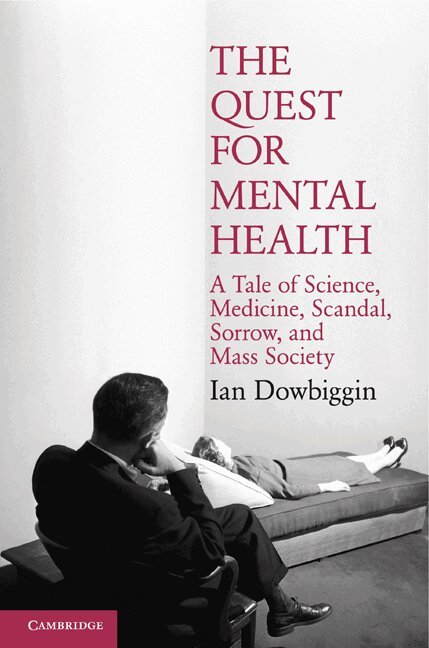
The Quest for Mental Health
A Tale of Science, Medicine, Scandal, Sorrow, and Mass Society
Häftad, Engelska, 2011
318 kr
Skickas inom 7-10 vardagar
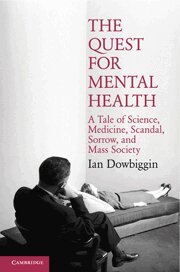
This is the story of one of the most far-reaching human endeavors in history: the quest for mental well-being. From its origins in the eighteenth century to its wide scope in the early twenty-first, this search for emotional health and welfare has cost billions. In the name of mental health, millions around the world have been tranquilized, institutionalized, psycho-analyzed, sterilized, lobotomized and even euthanized. Yet at the dawn of the new millennium, reported rates of depression and anxiety are unprecedentedly high. Drawing on years of field research, Ian Dowbiggin argues that if the quest for emotional well-being has reached a crisis point in the twenty-first century, it is because mass society is enveloped by cultures of therapism and consumerism, which increasingly advocate bureaucratic and managerial approaches to health and welfare.
The Quest for Mental Health
A Tale of Science, Medicine, Scandal, Sorrow, and Mass Society
Inbunden, Engelska, 2011
604 kr
Skickas inom 7-10 vardagar
This is the story of one of the most far-reaching human endeavors in history: the quest for mental well-being. From its origins in the eighteenth century to its wide scope in the early twenty-first, this search for emotional health and welfare has cost billions. In the name of mental health, millions around the world have been tranquilized, institutionalized, psycho-analyzed, sterilized, lobotomized and even euthanized. Yet at the dawn of the new millennium, reported rates of depression and anxiety are unprecedentedly high. Drawing on years of field research, Ian Dowbiggin argues that if the quest for emotional well-being has reached a crisis point in the twenty-first century, it is because mass society is enveloped by cultures of therapism and consumerism, which increasingly advocate bureaucratic and managerial approaches to health and welfare.
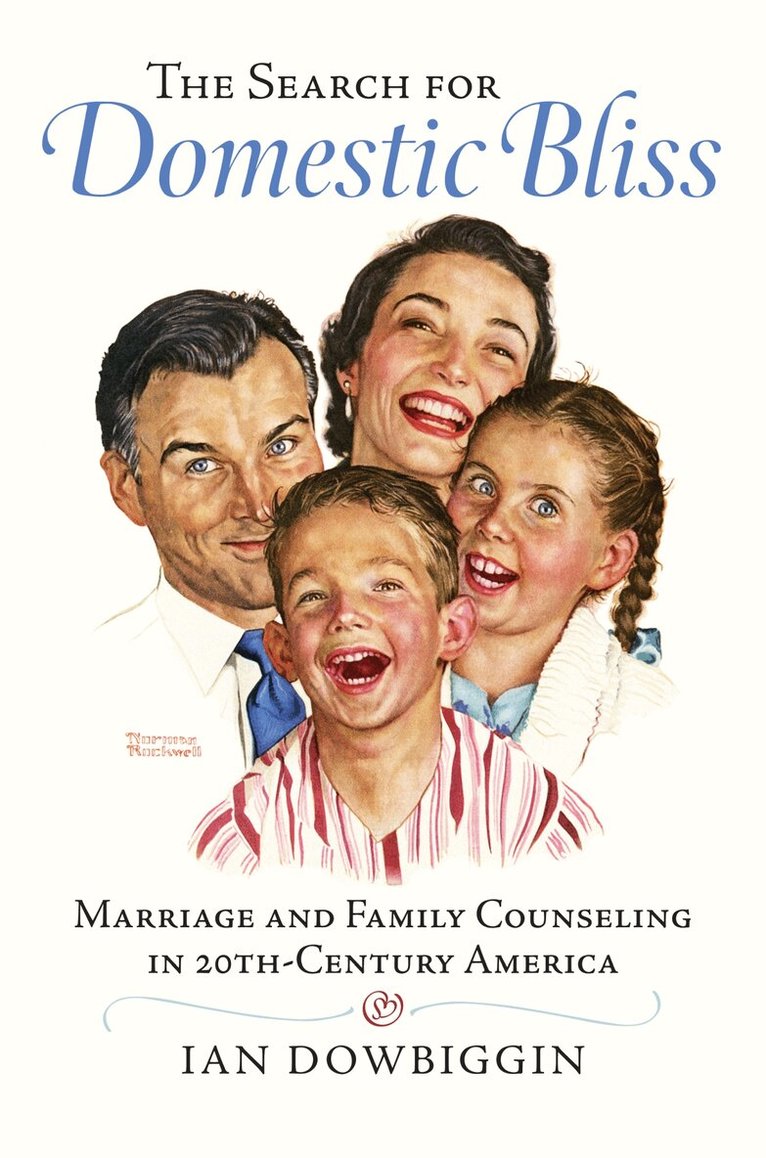
Search for Domestic Bliss
Marriage and Family Counseling in 20th-Century America
Inbunden, Engelska, 2014
588 kr
Skickas inom 5-8 vardagar
Why are Americans so bad at marriage? It’s certainly not for lack of trying. By the early 21st century Americans were spending billions on marriage and family counselling, seeking advice and guidance from some 50,000 experts. And yet, the divorce rate suggests that all of this therapeutic intervention isn’t making couples happier or marriages more durable. Quite the contrary, Ian Dowbiggin tells us in this thought-provoking book: the “caring industry” is part of the problem.Under the influence of therapeutic reformers, marital and familial dynamics in this country have shifted from mores and commitment to love and companionship. This movement toward a “me marriage,” as the New York Times has termed it, with its attendant soaring expectations and acute dissatisfactions, is rooted as much in the twists and turns of 20th-century history as it is in the realities in the hearts and minds of modern Americans, Dowbiggin argues; and his book reveals how effectively those changes have been encouraged and orchestrated by a small but resourceful group of social reformers with ties to eugenics, birth control, population control and sex education.In The Search for Domestic Bliss, Dowbiggin delves into the stories of the usual suspects in the founding of the therapeutic gospel, exposing little known aspects of their influence and misunderstood features of their work. Here we learn, for instance, that Betty Friedan did not after all discover “the problem that knows no name” - the widespread unhappiness of women in mid-century America; and that, like Friedan, one of the pioneers of marriage counselling was an open admirer of Stalin’s Russia. The book also explores the long overlooked impact of sex researchers Alfred Kinsey and Masters and Johnson on the development of marriage and family counselling; and considers the under-appreciated contributions to the marriage counselling movement of social reformer and activist Emily Mudd.Through these and other reform-minded Americans, Dowbiggin traces the concerted and deliberate way in which the old order of looking to family and community for guidance gave way to seeking guidance from marriage and family counselling professionals. Such a transformation, as this book makes clear, has been a key part of a major revolution in the way Americans think about their inner selves and their relations with friends, family and community members - a revolution in which once deeply private concerns have been redefined as grave matters of public mental health.