Ian Haynes – författare
Visar alla böcker från författaren Ian Haynes. Handla med fri frakt och snabb leverans.
3 produkter
3 produkter
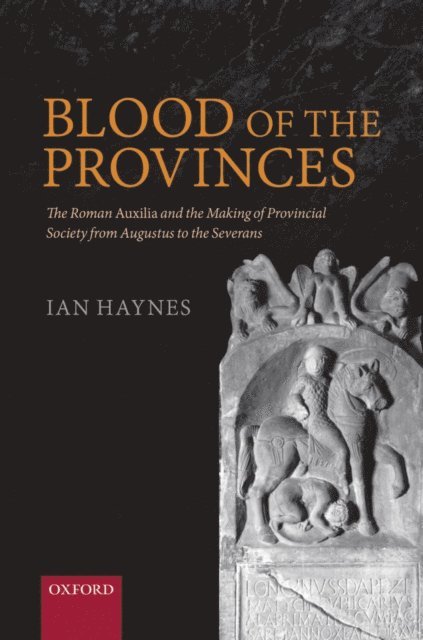
Blood of the Provinces
The Roman Auxilia and the Making of Provincial Society from Augustus to the Severans
Häftad, Engelska, 2016
635 kr
Skickas inom 7-10 vardagar
Blood of the Provinces is the first fully comprehensive study of the largest part of the Roman army, the auxilia. This non-citizen force constituted more than half of Rome's celebrated armies and was often the military presence in some of its territories. Diverse in origins, character, and culture, they played an essential role in building the empire, sustaining the unequal peace celebrated as the pax Romana, and enacting the emperor's writ.Drawing upon the latest historical and archaeological research to examine recruitment, belief, daily routine, language, tactics, and dress, this volume offers an examination of the Empire and its soldiers in a radical new way. Blood of the Provinces demonstrates how the Roman state addressed a crucial and enduring challenge both on and off the battlefield - retaining control of the miscellaneous auxiliaries upon whom its very existence depended. Crucially, this was not simply achieved by pay and punishment, but also by a very particular set of cultural attributes that characterized provincial society under the Roman Empire. Focusing on the soldiers themselves, and encompassing the disparate military communities of which they were a part, it offers a vital source of information on how individuals and communities were incorporated into provincial society under the Empire, and how the character of that society evolved as a result.
Blood of the Provinces
The Roman Auxilia and the Making of Provincial Society from Augustus to the Severans
Inbunden, Engelska, 2013
1 857 kr
Skickas inom 5-8 vardagar
Blood of the Provinces is the first fully comprehensive study of the largest part of the Roman army, the auxilia. This non-citizen force constituted more than half of Rome's celebrated armies and was often the military presence in some of its territories. Diverse in origins, character, and culture, they played an essential role in building the empire, sustaining the unequal peace celebrated as the pax Romana, and enacting the emperor's writ. Drawing upon the latest historical and archaeological research to examine recruitment, belief, daily routine, language, tactics, and dress, this volume offers an examination of the Empire and its soldiers in a radical new way. Blood of the Provinces demonstrates how the Roman state addressed a crucial and enduring challenge both on and off the battlefield - retaining control of the miscellaneous auxiliaries upon whom its very existence depended. Crucially, this was not simply achieved by pay and punishment, but also by a very particular set of cultural attributes that characterized provincial society under the Roman Empire. Focusing on the soldiers themselves, and encompassing the disparate military communities of which they were a part, it offers a vital source of information on how individuals and communities were incorporated into provincial society under the Empire, and how the character of that society evolved as a result.
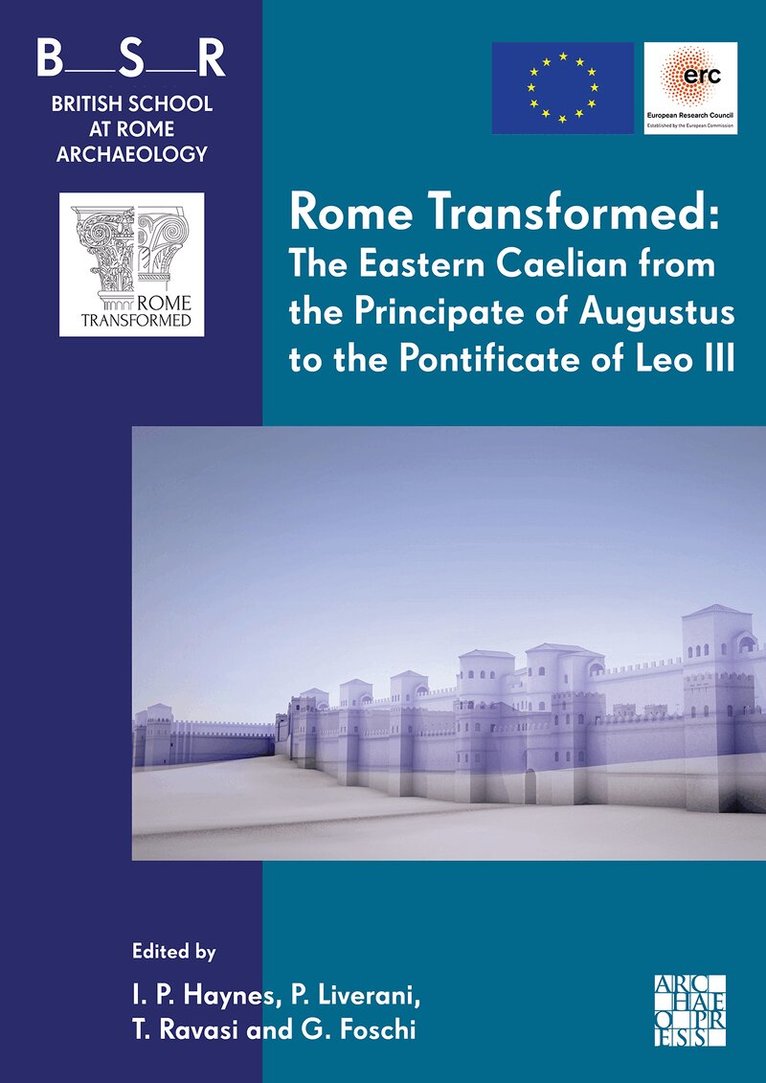
Rome Transformed: The Eastern Caelian from the Principate of Augustus to the Pontificate of Leo III
Häftad, Engelska, 2026
719 kr
Kommande
Over eight centuries, from the principate of Augustus to the pontificate of Leo III, the eastern Caelian and its environs went from being on the margins of the imperial city to becoming the centre of papal power. This volume is the first to examine the multiple changes and innovations that marked the area’s evolution from a classical to a late antique city. It brings together findings from the Rome Transformed Project alongside contributions from other specialist collaborators to illuminate and contextualise evidence of political, religious, military, and economic life.Drawing on archival, archaeological, environmental, and geophysical analyses produced for Rome Transformed, this book shows that far from being peripheral to the story of the city, this area—much of which lay beyond the pomerium—was shaped by influential episodes of lavish investment and remarkable creativity. The built landscape of south-east Rome was not simply reshaped by new ideas about power, belief, and security; it became a formative place where such ideas were generated, interwoven, and promoted.Exploring these ideas is not simply a matter of studying imperial intervention; it also involves deepening our understanding of the lives of the diverse people who lived here. Making extensive use of the ‘provocation’ visualisations created by the Rome Transformed Project, this volume invites us to reflect on the buildings and spaces encountered by successive generations of inhabitants and visitors in their daily lives.The Rome Transformed Project has received funding from the European Research Council (ERC) under H2020-EU.1.1., the European Union’s Horizon 2020 research and innovation programme (Grant agreement No.: 835271)