Ian S. Wood - Böcker
Visar alla böcker från författaren Ian S. Wood. Handla med fri frakt och snabb leverans.
5 produkter
5 produkter
1 627 kr
Skickas inom 7-10 vardagar
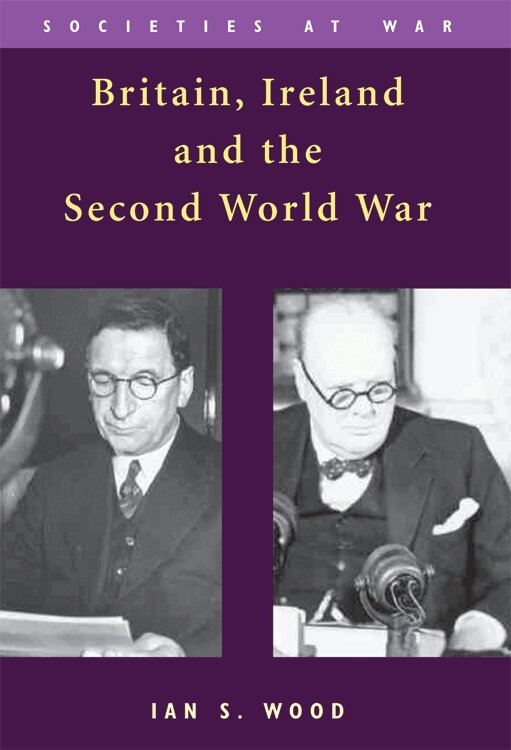
For Britain the Second World War exists in popular memory as a time of heroic sacrifice, survival and ultimate victory over Fascism. In the Irish state the years 1939-1945 are still remembered simply as 'the Emergency'. Eire was one of many small states which in 1939 chose not to stay out of the war but one of the few able to maintain its non-belligerency as a policy.How much this owed to Britain's military resolve or to the political skills of Éamon de Valera is a key question which this new book will explore. It will also examine the tensions Eire's policy created in its relations with Winston Churchill and with the United States. The author also explores propaganda, censorship and Irish state security and the degree to which it involves secret co-operation with Britain. Disturbing issues are also raised like the IRA's relationship to Nazi Germany and ambivalent Irish attitudes to the Holocaust.Drawing upon both published and unpublished sources, this book illustrates the war's impact on people on both sides of the border and shows how it failed to resolve sectarian problems on Northern Ireland while raising higher the barriers of misunderstanding between it and the Irish state across its border.
1 692 kr
Skickas inom 7-10 vardagar
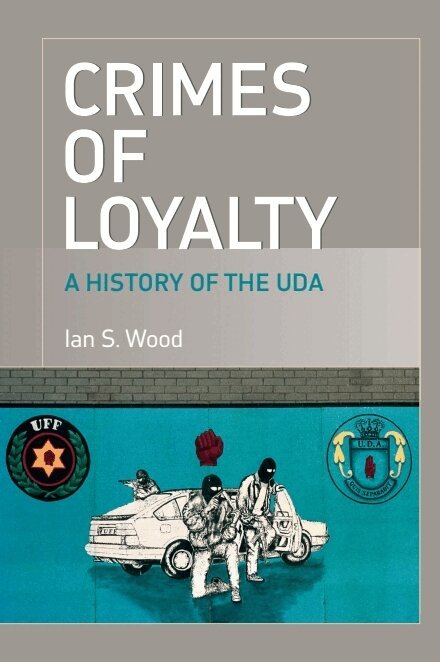
Sectarian murder, torture, bloody power struggles and racketeering are what for many define their image of the Ulster Defence Association. Yet as Northern Ireland’s Troubles worsened in 1971 and 1972, it emerged with a mass membership to defend Loyalist areas against the IRA and to uphold the Union with Britain. By 1974 it was able to defy the will of an elected government and it went on to formulate political strategies for working-class Loyalism.Ian S. Wood uses his specialist knowledge as well as extensive interviews to recount these events and the ruthless war waged by the UDA on the nationalist community. He explores issues such as the UDA’s descent into criminality and its relationship with the ‘secret war’ conducted by Britain’s undercover services and he assesses what impact the organisation had on the outcome of Europe’s worst political and ethnic conflict between 1945 and the break-up of the Soviet Union and Yugoslavia after 1990.
330 kr
Skickas inom 11-20 vardagar
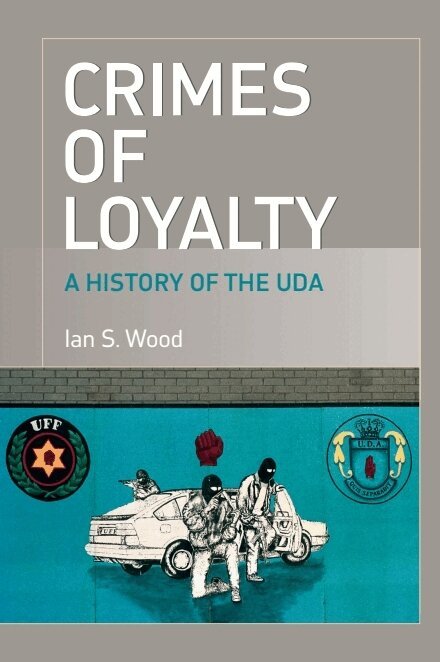
Sectarian murder, torture, bloody power struggles and racketeering are what for many define their image of the Ulster Defence Association. Yet as Northern Ireland’s Troubles worsened in 1971 and 1972, it emerged with a mass membership to defend Loyalist areas against the IRA and to uphold the Union with Britain. By 1974 it was able to defy the will of an elected government and it went on to formulate political strategies for working-class Loyalism.Ian S. Wood uses his specialist knowledge as well as extensive interviews to recount these events and the ruthless war waged by the UDA on the nationalist community. He explores issues such as the UDA’s descent into criminality and its relationship with the ‘secret war’ conducted by Britain’s undercover services and he assesses what impact the organisation had on the outcome of Europe’s worst political and ethnic conflict between 1945 and the break-up of the Soviet Union and Yugoslavia after 1990.
726 kr
Skickas inom 3-6 vardagar
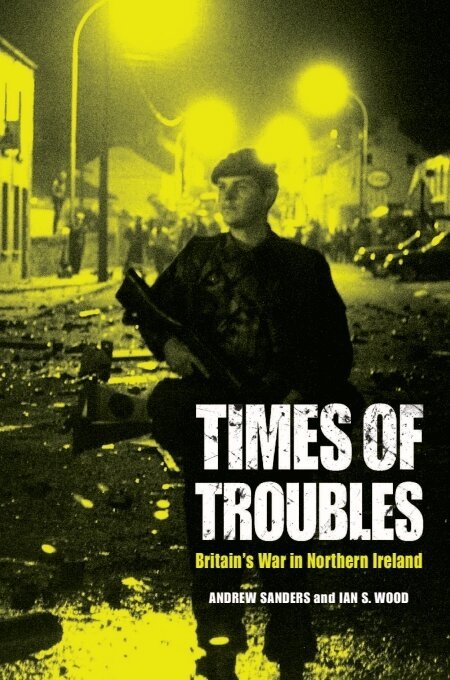
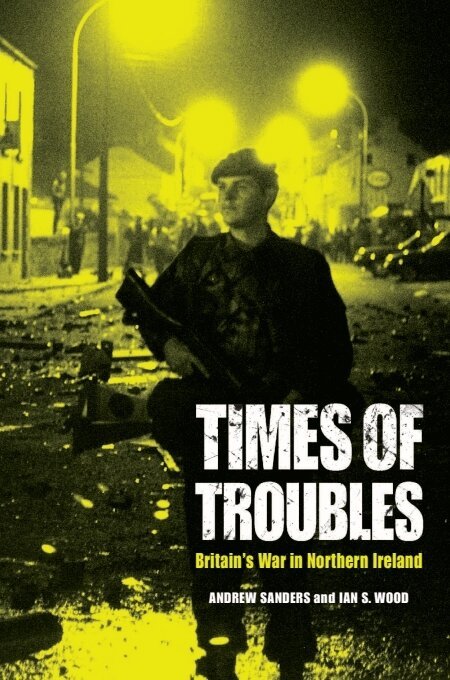
When do 'troubles', riots and insurgency become war? How does a liberal state respond to an internal war within its own borders? How does it define the rules of engagement for its armed forces? These questions, amongst others, faced the British government in 1969, when it decided to send the British Army to the streets of Northern Ireland.This is the first academic study of the British Army in Northern Ireland, featuring Scottish, Welsh, Irish and English regiments. It investigates the complex experiences of soldiers during the often-controversial Operation Banner (1969-2007). The experiences of these soldiers raise many important and difficult questions on war and policy. Featuring key interviews with former soldiers, paramilitaries and Special Branch detectives, amongst other key actors, the authors attempt to answer these questions and enhance our knowledge of conflict resolution by providing a deep analysis of one of the most significant British military operations since the Second World War.Andrew Sanders is the John Moore Newman Research Fellow at University College Dublin. He is the author of Inside the IRA: Dissident Republicans and the War for Legitimacy (Edinburgh, 2011)Ian S. Wood is a distinguished Military historian, lecturer and journalist. He is the author of Gods, Guns and Ulster (Caxton 2003); Crimes of Loyalty: a History of the UDA (Edinburgh 2006); Britain, Ireland and the Second World War (Edinburgh 2010) and is a contributing author to A Military History of Scotland (Edinburgh 2012).Key WordsNorthern Ireland, British Army, Scottish soldier, Troubles, Northern Ireland, Ulster, Operation banner, Bloody Sunday, Saville report, soldiers, IRA, British Army, military, occupation, RUC, UDA, UVF, conflict, Military history, counter-terrorism, counter-insurgency, terrorism Key Features* First title to analyse the role of British Army in Northern Ireland* Draws on new primary sources including soldiers' diaries, log-sheets, in
1 433 kr
Skickas inom 7-10 vardagar
When do 'troubles', riots and insurgency become war? How does a liberal state respond to an internal war within its own borders? How does it define the rules of engagement for its armed forces? These questions, amongst others, faced the British government in 1969, when it decided to send the British Army to the streets of Northern Ireland.This is the first academic study of the British Army in Northern Ireland, featuring Scottish, Welsh, Irish and English regiments. It investigates the complex experiences of soldiers during the often-controversial Operation Banner (1969-2007). The experiences of these soldiers raise many important and difficult questions on war and policy. Featuring key interviews with former soldiers, paramilitaries and Special Branch detectives, amongst other key actors, the authors attempt to answer these questions and enhance our knowledge of conflict resolution by providing a deep analysis of one of the most significant British military operations since the Second World War.Andrew Sanders is the John Moore Newman Research Fellow at University College Dublin. He is the author of Inside the IRA: Dissident Republicans and the War for Legitimacy (Edinburgh, 2011)Ian S. Wood is a distinguished Military historian, lecturer and journalist. He is the author of Gods, Guns and Ulster (Caxton 2003); Crimes of Loyalty: a History of the UDA (Edinburgh 2006); Britain, Ireland and the Second World War (Edinburgh 2010) and is a contributing author to A Military History of Scotland (Edinburgh 2012).Key WordsNorthern Ireland, British Army, Scottish soldier, Troubles, Northern Ireland, Ulster, Operation banner, Bloody Sunday, Saville report, soldiers, IRA, British Army, military, occupation, RUC, UDA, UVF, conflict, Military history, counter-terrorism, counter-insurgency, terrorism Key Features* First title to analyse the role of British Army in Northern Ireland* Draws on new primary sources including soldiers' diaries, log-sheets, in