Ian Watt – författare
Visar alla böcker från författaren Ian Watt. Handla med fri frakt och snabb leverans.
12 produkter
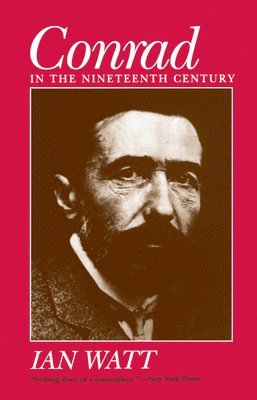
Conrad in the Nineteenth Century
Av Ian Watt
Häftad, 1981
744 kr
Lägg i varukorg
'Nothing short of a masterpiece...One of the great critical works produced since the 1950s' - "New York Times".
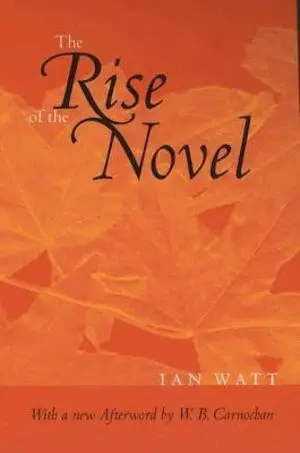
Rise of the Novel
Av Ian Watt
Häftad, 2001
638 kr
Lägg i varukorg
"The Rise of the Novel" is Ian Watt's classic description of the interworkings of social conditions, changing attitudes, and literary practices during the period when the novel emerged as the dominant literary form of the individualist era. In a new foreword, W.B. Carnochan accounts for the …
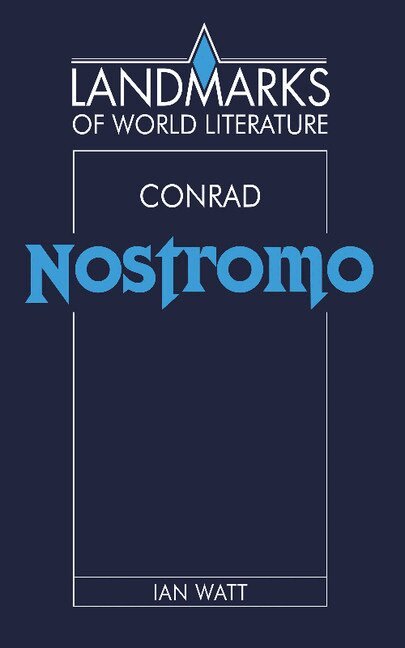
Conrad: Nostromo
Av Ian Watt, J. P. Stern
Häftad, 1988
407 kr
Lägg i varukorg
Conrad's great novel is a rich study not only of a typical South American country, but of the politics of any underdeveloped country, and for this reason it is permanently topical. Ian Watt addresses Conrad's concerns when writing the work, and provides an accessible introduction, taking account of …
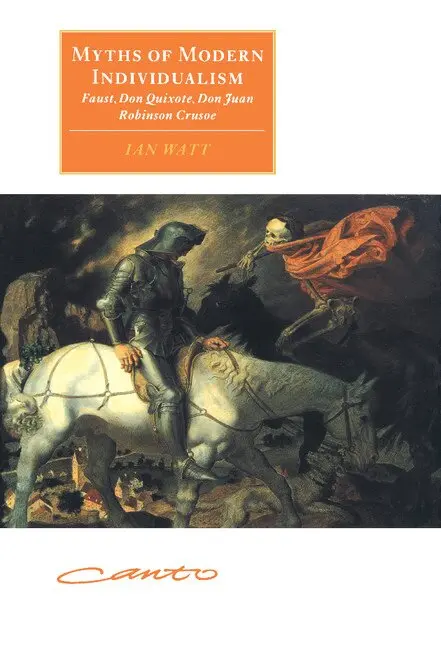
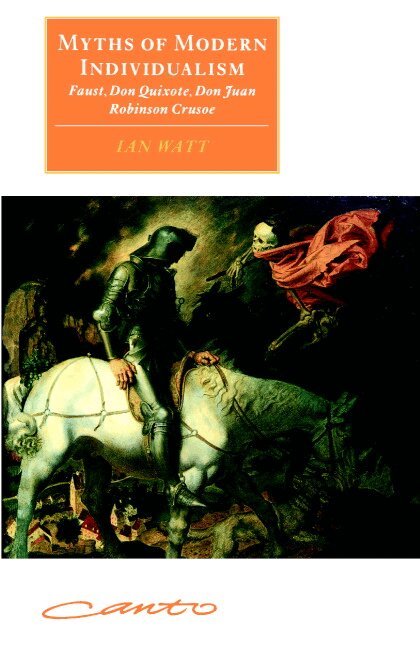
Myths of Modern Individualism
Faust, Don Quixote, Don Juan, Robinson Crusoe
Av Ian Watt
Inbunden, 1996
1591 kr
Lägg i varukorg
In this volume, Ian Watt examines the myths of Faust, Don Quixote, Don Juan and Robinson Crusoe, as the distinctive products of modern society. He traces the way the original versions of Faust, Don Quixote and Don Juan - all written within a forty-year period during the Counter Reformation - …
Myths of Modern Individualism
Faust, Don Quixote, Don Juan, Robinson Crusoe
Av Ian Watt
Häftad, 1997
529 kr
Lägg i varukorg
In this volume, Ian Watt examines the myths of Faust, Don Quixote, Don Juan and Robinson Crusoe, as the distinctive products of modern society. He traces the way the original versions of Faust, Don Quixote and Don Juan - all written within a forty-year period during the Counter Reformation - …
Essays on Conrad
Av Ian Watt
Inbunden, 2000
1832 kr
Lägg i varukorg
Ian Watt (1917-99) has long been acknowledged as one of the finest of post-War literary critics. The Rise of the Novel (1957) is still the landmark account of the way in which realist fiction developed in the eighteenth century and Watt's work on Conrad has been enormously influential. Conrad in …
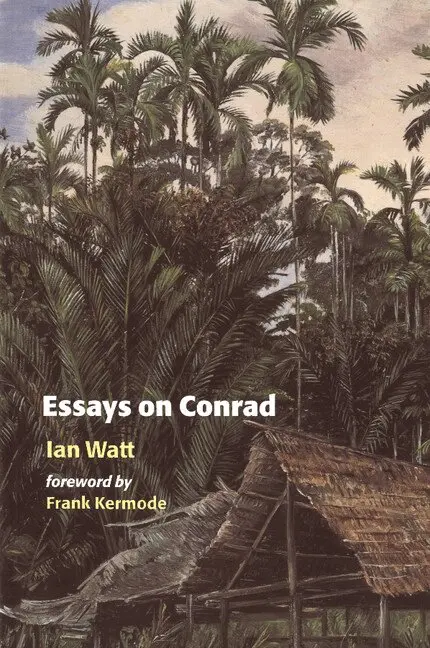
Essays on Conrad
Av Ian Watt
Häftad, 2000
842 kr
Lägg i varukorg
Ian Watt (1917-99) has long been acknowledged as one of the finest of post-War literary critics. The Rise of the Novel (1957) is still the landmark account of the way in which realist fiction developed in the eighteenth century and Watt's work on Conrad has been enormously influential. Conrad in …
The Rise of the Novel: Studies in Defoe, Richardson and Fielding
Av Ian Watt
Inbunden
755 kr
Lägg i varukorg
Rise Of The Novel
Studies in Defoe, Richardson and Fielding
Av Ian Watt
E-bok, 2015
170 kr
Lägg i varukorg
This is the story of a most ingenious invention: the novel. Desribed for the first time in The Rise of The Novel, Ian Watt's landmark classic reveals the origins and explains the success of the most popular literary form of all time.In the space of a single generation, three eighteenth-century …
The Rise of the Novel: Studies in Defoe, Richardson and Fielding
Av Ian Watt
Häftad
600 kr
Lägg i varukorg
Rise Of The Novel
Studies in Defoe, Richardson and Fielding
Av Ian Watt
Häftad, 2015
251 kr
Lägg i varukorg
This is the story of a most ingenious invention: the novel. Desribed for the first time in The Rise of The Novel, Ian Watt's landmark classic reveals the origins and explains the success of the most popular literary form of all time.In the space of a single generation, three eighteenth-century …