Ibironke T. Odumosu-Ayanu - Böcker
Visar alla böcker från författaren Ibironke T. Odumosu-Ayanu. Handla med fri frakt och snabb leverans.
3 produkter
3 produkter
455 kr
Skickas
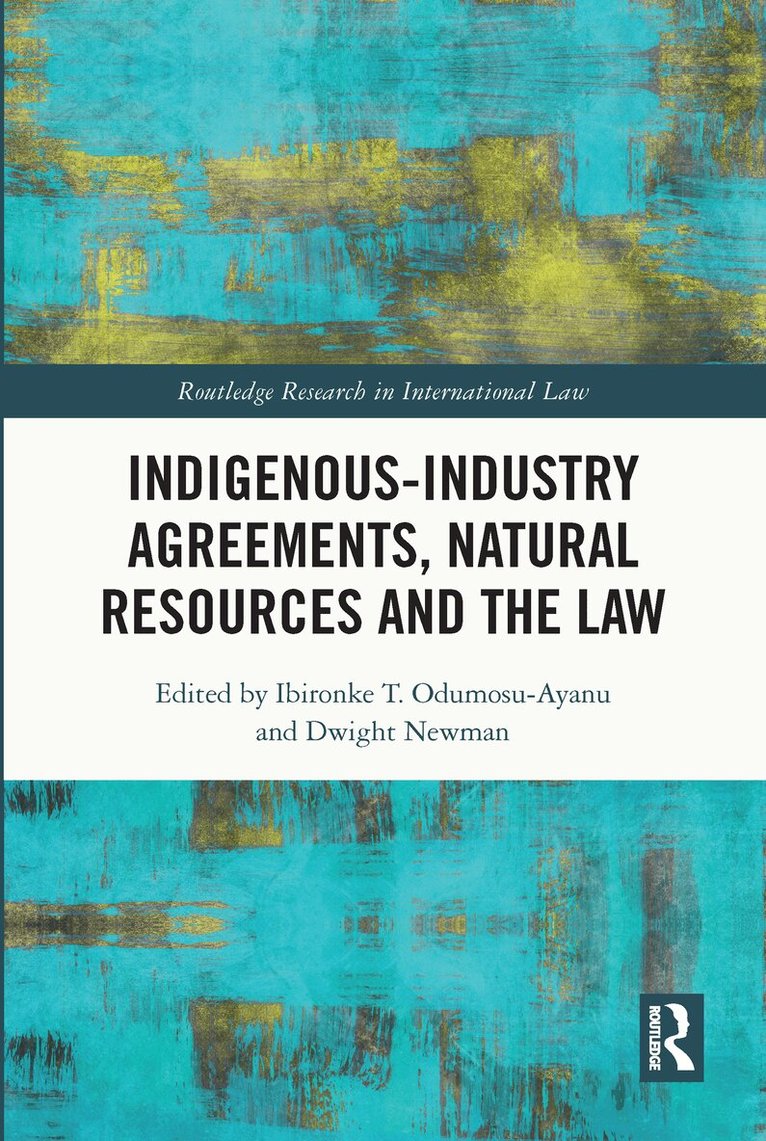
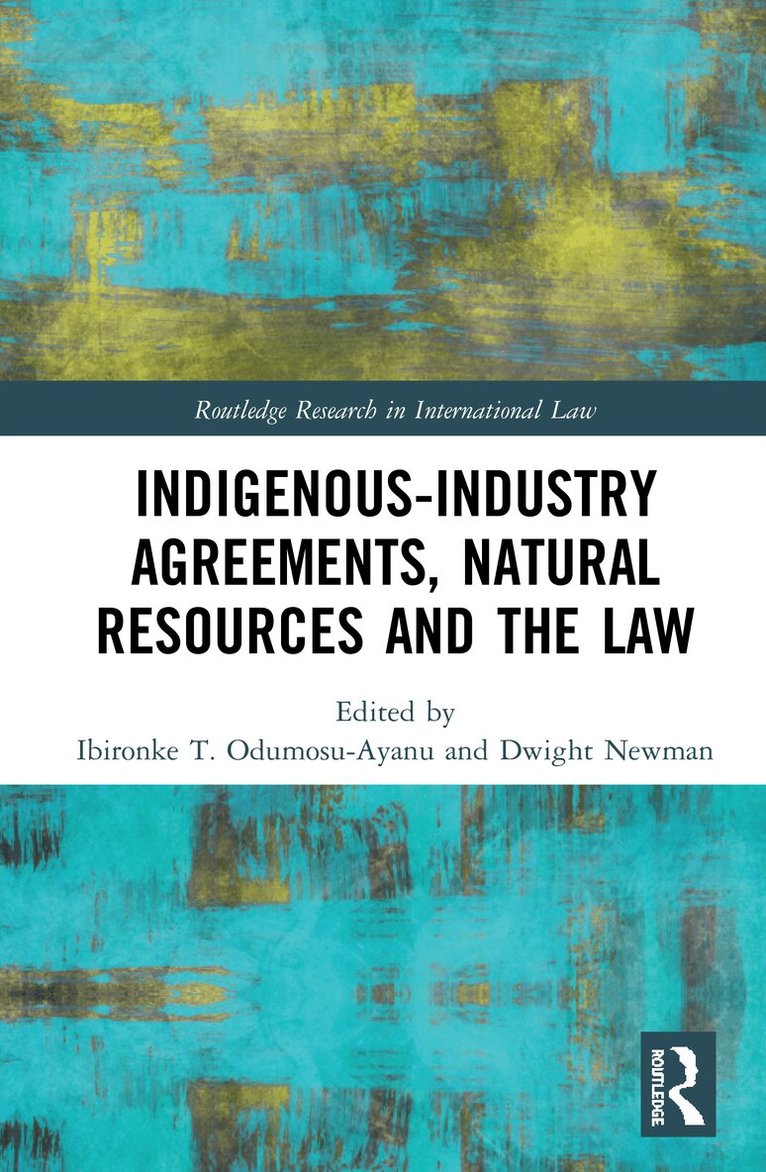
This edited collection is an interdisciplinary and international collaborative book that critically investigates the growing phenomenon of Indigenous-industry agreements – agreements that are formed between Indigenous peoples and companies involved in the extractive natural resource industry. These agreements are growing in number and relevance, but there has yet to be a systematic study of their formation and implementation. This groundbreaking collection is situated within frameworks that critically analyze and navigate relationships between Indigenous peoples and the extraction of natural resources. These relationships generate important questions in the context of Indigenous-industry agreements in diverse resource-rich countries including Australia and Canada, and regions such as Africa and Latin America. Beyond domestic legal and political contexts, the collection also interprets, navigates, and deploys international instruments such as the United Nations Declaration on the Rights of Indigenous Peoples in order to fully comprehend the diverse expressions of Indigenous-industry agreements.Indigenous-Industry Agreements, Natural Resources and the Law presents chapters that comprehensively review agreements between Indigenous peoples and extractive companies. It situates these agreements within the broader framework of domestic and international law and politics, which define and are defined by the relationships between Indigenous peoples, extractive companies, governments, and other actors. The book presents the latest state of knowledge and insights on the subject and will be of value to researchers, academics, practitioners, Indigenous communities, policymakers, and students interested in extractive industries, public international law, Indigenous rights, contracts, natural resources law, and environmental law.
Contested Consultations in the Extractive Industries
Rights, Processes, and Tensions
Inbunden, Engelska, 2025
2 104 kr
Skickas inom 10-15 vardagar
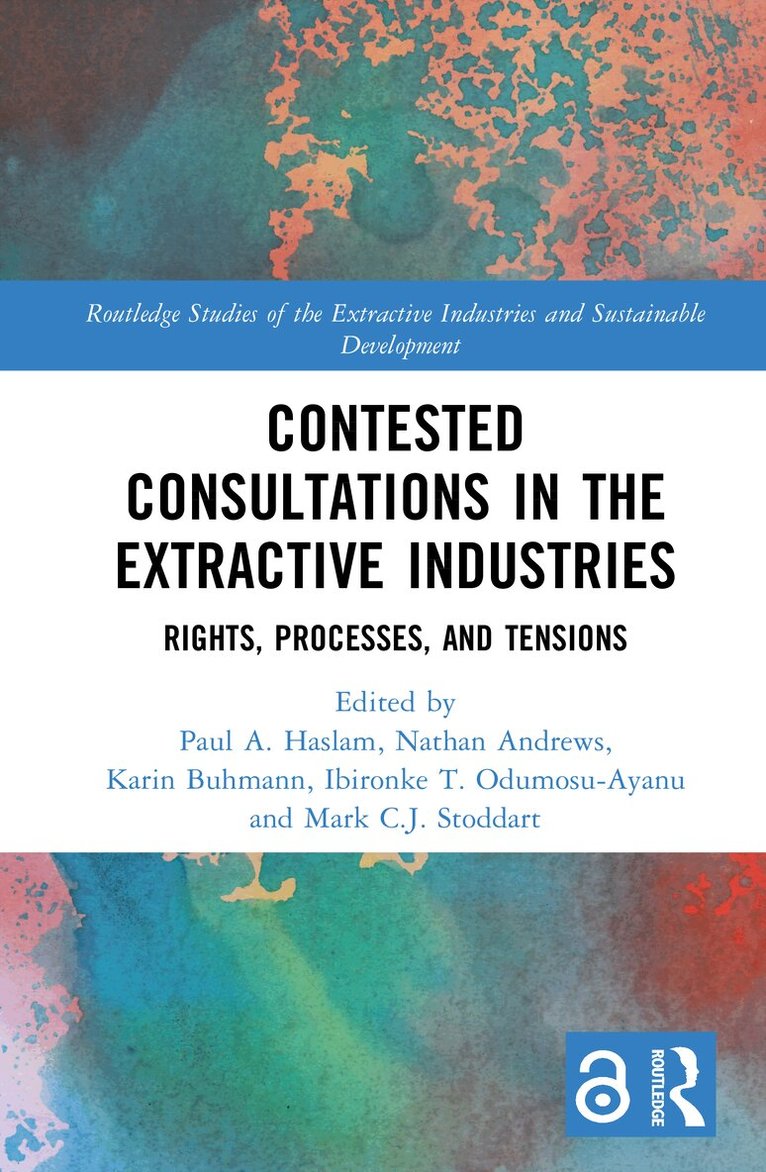
This volume examines how communities, companies, and governments contest and contribute to the evolution of norms, rules and decision-making procedures that govern stakeholder consultation in the extractive industries. In recent years international organisations, governments and companies around the world have dramatically reformed the regime that governs consultations with community stakeholders about proposed extractive projects. However, the characteristics of this consultation regime are often contested, with diverse stakeholders seeking to defend their interests by drawing on different authoritative interpretations of the rules, norms and decision-making procedures that govern stakeholder consultation. Contestation over the meaning, governance and practice of stakeholder consultation is the central thread that ties this book together. Within this overarching concern, the volume takes a global and comparative perspective that examines the complexity of these intersecting and overlapping consultation requirements, with a particular focus on Indigenous Peoples, using cases from the Global North and Global South, including Argentina, Australia, Brazil, Canada, The Central African Republic, The Democratic Republic of Congo, Iceland, Ghana, Greenland, Guyana, Norway, and Peru. The book highlights the tensions associated with the application of this contested regime and identifies possible solutions from best practices around the world. From a theoretical perspective the book unpacks the maze of overlapping consultation requirements and practices that highlights the normative disagreements between key stakeholders and the overlapping rules and procedures that govern the implementation of consultation. A unique contribution of this collection is the commentary from practitioners, who reflect on the same issues addressed by the academic contributors, but based on their own vast practical experience.This book will be of great interest to students and scholars researching public participation and stakeholder consultation in the extractive industries as well as natural resource governance and sustainable development more broadly.The Open Access version of this book, available at http://www.taylorfrancis.com, has been made available under a Creative Commons Attribution-Non Commercial-No Derivatives (CC BY-NC-ND) 4.0 license.
1 936 kr
Skickas inom 10-15 vardagar
This edited collection is an interdisciplinary and international collaborative book that critically investigates the growing phenomenon of Indigenous-industry agreements – agreements that are formed between Indigenous peoples and companies involved in the extractive natural resource industry. These agreements are growing in number and relevance, but there has yet to be a systematic study of their formation and implementation. This groundbreaking collection is situated within frameworks that critically analyze and navigate relationships between Indigenous peoples and the extraction of natural resources. These relationships generate important questions in the context of Indigenous-industry agreements in diverse resource-rich countries including Australia and Canada, and regions such as Africa and Latin America. Beyond domestic legal and political contexts, the collection also interprets, navigates, and deploys international instruments such as the United Nations Declaration on the Rights of Indigenous Peoples in order to fully comprehend the diverse expressions of Indigenous-industry agreements.Indigenous-Industry Agreements, Natural Resources and the Law presents chapters that comprehensively review agreements between Indigenous peoples and extractive companies. It situates these agreements within the broader framework of domestic and international law and politics, which define and are defined by the relationships between Indigenous peoples, extractive companies, governments, and other actors. The book presents the latest state of knowledge and insights on the subject and will be of value to researchers, academics, practitioners, Indigenous communities, policymakers, and students interested in extractive industries, public international law, Indigenous rights, contracts, natural resources law, and environmental law.