Paul A. Haslam - Böcker
Visar alla böcker från författaren Paul A. Haslam. Handla med fri frakt och snabb leverans.
4 produkter
4 produkter
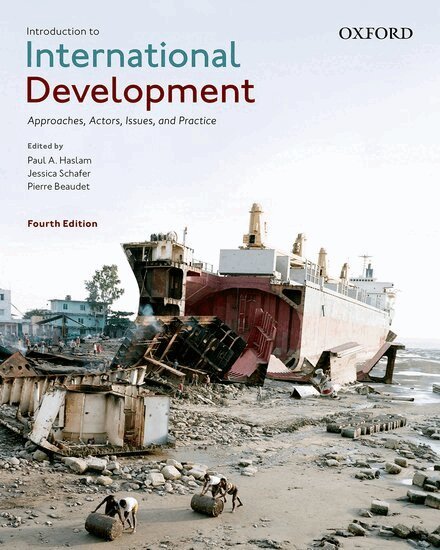
Introduction to International Development
Approaches, Actors, Issues, and Practice
Häftad, Engelska, 2021
1 215 kr
Skickas inom 5-8 vardagar
The most comprehensive introduction to international development, with chapters by leading experts who explore the field's most pressing issues and debates.Introduction to International Development is a collection of contributed chapters comprised of original essays by leading experts from a variety of disciplines. With four new chapters and the most up-to-date content on the global COVID-19 pandemic, this fully revised edition continues to give students a foundational overview to the field as well as in-depth coverage of issues at the heart of today's most pressing international debates.
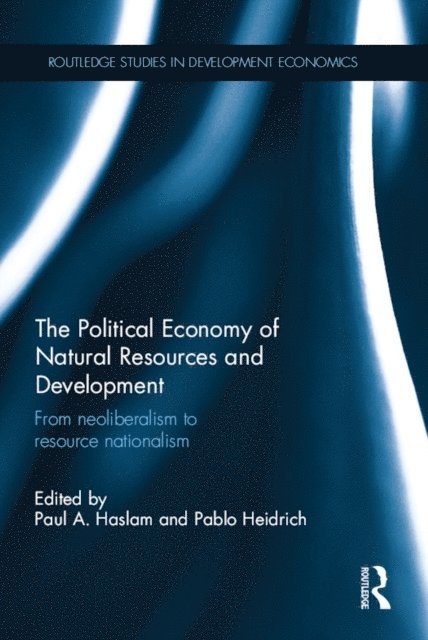
Political Economy of Natural Resources and Development
From neoliberalism to resource nationalism
Häftad, Engelska, 2018
691 kr
Skickas inom 10-15 vardagar
The Political Economy of Resources and Development offers a unique and multidisciplinary perspective on how the commodity boom of the mid-2000s reshaped the model of development throughout Latin America and elsewhere in the developing world. Governments increased taxes and royalties on the resource sector, the nationalization of foreign firms returned to the mainstream economic policy agenda, and public spending on social and developmental goals surged. These trends, often described as resource nationalism, have developed into a strategy for economic development, generated a re-imagining of the state and its institutional possibilities, and created a new but very significant political risk for extractive enterprises.However, these innovations, which constitute the most dramatic change in development policy in Latin America since the advent of neoliberalism, have so far received little attention from either academic or policy-oriented publications. This book explores the reasons behind these policies, and their effects on states, firms, and development trajectories. This text brings together renowned thematic experts to examine the political-economic causes of resource nationalism, as well as its manifestation in six Latin American countries. The causal variables considered by the contributors to this collection include a range of political-economic determinants of policy including commodity prices; the influence of ideology and national politics; ideas about industrial policy; relations between host governments and investors; and how countries respond to opportunities provided by regional initiatives and the new geography of the global economy.This volume is essential reading in development economics, political economy, and Latin American studies, as well as for those who want to understand what economic development means after neoliberalism.
Contested Consultations in the Extractive Industries
Rights, Processes, and Tensions
Inbunden, Engelska, 2025
2 088 kr
Skickas inom 10-15 vardagar
This volume examines how communities, companies, and governments contest and contribute to the evolution of norms, rules and decision-making procedures that govern stakeholder consultation in the extractive industries. In recent years international organisations, governments and companies around the world have dramatically reformed the regime that governs consultations with community stakeholders about proposed extractive projects. However, the characteristics of this consultation regime are often contested, with diverse stakeholders seeking to defend their interests by drawing on different authoritative interpretations of the rules, norms and decision-making procedures that govern stakeholder consultation. Contestation over the meaning, governance and practice of stakeholder consultation is the central thread that ties this book together. Within this overarching concern, the volume takes a global and comparative perspective that examines the complexity of these intersecting and overlapping consultation requirements, with a particular focus on Indigenous Peoples, using cases from the Global North and Global South, including Argentina, Australia, Brazil, Canada, The Central African Republic, The Democratic Republic of Congo, Iceland, Ghana, Greenland, Guyana, Norway, and Peru. The book highlights the tensions associated with the application of this contested regime and identifies possible solutions from best practices around the world. From a theoretical perspective the book unpacks the maze of overlapping consultation requirements and practices that highlights the normative disagreements between key stakeholders and the overlapping rules and procedures that govern the implementation of consultation. A unique contribution of this collection is the commentary from practitioners, who reflect on the same issues addressed by the academic contributors, but based on their own vast practical experience.This book will be of great interest to students and scholars researching public participation and stakeholder consultation in the extractive industries as well as natural resource governance and sustainable development more broadly.The Open Access version of this book, available at http://www.taylorfrancis.com, has been made available under a Creative Commons Attribution-Non Commercial-No Derivatives (CC BY-NC-ND) 4.0 license.
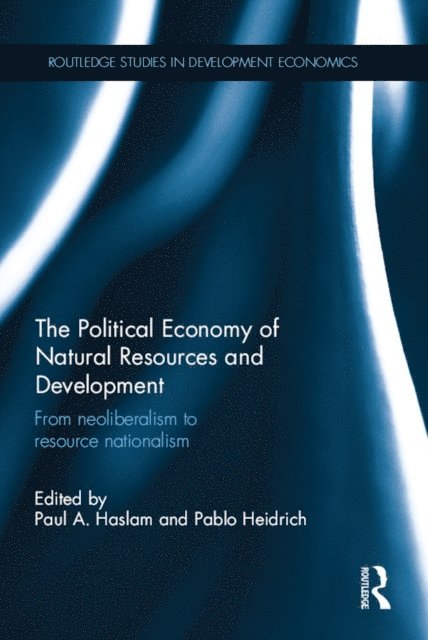
Political Economy of Natural Resources and Development
From neoliberalism to resource nationalism
Inbunden, Engelska, 2016
2 219 kr
Skickas inom 10-15 vardagar
The Political Economy of Resources and Development offers a unique and multidisciplinary perspective on how the commodity boom of the mid-2000s reshaped the model of development throughout Latin America and elsewhere in the developing world. Governments increased taxes and royalties on the resource sector, the nationalization of foreign firms returned to the mainstream economic policy agenda, and public spending on social and developmental goals surged. These trends, often described as resource nationalism, have developed into a strategy for economic development, generated a re-imagining of the state and its institutional possibilities, and created a new but very significant political risk for extractive enterprises.However, these innovations, which constitute the most dramatic change in development policy in Latin America since the advent of neoliberalism, have so far received little attention from either academic or policy-oriented publications. This book explores the reasons behind these policies, and their effects on states, firms, and development trajectories. This text brings together renowned thematic experts to examine the political-economic causes of resource nationalism, as well as its manifestation in six Latin American countries. The causal variables considered by the contributors to this collection include a range of political-economic determinants of policy including commodity prices; the influence of ideology and national politics; ideas about industrial policy; relations between host governments and investors; and how countries respond to opportunities provided by regional initiatives and the new geography of the global economy.This volume is essential reading in development economics, political economy, and Latin American studies, as well as for those who want to understand what economic development means after neoliberalism.