Ijaz Nabi - Böcker
Visar alla böcker från författaren Ijaz Nabi. Handla med fri frakt och snabb leverans.
3 produkter
3 produkter
281 kr
Skickas inom 10-15 vardagar
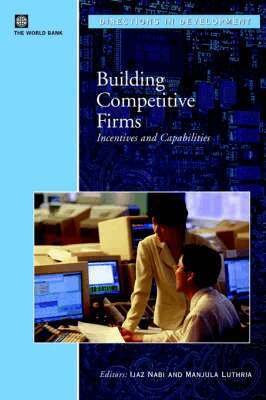
Building Competitive Firms: Incentives and Capabilities explains how firms become competitive in language suitable for both technical and non-technical readers. A simple analytical framework integrates elements such as competition policy, corporate governance, foreign direct investment, innovation readiness, intellectual property rights, e-commerce and supply chain management. These 'behind-the-border' elements are pivotal to shaping the investment climate in any country and enhancing the benefits of trade liberalization. Each of these themes is discussed in detail with a focus on policy design and international best practice in implementation.
295 kr
Skickas inom 10-15 vardagar
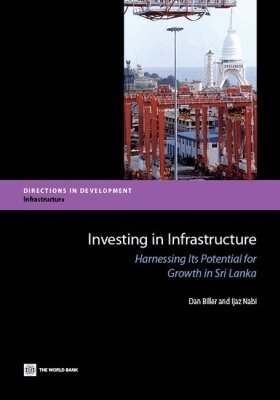
Sri Lanka achieved middle-income-country status in January 2010, on the strenght of of the economic growth fuelled by the liberalisation policy introduced in the late 1970s and pursued albeit unevenly in the following years. To continue growing, however, Sri Lanka needs to pay attention to its much neglected infrastructure. Accordingly, this report, aims to provide policy makers in Sri Lanka with a sound analytical basis for prioritising investments and designing policy interventions that result in the mobilisation of funds and their effective use for future development of Sri Lanka's infrastructure, and also to improve understanding of the infrastructure sectors in Sri Lanka, including their current state and performance, future development needs, investment requirements and financing gaps, and bottlenecks to infrastructure development.The report assesses the country's infrastructure endowment and performance, analyses the contribution of infrastructure to economic and spatial development, and outlines investment needs and strategic priorities within those established by the Mahinda Chintana. It provides a cross-sectoral analysis of the major infrastructure cross-cutting themes including the link between infrastructure and poverty reduction and economic growth; the institutional and regulatory framework; the main issues regarding planning, coordination, and financing; and the role and constraints of private sector participation in infrastructure financing and service provision. It identifies bottlenecks to economic growth and considers policy issues to address them.
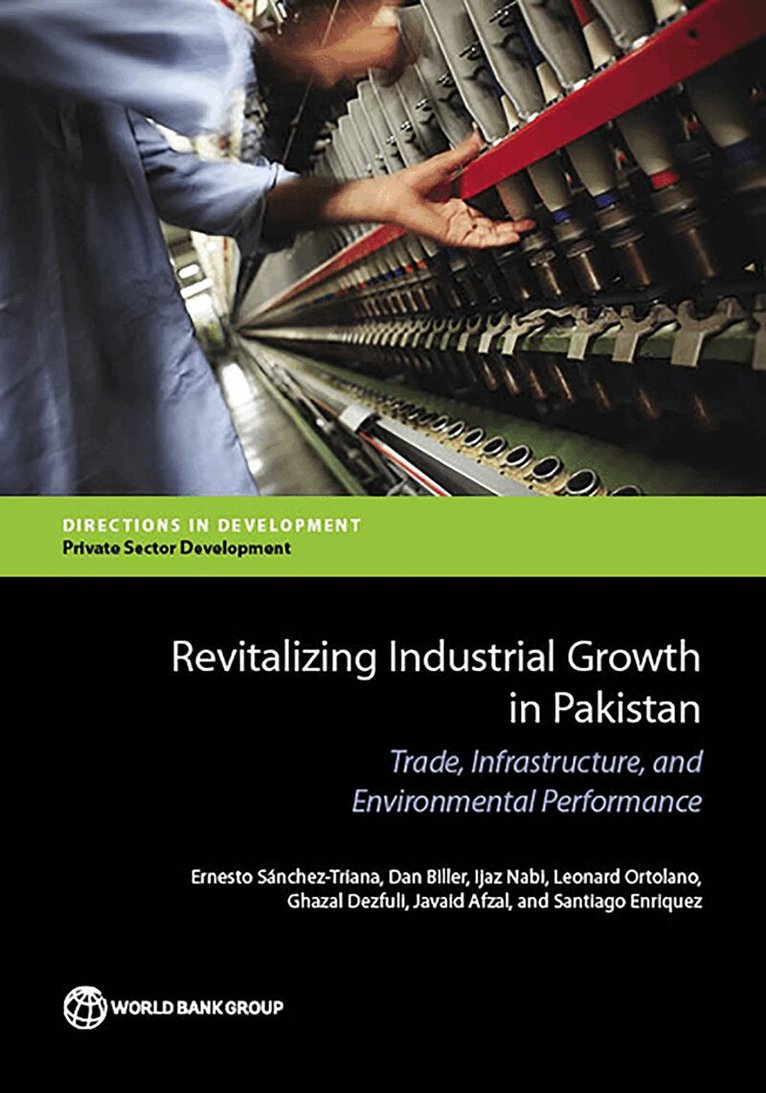
Revitalizing Industrial Growth in Pakistan
Trade, Infrastructure, and Environmental Performance
Häftad, Engelska, 2014
281 kr
Skickas inom 10-15 vardagar
Pakistan's development efforts are guided by its 2011 Framework for Economic Growth, which identifies actions needed to create a prosperous, industrialised Pakistan through rapid and sustainable development. Industrialisation has the potential to drive Pakistan's economic growth and contribute significantly to meeting both economic and human development goals in Pakistan. Expansions of industrialisation activities, whether in highly developed or developing countries, can be stimuli for intense debate about such projects' benefits and costs to the region in which they are to be located, to the national economy - and to human health and the environment. Pakistan's 2011 Framework for Economic Growth recognises that, to accelerate industrialisation, Pakistan must reduce the cost of doing business and create an incentive structure designed to achieve a competitive, dynamic, and export-driven industrial sector capable of providing employment to the growing labour force. Competing in global markets requires a socially and environmentally sustainable industrialisation strategy. The four main inputs for sustainable industrial growth in Pakistan discussed in this book are: (i) Macroeconomic stability and sectoral policies to support industrial competitiveness by allowing long-term planning, including investments in infrastructure and cleaner production; (ii) Upgraded trade facilitation and infrastructure (particularly transport and energy) to address some of industrialisation's spatial aspects. Improved transport infrastructure will lower production's environmental costs; (iii) Greening of Pakistan's industrial sector to enhance international competitiveness - 'greening' will make Pakistan a more attractive export partner for nations and firms committed to green production; (iv) Strong institutions - for example, environmental management agencies to control pollution, and cleaner production centers to increase domestic awareness of international environmental standards- to implement industrialisation initiatives effectively, including those for small and medium-sized enterprises.This book provides a comprehensive analysis of issues relating to the debate about Pakistan's green industrial growth and lays out priorities and strategies for 'greening' Pakistan's industrial growth.