Ikuo Kume - Böcker
Visar alla böcker från författaren Ikuo Kume. Handla med fri frakt och snabb leverans.
3 produkter
3 produkter
1 349 kr
Skickas inom 7-10 vardagar
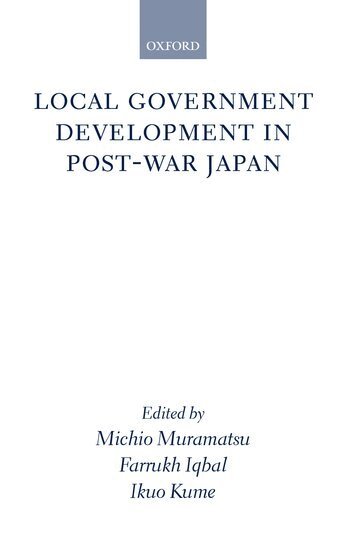
This book examines the evolution of intergovernmental relations in postwar Japan. These relations are shown to be both complex and dynamic, and the Japanese model is revealed as one in which aspects of both central control and local autonomy have co-existed with the balance shifting gradually over time towards the latter. The Japanese system has helped to maintain broad-based economic growth since it has at its core a strongly egalitarian fiscal transfer mechanism. At the same time, it has proved to be consistent, to a much greater extent than previously recognized, with political development, or progress in the attainment of such political values as liberty (personal rights) and equality (broad participation in public affairs) for individuals and communities. This is because the national government has proved flexible enough to accommodate, although not always with grace or alacrity, citizen concerns about the quality of life. The Japanese approach to intergovernmental relationships has also been successful in solving coordination problems which often arise between local and central government units and in building capacity to support greater and effective decentralization. Coordination problems have been handled through a variety of mechanisms including the practice of agency delegated functions, while local capacity issues have been addressed through such practices as the exchange of personnel across different levels of government and the use of attractive compensation and training packages to recruit and retain local staff. The Japanese experience thus provides an example of gradual and guided decentralization based on shared responsibilities between local and central governments for mobilizing, managing, and spending public resources in the pursuit of sustainable development.
1 594 kr
Skickas inom 10-15 vardagar
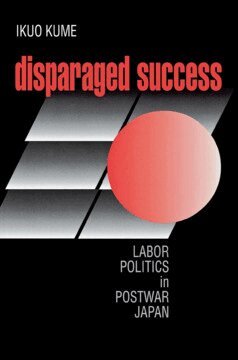
Japanese scholars have begun to challenge conventional wisdom about effective labor organizing, and Ikuo Kume has written the first book in English to advance their controversial theory. Since at least the early 1980s, the power of organized labor has weakened in most advanced industrial countries. The decline of organized labor has coincided with the decentralization of labor-management relations. As a result, most observers assume that decentralized labor is destined to lose power in a capitalist economy, and that enterprise unions will tend to be docile and powerless.Kume documents the one notable exception. The Japanese trade union confederation has steadily grown in importance, expanding its scope beyond individual companies to national policy making. Kume traces the achievements of enterprise unionism in private firms. Labor, he argues, slowly gained legitimate corporate membership by establishing joint institutions with management. By the 1960s, labor-management councils, stimulated by foreign competition, had become a widespread feature of Japanese industry. Soon unions were regular participants in the government deliberation councils and in the information exchange that shaped policy when inflation hit the Japanese economy. The unions had become a full partner by the 1980s and were crucially involved in the 1993 defeat of the Liberal Democratic Party after thirty-eight years of rule.
431 kr
Skickas inom 10-15 vardagar
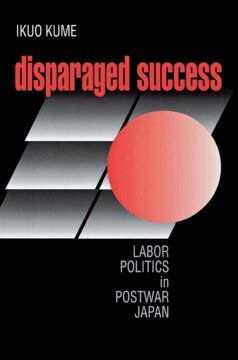
Japanese scholars have begun to challenge conventional wisdom about effective labor organizing, and Ikuo Kume has written the first book in English to advance their controversial theory. Since at least the early 1980s, the power of organized labor has weakened in most advanced industrial countries. The decline of organized labor has coincided with the decentralization of labor-management relations. As a result, most observers assume that decentralized labor is destined to lose power in a capitalist economy, and that enterprise unions will tend to be docile and powerless.Kume documents the one notable exception. The Japanese trade union confederation has steadily grown in importance, expanding its scope beyond individual companies to national policy making. Kume traces the achievements of enterprise unionism in private firms. Labor, he argues, slowly gained legitimate corporate membership by establishing joint institutions with management. By the 1960s, labor-management councils, stimulated by foreign competition, had become a widespread feature of Japanese industry. Soon unions were regular participants in the government deliberation councils and in the information exchange that shaped policy when inflation hit the Japanese economy. The unions had become a full partner by the 1980s and were crucially involved in the 1993 defeat of the Liberal Democratic Party after thirty-eight years of rule.