Ila Berman - Böcker
Visar alla böcker från författaren Ila Berman. Handla med fri frakt och snabb leverans.
2 produkter
2 produkter
651 kr
Skickas inom 3-6 vardagar
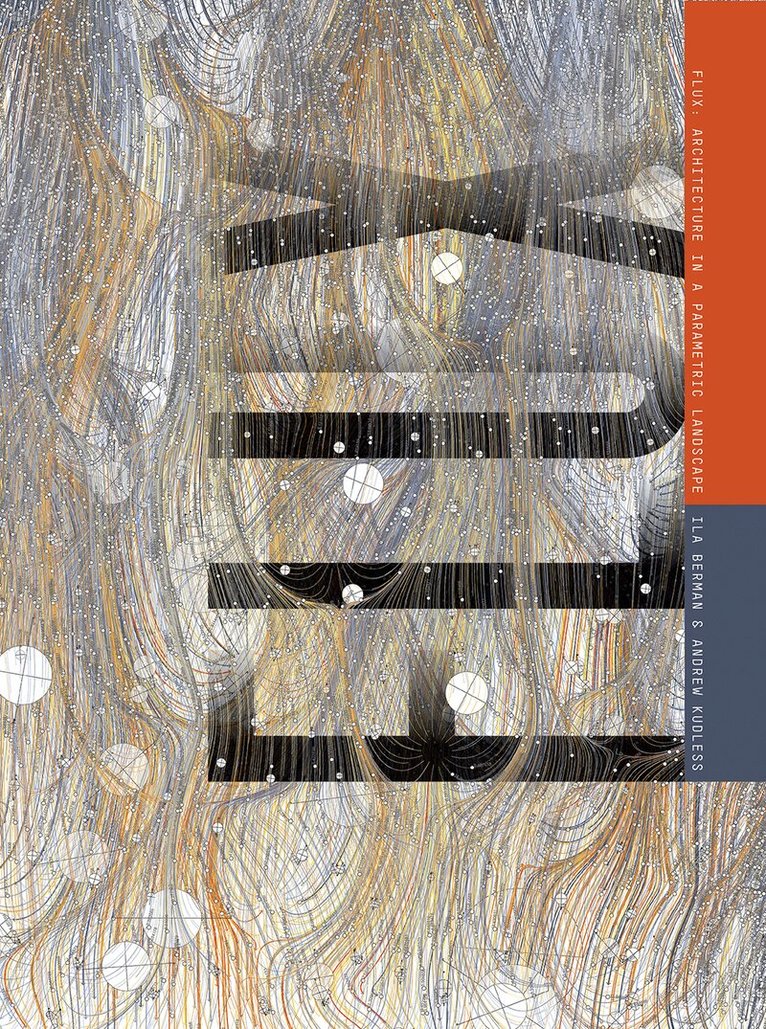
FLUX: Architecture in a Parametric Landscape focuses on the radical evolution of computational and material technologies that, during the last 25 years, have catalysed one of the most creative and prolific periods in architecture since the early 20th century. The book is organised into eight taxonomies—Stacked Aggregates, Modular Assemblages, Pixelated Fields, Cellular Clusters, Serial Iterations, Woven Meshes, Emerging Surfaces and Catenary Systems, and Multi-agent Systems—each of which explores a dominant logic and set of morphological traits transformed through advanced computational and material practices. These themes are theoretically explored and elaborated through the presentation of 140 built works and experimental architectural projects, which are then expanded through analytical and generative diagrams and models that further the design potential of the logics used to create them. Within the book, the architectures presented are considered as a population of objects responsible for the evolution of something that far exceeds the trajectory of a single project. They are thus explored less as autonomous works than as a collection of interrelated and interacting cultural artifacts in flux, whose formation, methods, and tools, as well as their experience, perception, and meaning are necessarily tied to a broader field of cultural production, contributing to the dynamic generation of new architectural and urban models.
366 kr
Tillfälligt slut
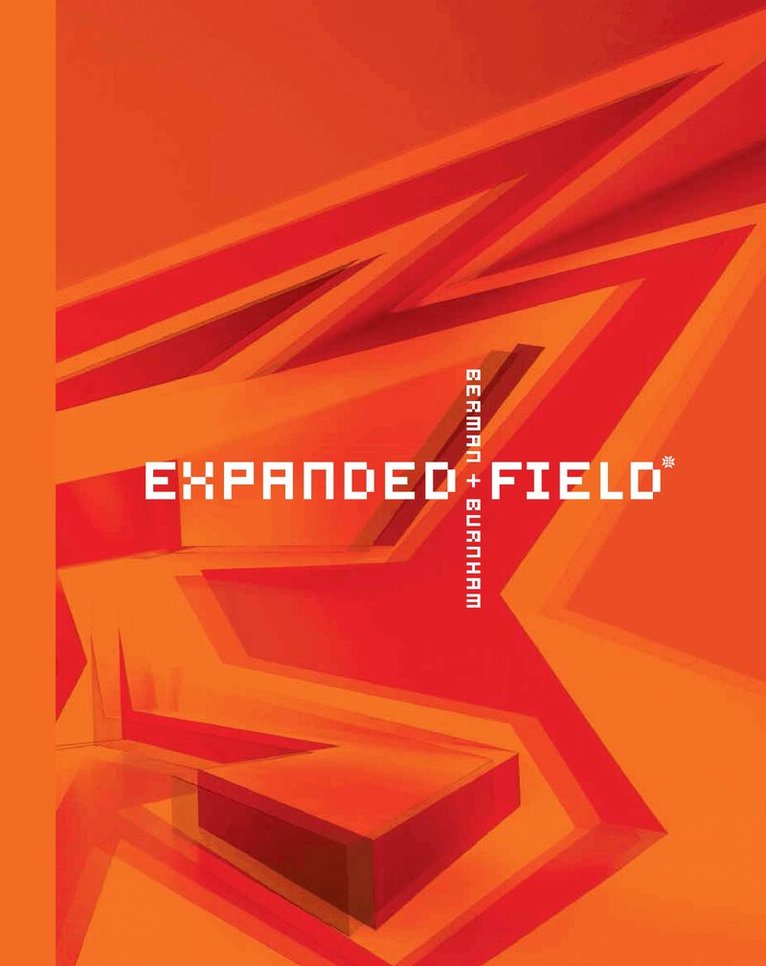
At the end of the late 1970s, art theorist and critic Rosalind Krauss had written a seminal text entitled "Sculpture in the Expanded Field," in an attempt to both locate and analyze vanguard sculptural practices of the time such as the work of Richard Serra, Robert Smithson, Mary Miss, and Donald Judd whose practices crossed outside of the limits of traditional sculpture and entered into the realms of architecture and landscape through the production of works that she classified as site constructions, marked sites, earthworks and axiomatic structures. Over the past three decades, the boundaries between art and architecture have continued to blur, giving rise to a series of works known as installations whose conceptual, spatial and material trajectories have generated a new and expanding network of relations between the domains of architecture, interiors, sculpture and landscape. At the same time, the range of institutional venues advancing architectural installation practices, such as the PS1 program spawned by the MoMA in New York, the Serpentine Gallery's annual architectural pavilion in London and the Art and Architectural Biennale's in Venice, have provided platforms to intensify the production and reach of contemporary installations. Installations have not only contributed to the advancement of architectural research but have also enabled the redefinition and progressive development of architecture's disciplinary territory allowing architects to explore spatial and tectonic ideas, experiment with emerging technological strategies, and distill perceptual and experiential conditions without the limitations traditionally imposed by the permanence and utility of building. Following the legacy of Rosalind Krauss, EXPANDED FIELD: Installation Architecture Beyond Art by Ila Berman and Douglas Burnham explores the realm of art and architecture across a broad terrain of installation practices, revealing a critical territory that, despite its exuberant proliferation, has been historically defined as a negativity: the progeny of that which is both not-architecture and not-art. Within this book, a wide range of art and architectural works are positioned and mapped as constellations within a newly expanded field suspended between Architecture, Interiors, Sculpture, and Landscape. These four terms are the initial reference points used to elaborate a more extensive taxonomical framework defining twelve distinct territories where the analytical drawings and photographic indexes of seventy-five installation projects are situated. The expanded field diagram is a conceptual framework that operates on many levels. It acts as a lens through which to theorize and classify the trajectories of current installation practices and serves as an infrastructure to organize the content of the book. Along the trajectory from interiors to sculpture, for example, one finds the immersive chromatic environments of Carlos Cruz-Diez, the thermal and radiant atmospheres of Philippe Rahm, the intensely graphic patterned surfaces of Jrgen Mayer and Yayoi Kusama, and the interactive mediated light landscapes of Ryoji Ikeda and Julio Le Parc. These are installations intent on foregrounding immersive atmospheric spaces rather than sculptural objects and that collectively define Chromatic/Graphic Immersion, one of the twelve typologies through which the book is organized. Along the path from interiors toward landscape, are situated a different series of installation projects including the undulating orange strata of Bamscape and the pink spongy terrain of Mute Room, two works by Thom Faulders both of which redefine ground as a programmed surface and occupiable topography. These qualities of landscape then merge with the architectonic in the thickened geology of Rip Curl Canyon by Ball-Nogues, the artificial Dunescape by SHoP and the cellular topography of Voromuro developed for the ICA in Boston by Office dA. Based on an exhibition at the Wattis Institute of Contemporary Art, the book EXPANDED FIELD guides one through the world of contemporary installation practice through drawings, images and text that simultaneously expose the techniques through which architects describe and analyze spatial production while providing a context for installation art and architecture that supports both its didactic understanding and immersive experience.