Ilana Krausman Ben-Amos – författare
Visar alla böcker från författaren Ilana Krausman Ben-Amos. Handla med fri frakt och snabb leverans.
5 produkter
5 produkter
554 kr
Skickas inom 5-8 vardagar
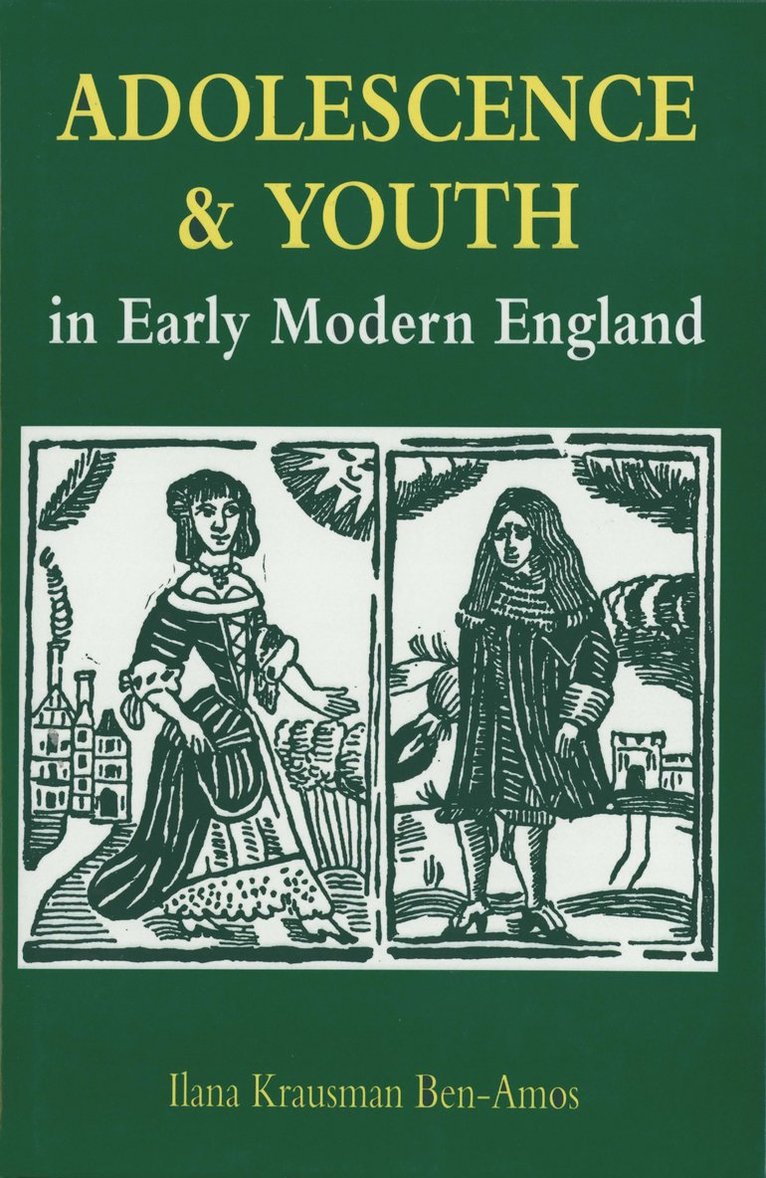
In preindustrial England, few people could expect to live past the age of forty, and so adolescence and youth represented a significant proportion of an individual's life. This book by Ilana Krausman Ben-Amos is the first to explore in depth the transition from childhood to adulthood during this period, describing the maturation processes of young people from the middle and lower classes who spent their youth as apprentices, domestic servants, or agricultural servants and laborers.Previous historians of the sixteenth and seventeenth centuries have assumed either that childhood was brief and there was no adolescence, or that childhood was prolonged and adolescence was maintained well into the mid-twenties. Ben-Amos argues instead that while the maturation process was prolonged in some cases, it was short and intense in others, and that variations were due to complex mental, social, and economic causes. Paying close attention to differences introduced by gender and social and geographical contexts, Ben-Amos focuses on numerous aspects of youths' lives as they related to maturation. These include the separation of adolescents from their parents, their working lives, acquisitions of new skills, social relationships, religious attitudes, sexual mores and norms, and leisure activities. Drawing on urban and court records, as well as on 74 contemporary autobiographies, Ben-Amos vividly recreates the experience of growing up in early modern England.
Del 12 - Cambridge Social and Cultural Histories
The Culture of Giving
Informal Support and Gift-Exchange in Early Modern England
Häftad, Engelska, 2011
550 kr
Skickas inom 7-10 vardagar
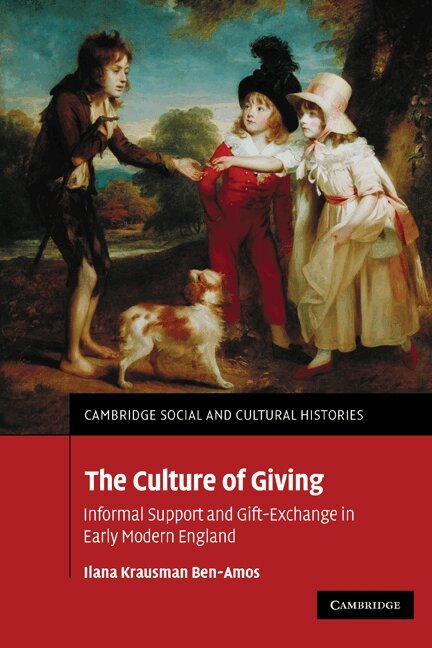
An innovative study of gift-giving, informal support and charity in England between the late sixteenth and early eighteenth centuries. Ilana Krausman Ben-Amos examines the adaptation and transformation of varied forms of informal help, challenging long-held views and assumptions about the decline of voluntary giving and personal obligations in the transition from medieval to modern times. Merging historical research with insights drawn from theories of gift-giving, the book analyses practices of informal support within varied social networks, associations and groups over the entire period. It argues that the processes entailed in the Reformation, state formation and the implementation of the poor laws, as well as market and urban expansion, acted as powerful catalysts for many forms of informal help. Within certain boundaries, the early modern era witnessed the diversification, increase and invigoration, rather than the demise, of gift-giving and informal support.
Del 12 - Cambridge Social and Cultural Histories
The Culture of Giving
Informal Support and Gift-Exchange in Early Modern England
Inbunden, Engelska, 2008
1 431 kr
Skickas inom 7-10 vardagar
An innovative study of gift-giving, informal support and charity in England between the late sixteenth and early eighteenth centuries. Ilana Krausman Ben-Amos examines the adaptation and transformation of varied forms of informal help, challenging long-held views and assumptions about the decline of voluntary giving and personal obligations in the transition from medieval to modern times. Merging historical research with insights drawn from theories of gift-giving, the book analyses practices of informal support within varied social networks, associations and groups over the entire period. It argues that the processes entailed in the Reformation, state formation and the implementation of the poor laws, as well as market and urban expansion, acted as powerful catalysts for many forms of informal help. Within certain boundaries, the early modern era witnessed the diversification, increase and invigoration, rather than the demise, of gift-giving and informal support.
2 176 kr
Skickas inom 10-15 vardagar
This book is a study of shame in English society in the two centuries between c.1550 and c.1750, demonstrating the ubiquity and powerful hold it had on contemporaries over the entire era. Using insights drawn from the social sciences, the book investigates multiple meanings and manifestations of shame in everyday lives and across private and public domains, exploring the practice and experience of shame in devotional life and family relations, amid social networks, and in communities or the public at large. The book pays close attention to variations and distinctive forms of shame, while also uncovering recurring patterns, a spectrum ranging from punitive, exclusionary and coercive shame through more conciliatory, lenient and inclusive forms. Placing these divergent forms in the context of the momentous social and cultural shifts that unfolded over the course of the era, the book challenges perceptions of the waning of shame in the transition from early modern to modern times, arguing instead that whereas some modes of shame diminished or disappeared, others remained vital, were reformulated and vastly enhanced.
561 kr
Skickas inom 10-15 vardagar
This book is a study of shame in English society in the two centuries between c.1550 and c.1750, demonstrating the ubiquity and powerful hold it had on contemporaries over the entire era. Using insights drawn from the social sciences, the book investigates multiple meanings and manifestations of shame in everyday lives and across private and public domains, exploring the practice and experience of shame in devotional life and family relations, amid social networks, and in communities or the public at large. The book pays close attention to variations and distinctive forms of shame, while also uncovering recurring patterns, a spectrum ranging from punitive, exclusionary and coercive shame through more conciliatory, lenient and inclusive forms. Placing these divergent forms in the context of the momentous social and cultural shifts that unfolded over the course of the era, the book challenges perceptions of the waning of shame in the transition from early modern to modern times, arguing instead that whereas some modes of shame diminished or disappeared, others remained vital, were reformulated and vastly enhanced.